
Home » Testosterone Replacement Therapy East Orlando » Hormone Level Testing for Men in Orlando | Svelte Medical Weight Loss – East Orlando
Hormone Level Testing for Men in Orlando | Svelte Medical Weight Loss - East Orlando
What to Look For Before You Test

Few guys suddenly go, “Today is the day I check my hormones.” It’s a much slower creep. You wake up and your afternoon slump is still there. Your training in the gym feels futile. You aren’t getting the same gains. You’ve had a mood swing that has lasted for months and can’t figure out the cause.
All of these are real symptoms, not just the symptoms of aging.
We have weekly conversations with Orlando men that sound the same. Someone in their late thirties or early forties will come to us and say they have tried every intervention. They are eating better, working out harder, supplementing more, etc. It’s all falling by the wayside. They are frustrated that their blood work and body composition seem normal but they feel bad and no one has ever tested them for hormones.
So, what should you be watching out for? Symptoms like fatigue that isn’t helped by a morning cup of joe, low libido, or any change in sexual performance. A decline in mental clarity, an increase in belly fat, changes in mood that make you angry at things you don’t usually get angry about, and/or muscle loss are all potential signs of a hormonal imbalance. Any one of those could be explained by lack of sleep or poor nutrition; if you have several of those and have had them for weeks, though, that is definitely your body asking for help.
The Florida climate can exacerbate symptoms as well. Men who work or commute in Orlando can attribute a lot of fatigue and brain fog to the summer heat and traffic, since the weather makes everything worse by July. Sometimes that is true. Other times, it is the body trying to tell you that you need to check your hormone panel.
Don’t let this go on for another year. If you see yourself in a few of these, it might be time to get some actual numbers.
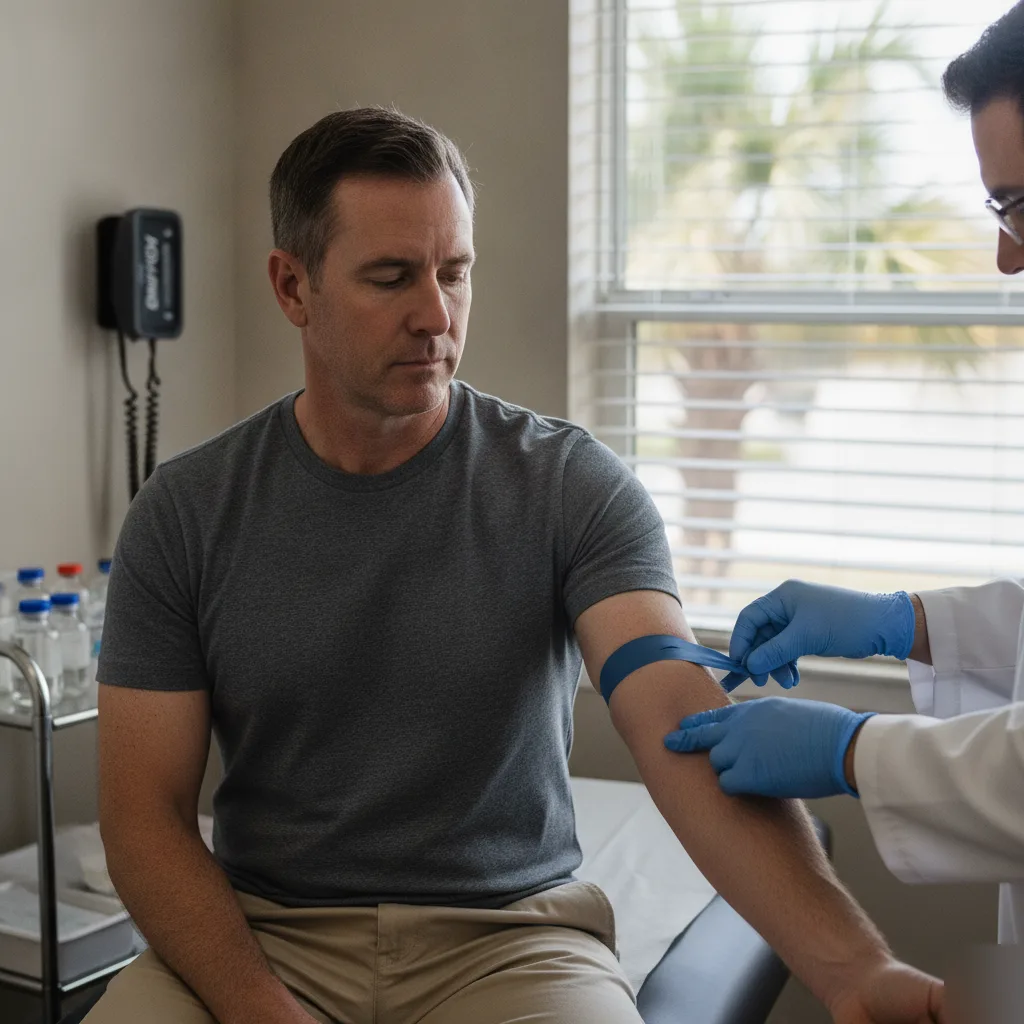
Primary Care Orders vs. Specialized Testing Panel
Your doctor can order a testosterone test. That is true. But every few weeks, we will see someone show up with their test results from a primary care doctor showing “normal” testosterone and still feeling exhausted, unmotivated, and foggy.
The issue is that you can’t tell the whole picture. A primary care doctor will most likely order total testosterone, and a CBC and a lipid panel.
That one number doesn’t tell you how much of that testosterone you’ll be able to use. That’s why we run a hormone panel, because a single number just doesn’t tell the full story. It measures free testosterone so we can see how much is available to be used by your cells. It measures SHBG to see how much testosterone is bound up in your blood. It measures estrogen because, yes, men do make estrogen. If your estrogen is too high, it doesn’t matter how much testosterone you have, you are going to feel the effects. And it also tests other hormones that affect the testosterone in your blood: DHEA-S, thyroid hormones, cortisol, insulin. None of those can be seen if the only number your doctor measures is testosterone.
So when is the right time to order a blood test for testosterone? If you’ve never had labs done before, or you are just curious to see your levels, a testosterone test is a fine place to start. A basic hormone screening test is a reasonable place to start if you are curious or if your doctor has told you to get some bloodwork done. But if your body is already struggling with some symptoms related to low testosterone, such as low energy, weight gain around the middle of your body, trouble sleeping and getting the muscle recovery you need, this basic hormone screening test likely won’t give you the insight you need to get the help you need.
Most of the men who walk into our East Orlando men’s health clinic have been told their numbers are “within range.” That’s because the reference ranges for total testosterone levels that your body produces is huge. The reference range for total testosterone in blood is 264 to 916 ng/dL according to the American Urological Association. In other words, a 40 year-old man can have a total testosterone level as low as 280 and will be “in range.” He can still be very symptomatic every day. The range doesn’t give you the whole story.
A hormone specialist sees the lab reports and the results differently than a family doctor. We don’t just ask if you are “in range.” We ask how you are in relation to other men your age, your symptoms, your goals. It is this level of specificity that makes the difference for you.
When Is It Okay to Wait on Hormone Level Tests?
I can’t stress this enough, and we’ll hear more about this in later sections: Not every man with symptoms of low energy and other complaints need to have hormone levels tested right now. If you haven’t slept in two days, you’ve eaten nothing but fast food all week, or you just came from a week at work in a crisis, your body is going to respond as if your life is about to end, and that’s fine. That’s normal. Let yourself have a week to sleep, a week to eat normally, a week to recover from whatever stress your body is feeling, and if you start feeling better, you likely don’t need hormones testing for men.
Just as we don’t recommend hormone testing right after a bad work week, we also don’t recommend hormone testing for men after a week of bad workouts at the gym. If you are feeling run-down after working out a lot, it is probably over-training, not low hormones. The stress can play havoc with cortisol levels, and cortisol levels can temporarily suppress testosterone, so if you are in the midst of a divorce, a move to a new town, or a stressful job situation, it makes sense to wait until your stress level has gone back down to normal before having a test done.
But there are times when delaying hormone testing isn’t the decision: You’ve been feeling tired for months. No, not days, months. It’s the kind of reality where you log seven or eight hours of sleep and still drag yourself out of bed feeling wrecked. That drive to hit the gym evaporates. You feel emotionally flat. Perhaps your sex drive has dipped to a crawl with no obvious cause, or you’re watching muscle mass leak away while doing absolutely nothing differently. The thing is, no amount of time off or beach trips will make those things disappear.
The heat and humidity here make it so much more difficult to spot shifts in the water. Guys chalk up lethargy to another day spent in Central Florida in the summer, to the never-ending I-4 traffic in the morning, to the simple aging process. By the time someone finally walks in the door, we hear the same story: they waited 12 months longer than they ought to have. They got used to being miserable instead of looking for an answer.
If you’re under 30, with no chronic symptoms, a regular yearly physical with your PCP is the way to go. But, if you’re 35 plus, you’ve had three or more of those symptoms for more than eight weeks, it’s time. And it’s a quick test. Just a simple blood draw with actual answers you can hold on to is always a better choice than having to guess for months on end. Don’t discount what you might discover.
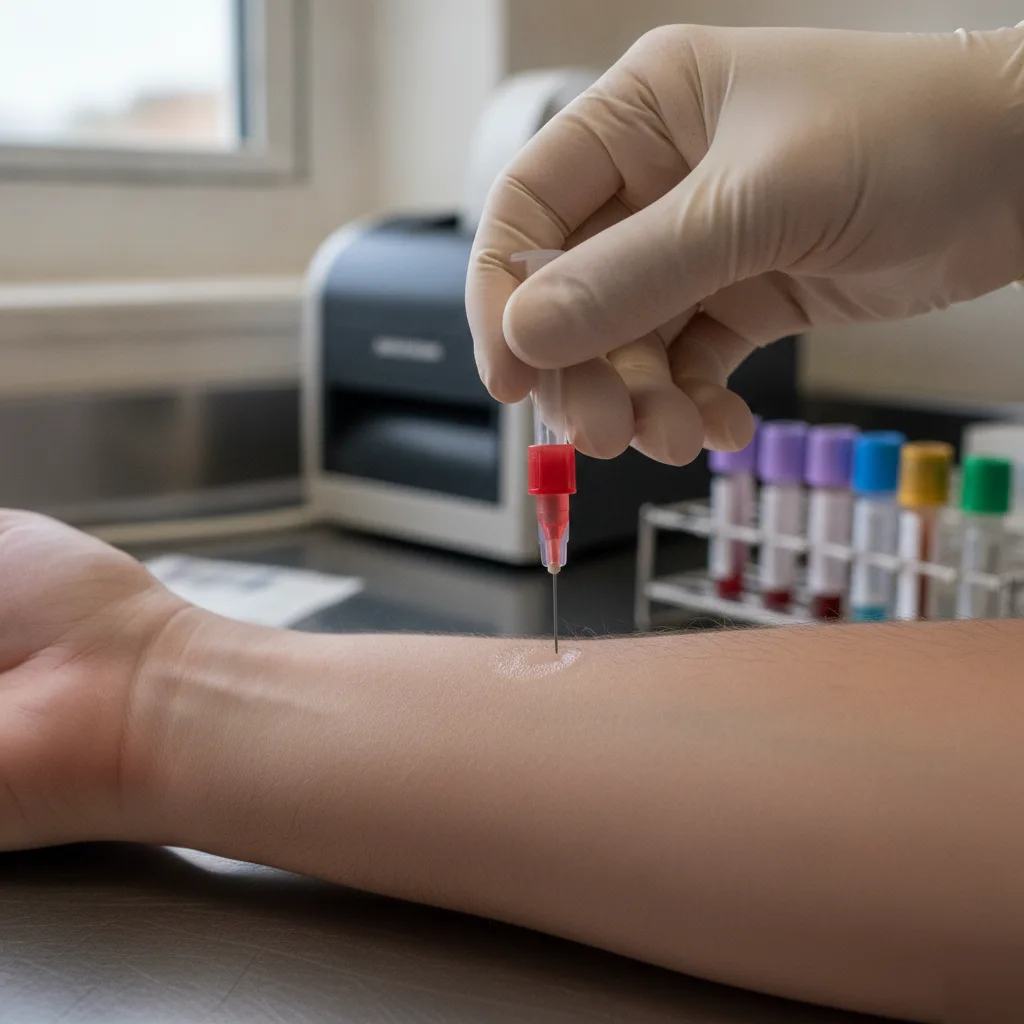
Preparing for a Morning Blood Draw
Often, guys arrive not knowing what to expect. It’s alright. A blood draw for hormone levels is a very simple procedure, although some simple preparations are required to accurate results.
Your blood draw must be done first thing in the morning. Testosterone peaks at around 7-10 am in men then decreases throughout the rest of the day. A 12 pm draw could show results 20% to 30% lower than 7 am results. This is not a drop in levels, only your body’s natural rhythms causing them to dip during the evening. We schedule all appointments during morning hours so results can show your actual hormone baseline.
What to do prior to the night before and the morning of your blood draw:
- Starve 8 to 12 hours prior to appointment. Hydrate with water, but coffee or tea with milk and sweetener can impact certain tests.
- Avoid your morning workout. Intense exercise raises testosterone temporarily, as well as cortisol.
- Get a normal night of sleep. A few nights of less than great sleep won’t make a difference in this test, but generally, poor sleep will result in low hormone levels.
- Bring a full list of all vitamins and medications you are currently taking. Be sure to add biotin supplements, as some lab assays are affected by them.
- Hidrate your body the night before your appointment. Being dehydrated makes finding veins a challenge and can impact certain blood tests.
And don’t forget, the heat and humidity in Orlando is a big deal. If you are coming in during hot summer months, know that you may already be dehydrated without realizing it due to all of your sweating. Have an extra glass or two of water during the night.
And don’t be afraid of the needle. The entire process takes 60 seconds and only requires us to pull a little bit of blood (a couple of vials). It’s no problem. We always find that the guys who come in and have been putting this off for months are not quite sure what to do. There’s no elaborate routine to prepare for this, other than: fast, stay hydrated, and come in a bit early. We then discuss your results with you, so that nothing is lost in the translation of a lab sheet of numbers vs. your reality. Of course, if you are on hormone replacement therapy (HRT) or TTRT we want you to let us know prior to your draw as the timing of when you receive your last dose is very important.
Confirmation of Results
One draw and we are not ready to diagnose you yet, we want you to know. Testosterone levels in your body fluctuate, are highest in the morning and dip throughout the day. Your body is affected by stress, sleep and what you ate last night. It is not uncommon to have your levels drop for any of these reasons. So what if you do have a low result? Do not worry! This is why we confirm! The next test we do on another morning gives you a chance to compare. If those results are the same, you are likely dealing with low testosterone!
We get a lot of patients walk through our door in Orlando who have gotten labs through a different facility. It might have been done at a walk-in or an online kit and now they know their numbers and are worried. I totally understand! What they are not aware of is their age, size and symptomology are all part of a formula which we use to determine if a diagnosis is valid. A total testosterone of 350 ng/dL in a 28-year-old tells a very different story than the same number in a 55-year-old.
Once we are confirming that second test, we want to review not just your testosterone levels, but free testosterone, sex hormone binding globulin (SHBG), estradiol, thyroid panel, metabolic and a few other markers as well. There are often other issues that mimic the symptoms of low testosterone (low thyroid or high estrogen for example). Having that data allows our physician to determine the way forward for you.
Here, in Orlando and throughout all of Florida, patients are under the care of a board certified Medical doctor in a real medical office. They have reviewed your results face to face to understand not only what the tests say but how they relate to your current symptoms before discussing whether medication would be beneficial. The hot, humid weather here can be an additional factor that may contribute to a reading of your cortisol and hydration levels as we see the patient’s come from everywhere in Lake Nona to East Orlando. The confirmation process is not only about protecting patients from unnecessary treatment but also from the other problems one test could never tell you.

Book Your Consultation
Frequently Asked Questions
Do I need to fast before hormone level testing?
Yes, most hormone panels ask you to fast for eight to twelve hours before your blood draw. This helps get accurate readings on insulin and other markers tied to your metabolism. We suggest booking an early morning appointment so you can eat breakfast right after. Skip your workout that morning too, since hard exercise can shift your hormone numbers for a few hours.
How is a full hormone panel different from a standard testosterone test?
A standard testosterone test only gives you one number, while a full hormone panel checks free testosterone, SHBG, estrogen, DHEA-S, thyroid, cortisol, and insulin. That one number from a primary care visit can’t show you how much testosterone your body can actually use. Many Orlando men come to us with a “normal” total testosterone result but still feel exhausted and foggy. The wider panel explains why.
Can Orlando’s heat and traffic affect my hormone test results?
Yes, summer heat and long commutes can raise cortisol and make you feel tired, which sometimes gets mistaken for low hormones. If you’ve been stuck in Orlando traffic or working outside in July heat, that stress alone can temporarily suppress testosterone. We often recommend waiting until your stress and sleep settle before testing, so your results reflect your real hormone levels, not a rough week.
How soon will I get my hormone test results?
Most hormone panels return results within a few business days after your blood draw. Once your results are in, we walk you through each number and compare it to men your age, not just a wide lab range. That context matters, since a normal reference range for total testosterone runs from 264 to 916 ng/dL, so two very different men can both be told they’re “in range.”
How do I know if my symptoms are worth getting tested for?
You’re a good candidate for testing if you’ve had several symptoms, like low energy, low libido, brain fog, or muscle loss, for weeks or months, not just a few bad days. A rough week of poor sleep or a hard training block usually isn’t a reason to test yet. But months of feeling run-down despite eating well and sleeping enough is your body asking for real answers.
What should I bring to my hormone testing appointment?
Bring a list of your symptoms and how long you’ve had them, plus any recent lab work from your primary care doctor. This history helps us decide which hormones to check beyond just testosterone. If you take any supplements or medications, jot those down too, since some can affect thyroid or cortisol readings on your panel.