
Home » Testosterone Replacement Therapy DR Phillips » Anti-Aging Hormone Therapy for Men in Orlando | Svelte Medical Weight Loss – DR Phillips
BioTE Bioidentical Hormone Replacement Therapy for Women in Orlando | Svelte Medical Weight Loss - DR Phillips
Spotting the Signs ofHormone Decline in Men
Most men don’t wake up one morning thinking, ‘my hormones are off.’ The changes often happen slowly. You might notice dragging through the afternoon, workouts stopping results, or sleep feeling unrefreshing even with enough hours. Over time, the drive you once had quietly fades.
We hear this story from men across Orlando almost every day.
Hormone decline in men often starts in the mid-30s. According to the American Urological Association, testosterone drops roughly one to two percent per year after age 30. By your mid-40s or 50s, these small annual dips add up. The signs can resemble “just getting older,” and many men ignore them for years because of this.
Common Signs We See in Our Patients
Here’s what to watch for. Not every man experiences all of these, but if three or more sound familiar, consider getting lab work done:
- Persistent fatigue that coffee can’t fix
- Loss of lean muscle even with regular exercise
- Increased belly fat, especially around the midsection
- Low libido or changes in sexual performance
- Brain fog, poor focus, or trouble remembering simple things
- Irritability or mood swings that feel out of character
Many men who come to us near Lake Nona or downtown Orlando have been dealing with at least three of these symptoms for over a year. They’ve tried new diets and switched supplements. Nothing helped because the root cause was metabolic, not behavioral.
That’s what many people miss. These aren’t personality flaws or signs of laziness. When testosterone and other key hormones decline, your body shifts into a sugar-burning metabolism. Insulin spikes more easily, increasing fat storage. Rebound hunger also kicks in. You’re fighting your own biology, and willpower alone won’t win that fight.
Here’s the good news. Once we identify the decline through proper bloodwork, we can build a clear path forward. The signs are signals from your body telling you something is off. This ‘something’ is measurable and treatable and men’s anti-aging hormone therapy exists precisely for this moment.

Why Lab-Based DiagnosisMatters Before Treatment
We tell every man who visits our Orlando clinic that symptoms don’t tell the whole story. Fatigue, low drive, and brain fog could point to low testosterone. They could also indicate thyroid issues, vitamin D deficiency, or elevated cortisol. We’ve seen men convinced they need testosterone, only to find their levels are normal and a different problem is at play.
That’s why we won’t start hormone therapy without bloodwork first. Ever.
A proper lab panel provides a clear picture of what’s happening inside your body. We don’t guess; we measure. The specific markers we check extend beyond just total testosterone. Our board-certified physician reviews every result before a treatment plan is formed. This level of clinical oversight matters more than most men realize.
What We’re Looking At in Your Labs
- Total and free testosterone levels, because the number that’s available to your cells is what counts
- Estradiol, since too much estrogen in men causes its own set of problems
- SHBG (sex hormone-binding globulin), which can bind up testosterone. This makes good numbers look deceiving.
- Thyroid panel and metabolic markers to rule out other causes of fatigue and weight gain
- PSA and hematocrit for safety baselines before starting any hormone protocol
We see this every week. A man near Lake Nona or down in Meadow Woods might drag through his days for months, assuming it’s just aging. His labs can reveal something specific and treatable. That discovery changes everything; it gives us a target instead of a guess.
The Endocrine Society states that lab confirmation is the clinical standard for diagnosing testosterone deficiency in men. We follow this standard because it protects you. Starting hormone therapy without proper bloodwork is like treating a symptom with your eyes closed. You might get lucky, but you could also miss something needing attention.
Your labs are your roadmap. We read every line before taking any step forward with treatment at our Orlando clinic.
Preparing for Your First Hormone Consultation
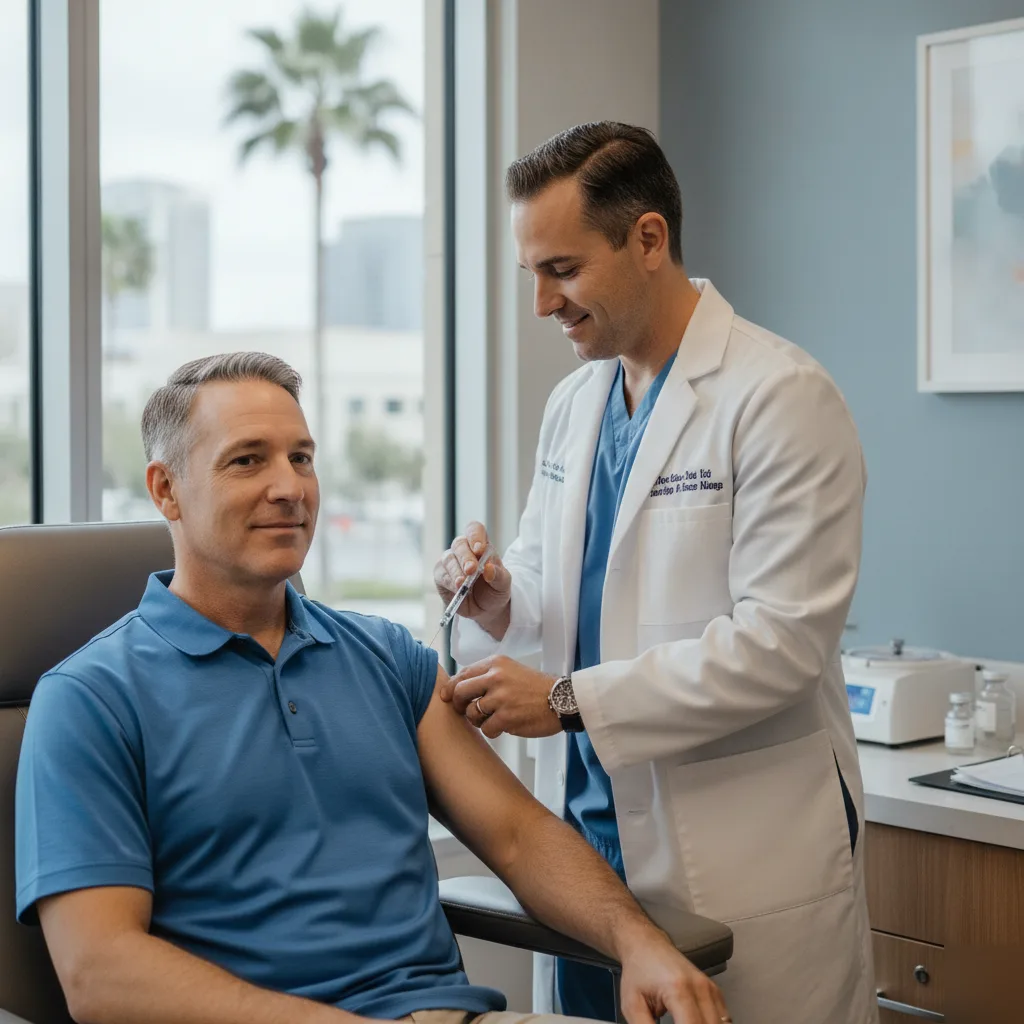
Most men who visit our Orlando clinic have spent months feeling unwell. They’ve tried sleeping more, eating better, or hitting the gym harder. When nothing helps, they’re ready for real answers by the time they sit down with us.
Your first visit requires little preparation, but coming in with a few things ready can help.
What to Bring and What to Expect
- Write down your symptoms. Include brain fog, low energy, stubborn belly fat, poor sleep, or reduced drive. Be specific about when they started and how they’ve changed. We see men every week who say, ‘I just don’t feel like myself anymore.’ That is a valid starting point.
- List your current medications and supplements. Everything counts. Even that over-the-counter sleep aid you take three nights a week.
- Bring any recent lab work. If your primary care doctor ran bloodwork in the last six months, bring it. If not, we will order labs ourselves. A board-certified physician reviews every panel before discussing next steps.
- Come fasting if possible. Testosterone and insulin levels are most accurate in the morning after an overnight fast. We’ll let you know when you schedule whether fasting is needed for your appointment.
- Prepare your questions. There are no dumb ones. Ask about timelines, what the process looks like week by week, how we monitor progress.
We run a detailed metabolic panel that checks more than just total testosterone. We look at free testosterone, SHBG, insulin, thyroid markers, and other factors. This full picture matters. For example, a man near Lake Nona came in last year with ‘normal’ testosterone on a basic test from his doctor. However, his free testosterone was very low, his insulin was spiked, and he was in a sugar-burning metabolism. Without detailed labs, he would never have known.
Your consultation is a conversation, not a sales pitch. We sit with you, explain what the numbers mean, and talk through whether hormone therapy is even the right path for you. Sometimes it’s not. And we’ll tell you that.
The whole first visit usually takes about an hour. You’ll leave knowing exactly where you stand.

The Hormone TherapyProcess for Orlando Men
Every man who visits our clinic first gets a real conversation. We sit down, listen, and figure out what’s going on before anything else happens.
The process for Orlando men works as follows:
- Free consultation and health history review. We discuss your symptoms, lifestyle, and goals. We ask honest questions with no judgment to understand your situation.
- Lab work. This isn’t optional. We run a full panel to check testosterone levels, thyroid function, metabolic markers, and insulin stability. Without labs, you’re guessing. We don’t guess.
- Physician review of results. Our board-certified MD personally reads every lab. Not a nurse. Not a tech. The doctor. We look at the full picture, not just one number on a page.
- Treatment plan built around your body. Based on your labs and symptoms, we design a protocol. That might include bioidentical hormone support, nutritional guidance to stabilize insulin, or a combination approach.
- Ongoing monitoring and adjustments. We bring you back in for follow-up labs. Hormone levels shift, your body responds. We adjust accordingly.
We see men from Lake Nona to College Park who hear ‘your levels are normal’ from their primary care doctor. But ‘normal’ on paper doesn’t always mean normal for you. A man with a total testosterone of 350 might feel terrible, while another at 500 feels fine. Context matters, and a quick office visit at a general practice often misses this.
Most Orlando men start noticing real changes within four to six weeks. Better sleep often comes first. Then the mental fog lifts and energy picks up. Around the two-month mark, body composition starts shifting too.
The process isn’t complicated. But it does require medical oversight at every step. That’s what separates a real clinic from a website selling you something in a box.

Monitoring Progress With Follow-Up Testing
We tell every man who visits our Orlando clinic that initial lab work is just the starting line. What truly matters is what happens at your follow-up panels.
We typically recheck your bloodwork around the six to eight-week mark. At this point, hormone levels have had enough time to stabilize, allowing us to see how your body is responding. We don’t guess; we measure. We look at free and total testosterone, estradiol, hematocrit, PSA, and metabolic markers like fasting insulin and lipid panels. Every number indicates how your treatment is working.
What We’re Tracking and Why
- Testosterone levels relative to your baseline and symptom improvement
- Estradiol conversion, because too much estrogen causes its own problems
- Hematocrit and red blood cell count to watch for thickening of the blood
- PSA to maintain prostate safety under physician oversight
- Insulin and metabolic markers tied to fat-burning versus sugar-burning metabolism
At this stage, we usually make small adjustments. This might involve a slight dosage change or a tweak to your protocol. That is the whole point of follow-up testing. It’s not a one-size-fits-all approach; it’s a living treatment plan guided by your lab results. We encourage every patient to understand the testosterone therapy risks and benefits before starting or continuing any protocol, since informed patients tend to stay more engaged in their own care.
Monitoring doesn’t stop after one recheck. Our patients near Lake Nona and throughout Orlando come in for ongoing panels every few months during their first year. After that, we establish a rhythm that works for your schedule. The Endocrine Society states that periodic monitoring is important for safe, long-term hormone management in men.
Your body changes over time. So should your treatment. That’s what separates real hormone care for men from a clinic that writes a script and sends you on your way. We stay involved because your results depend on it.
Book Your Consultation
Frequently Asked Questions
How do I know if I need testosterone therapy?
You’ll know through bloodwork, not guesswork. If you’re dealing with three or more signs like fatigue, low libido, brain fog, or stubborn belly fat, it’s worth getting labs done. Many men near Lake Nona come to us after a year or more of these symptoms. We check total and free testosterone, plus other markers, before making any recommendation. Symptoms alone don’t tell the full story. Our guide on the signs worth getting checked walks through what testing involves.
What happens at my first appointment?
Your first visit starts with a conversation about your symptoms, then moves into lab work if you haven’t had recent bloodwork. Bring a list of your medications and any past labs from the last six months. Come fasting if we’ve asked you to, since this gives more accurate testosterone and insulin readings. A board-certified physician reviews everything before discussing a plan with you.
How long does it take to get lab results back?
Most men get their results within a few business days after their blood draw. See our full breakdown of lab result turnaround times in Orlando. Our physician reviews every marker personally, including free testosterone, SHBG, thyroid panel, and PSA. We don’t rush this step. Once results are in, we schedule a follow-up to walk through what they mean and build a plan together. Nothing starts until we understand your full hormone picture.
Can low testosterone cause weight gain even if I’m eating right?
Yes, this happens more than most men expect. When testosterone drops, your body shifts toward storing fat instead of burning it. Insulin spikes more easily, and rebound hunger kicks in. We’ve seen men in Meadow Woods try every diet with no results, only to find the real issue was hormonal. Once we identify this through labs, we can address the actual cause instead of fighting biology with willpower.
Do I need to fast before my testosterone test in Orlando?
Fasting is often needed, since testosterone and insulin levels read most accurately after an overnight fast. We’ll tell you exactly what’s required when you schedule your appointment. If you’ve had labs from your primary care doctor already, bring those in. Otherwise, we’ll order a full panel here at our Orlando clinic, checking far more than just total testosterone.
What if my testosterone comes back normal but I still feel off?
Normal total testosterone doesn’t always tell the whole story. We’ve had men come in with a normal reading from a basic test, only to find their free testosterone was low and their insulin was high. Other issues like thyroid problems or vitamin D deficiency can also cause similar symptoms. That’s why we run a detailed panel instead of a single number, so we don’t miss what’s actually going on.