
Home » Can Low Testosterone Cause Weight Gain Even If I’m Eating Right? A Guide for Orlando Men
Can Low Testosterone Cause Weight Gain Even If I'm Eating Right? A Guide for Orlando Men
Why Eating Right Isn't Always Enough to Stop Weight Gain
Yes, low testosterone can cause weight gain even with a clean diet. Testosterone directly affects how your body stores fat and builds muscle. Diet alone won’t fix a hormone problem. You need labs to see what’s really happening.
You’re eating clean. You’ve cut the fast food, you’re watching portions. Maybe you’ve even tried intermittent fasting. But the scale still won’t move, or it keeps climbing. We hear this frustration from men walking into our Orlando clinic all the time. They think they’re messing up their diet. Often, it’s really hormonal, not what they’re eating.
Testosterone does more than just affect libido or energy. It plays a direct role in how your body handles muscle and fat. Less testosterone means less muscle mass. And less muscle means a slower metabolism. Your body burns fewer calories at rest than it used to. That’s math working against you, not a lack of willpower.
Low testosterone also changes where your body stores fat. Many men notice fat building around the belly and chest, places they didn’t carry extra weight before. This happens because testosterone influences fat cell behavior, especially visceral fat (the kind that sits around your organs). A 2018 study in the Journal of Clinical Endocrinology and Metabolism found low testosterone links to increased visceral fat – independent of diet changes. That’s a hormone problem, not a food problem. This is a common pattern for men seeking hormone treatment in Dr. Phillips.
Here’s where it gets tricky. Low testosterone often pairs up with insulin resistance. When insulin isn’t working efficiently, your body stores more sugar as fat instead of burning it. This creates a cycle: low testosterone worsens insulin resistance, then insulin resistance worsens fat storage. And fat tissue itself lowers testosterone even further. Round and round it goes.
- Reduced muscle mass slows your resting metabolic rate.
- Fat cells shift toward the belly and chest region.
- Insulin resistance increases, making sugar-burning less efficient.
- Fat tissue produces enzymes that convert testosterone into estrogen, worsening the cycle.
- Energy drops, making regular exercise harder to sustain.
We had a patient last year. He was a 44-year-old contractor from the Orlando area. He’d lost 15 pounds through diet alone, then hit a hard plateau for eight months. His labs showed testosterone in the low 200s. We started treatment and paired it with insulin-stabilizing nutrition coaching. He lost another 22 pounds over four months. His diet barely changed, his hormones did.
That’s the piece most people miss.
You can’t out-diet a hormone imbalance. Nutrition matters, it always will. But if your body is stuck in a sugar-burning pattern driven by low testosterone and unstable insulin, clean eating alone won’t flip the switch to fat-burning mode. The only way to know for sure is with a blood panel. No guesswork here.
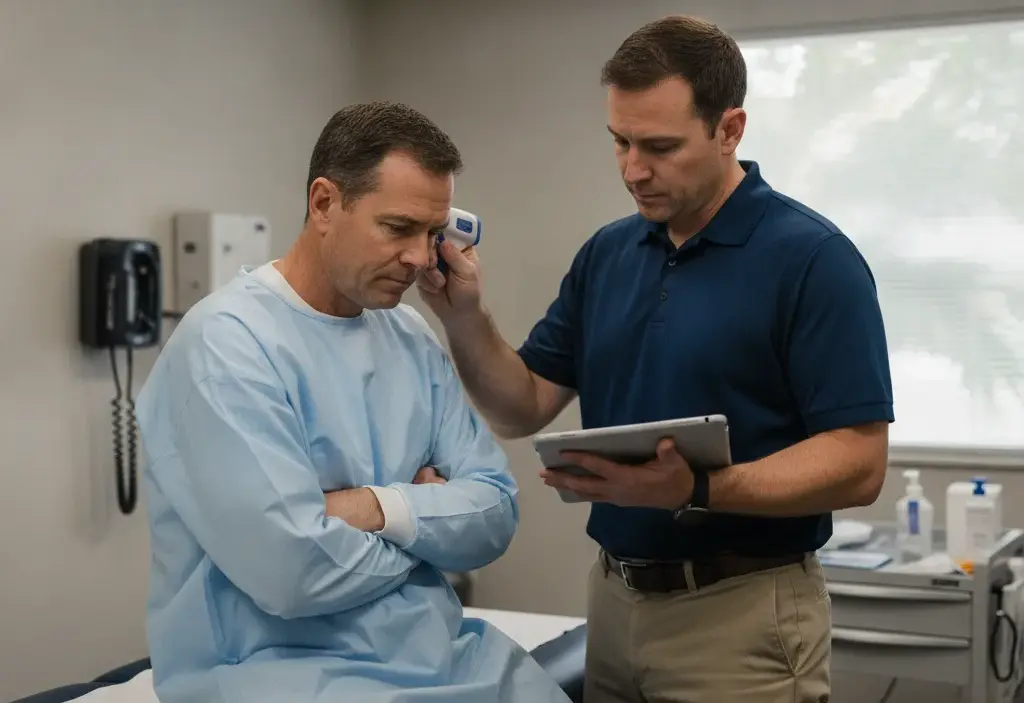
How Low Testosterone Changes the Way Your Body Stores Fat
So why does this happen even when you’re doing everything right on paper? The reason has nothing to do with willpower. Testosterone helps your body build and keep muscle. Muscle burns more calories at rest than fat does. When testosterone drops, muscle mass shrinks. Your body then burns fewer calories every day, even with the exact same diet.
We see this pattern often in our Orlando patients. A man in his 40s tells us he’s eating the same way he did ten years ago. But his body isn’t the same. His metabolism has shifted. Low testosterone is often the hidden reason, especially in upscale neighborhoods like Bay Hill where guys are usually active.
Low testosterone also changes where your body puts fat. Research published in the Journal of Clinical Endocrinology & Metabolism shows testosterone helps regulate fat distribution. Lower levels link to more fat stored around the belly and organs, not just under the skin. This visceral fat is more active than regular fat. It produces hormones that lower testosterone even further. That creates a loop that’s hard to break through diet changes alone.
- Less testosterone means less muscle. Less muscle means a slower resting metabolism.
- Fat cells convert testosterone into estrogen. More fat means more of this conversion.
- Low testosterone raises insulin resistance, pushing your body to store sugar as fat.
- Belly fat itself lowers testosterone further. This creates a cycle that keeps feeding itself.
- Energy drops, so daily movement and activity often decline without you noticing.
That insulin piece matters more than most people realize. When insulin runs high, your body burns sugar for fuel and stores fat instead of releasing it. Low testosterone pushes insulin in the wrong direction. It’s not a diet failure, it’s a hormone problem working against your effort.
Here’s a scenario we hear all the time. A patient cuts carbs, adds cardio, tracks every meal. The scale barely moves. He’s not imagining it. His hormone panel usually tells the real story.
This is why we don’t guess at treatment plans. Every patient at our practice gets lab work first. You can’t fix what you haven’t measured. A board-certified physician reviews your results and builds a plan around what your body needs, not a generic template.
So does this mean diet doesn’t matter? No. But diet works once your hormone levels and insulin response are stable again. That’s the missing piece for so many men in Central Florida who’ve done everything right on paper and still can’t lose the weight.
Five Signs Your Weight Gain Might Be Hormone-Related
We see this exact scenario play out in our Orlando clinic every week. A patient walks in eating clean, tracking calories, hitting the gym. Still gaining weight around the midsection. That pattern usually points to a hormone problem, not a diet problem. It’s especially true for men around Restaurant Row who are trying to stay fit.
So how do you know if testosterone is the real issue? Here are five signs we look for during a consultation.
- Fat collects around your belly even when your total calorie intake hasn’t changed.
- You feel tired by early afternoon no matter how much sleep you got.
- Your muscle tone has dropped despite consistent strength training.
- Your motivation and mood have flattened out over the past several months.
- You’ve noticed a drop in libido along with the weight changes.
Any one of these alone could mean something else. Stress, poor sleep, thyroid issues – they all overlap. But when three or more show up together, that’s a pattern worth checking with bloodwork.
Here’s the part most people miss. Low testosterone doesn’t just slow your metabolism. It messes with insulin. When testosterone drops, your body tends to store more fat and burn less of it for fuel. Add a high-carb diet on top of that, and you get insulin spikes that trigger fat storage and rebound hunger. That hunger isn’t weakness. It’s a metabolic response your body is having to the hormone shift.
We had a patient last year, mid-40s. He ran three days a week and still couldn’t lose the weight around his waist. His labs showed testosterone well below normal for his age. We addressed it with a personalized plan and started stabilizing his insulin through nutrition coaching. The scale finally moved. He wasn’t failing at dieting. His hormones were working against him.
This is why we always start with labs, not guesswork.
If two or more of these signs sound familiar, don’t just keep cutting calories. That approach often backfires when hormones are the root cause. The next step is simple: get your levels checked by someone who understands both hormone therapy and metabolic health, not just one or the other.
Book Your Consultation
Frequently Asked Questions
How do I know if my weight gain is from low testosterone and not just my diet?
You can’t know for sure without a blood test. Signs like belly fat that won’t budge, low energy, and muscle loss despite clean eating point to a hormone issue. Diet alone should work if your hormones are balanced. If it hasn’t after months of effort, a lab panel checks your testosterone and insulin levels. That’s the only way to see what’s really driving the weight gain instead of guessing.
Can low testosterone cause belly fat even if I’m not overweight everywhere else?
Yes, low testosterone often causes fat to build specifically around your belly and chest. This happens because testosterone affects fat cell behavior and where your body chooses to store fat. Many Orlando men notice this even at a normal weight. It’s not about total pounds. It’s about where the fat lands. A lab panel can show whether hormones are behind this pattern.
Why isn’t intermittent fasting or cutting carbs working for my weight loss?
Diet changes like fasting or cutting carbs won’t fix a hormone problem underneath. Low testosterone can raise insulin resistance, which makes your body store sugar as fat instead of burning it. This creates a cycle that clean eating alone can’t break. If you’ve tried multiple diet strategies with no results, it’s worth checking your hormone levels before trying another eating plan.
Does living in Orlando’s heat and active lifestyle affect testosterone-related weight gain?
Orlando’s active outdoor culture doesn’t cause low testosterone, but it can hide it. Men in areas like Bay Hill and Restaurant Row often stay busy and assume activity alone should control their weight. When testosterone drops, that same activity level stops producing results. Heat and humidity also drain energy faster, making workouts harder to sustain. A lab test shows whether hormones, not effort, are the real issue.
What’s the difference between low testosterone weight gain and normal aging weight gain?
Normal aging weight gain happens slowly and responds to diet and exercise changes over time. Low testosterone weight gain often shows up as a sudden plateau, muscle loss, and fat shifting to your belly despite consistent effort. If you’re doing everything right and still stuck, that’s a signal worth checking. A blood panel through our Orlando testosterone therapy program can tell you which one you’re dealing with.
Can low testosterone weight gain be reversed once I start treatment?
Many men see real changes once testosterone and insulin levels stabilize. Muscle mass can rebuild, metabolism can improve, and fat loss becomes easier to sustain. Diet still matters, but it works better once your hormones aren’t working against you. Results vary by person, which is why lab work and a doctor-guided plan matter more than guessing at another diet change.
Ready for a Svelte transformation?
Take the first step toward better health and metabolic stability today.
Our team is here to support you.