
Home » How Do I Know If I Need Testosterone Therapy? A Guide for Orlando Men
How Do I Know If I Need Testosterone Therapy? A Guide for Orlando Men
Why a Symptom Checklist Can't Give You a Real Answer
Fatigue, low libido, and mood changes often point to low testosterone, but they can mean a lot of other things. Only bloodwork tells the real story. A checklist helps you ask the question. Our lab tests give you the answer.
You’ve probably taken one of those online quizzes. Ten questions, a few checkboxes. It tells you that you “might have low testosterone.” Here’s the problem. Fatigue, weight gain, low sex drive, brain fog – these are classic low testosterone signs. But they also pop up with thyroid issues, sleep apnea, depression, prediabetes, and plain old stress. So a checklist can’t tell the difference. It just flags something as off.
We see this all the time in our Svelte MD Dr. Phillips clinic. A man in his 40s comes in, sure he has low T. He’s tired, gained 15 pounds. He’s right that something’s wrong. But he’s just guessing at the cause. Sometimes it is low testosterone. Sometimes it’s sleep apnea he’s never been screened for. Sometimes it’s both. Guessing based on symptoms can send you down the wrong path for months.
Symptom overlap is the real issue.
- Low energy can come from thyroid problems, anemia, or bad sleep, not just low T.
- Weight gain around the midsection also happens with insulin resistance.
- Mood changes and irritability are common in depression and chronic stress.
- Less muscle mass can be normal aging or a bigger metabolic problem.
- Low libido has emotional, relationship, and hormonal causes, all at once.
A checklist can’t sort through that. It doesn’t know your actual testosterone level. It won’t tell you if your symptoms are mild or severe. It won’t know if another condition is driving them. And it can’t tell you if your levels are borderline, which really matters. Two men can have the exact same symptoms with wildly different lab numbers. That difference changes the whole plan.
This is why physician oversight makes a difference. A board-certified doctor doesn’t just read your checklist answers. He orders bloodwork. He looks at your total and free testosterone. We check related markers like thyroid and blood sugar, too. And we ask about your sleep and stress. That full picture turns a guess into a diagnosis.
Guessing costs you time you don’t get back.

Signs That Are Worth Getting Checked
How do I know if I need testosterone therapy? It usually starts with a pattern, not one single symptom. You feel tired, even after sleeping eight hours. Your workouts aren’t building muscle like they used to. Your motivation for things you once enjoyed just isn’t there. One bad week doesn’t mean much. But weeks stacking into months? That’s worth a conversation.
We see men in Orlando all the time who chalk this up to stress or aging. Sometimes that’s true. But often it isn’t.
Low testosterone symptoms show up in a few categories. Some are physical. Some are mental. Others are about drive and performance. Here’s what we ask patients about during a first visit here in Dr. Phillips:
- Persistent fatigue that doesn’t improve with rest or sleep.
- Loss of muscle mass or strength, even with regular exercise.
- Reduced sex drive or fewer morning erections than before.
- Mood changes like irritability, low motivation, or a flat mood.
- Increased body fat, especially around the belly, with no diet change.
None of these confirm low testosterone on their own. Fatigue could be a sleep issue. Mood changes could be tied to work stress. That’s exactly why lab work matters so much. Guessing gets you nowhere. Testing gets you an answer.
Here’s a scenario we see often. A guy in his early 40s comes in, just feeling off. He’s still working out. Still eating fine. But he’s not recovering the way he used to. His labs come back showing testosterone well below normal range. He wasn’t imagining it.
Age plays a role, too. Testosterone naturally declines starting around age 30, dropping roughly 1% per year according to the Cleveland Clinic. That’s a slow curve for most guys. But for some men, the drop is sharper or happens earlier. That’s when symptoms become noticeable enough to act on.
So how do you separate normal aging from something that needs treatment? You don’t guess. You test. Symptoms give you a reason to ask the question. Bloodwork gives you the actual answer.
One more thing worth mentioning: sexual symptoms tend to get the most attention. But they’re not always the first sign. Energy and mood often shift before anything else. If you’ve noticed a change you can’t quite explain, that’s reason enough to get checked.
What Happens During Testing
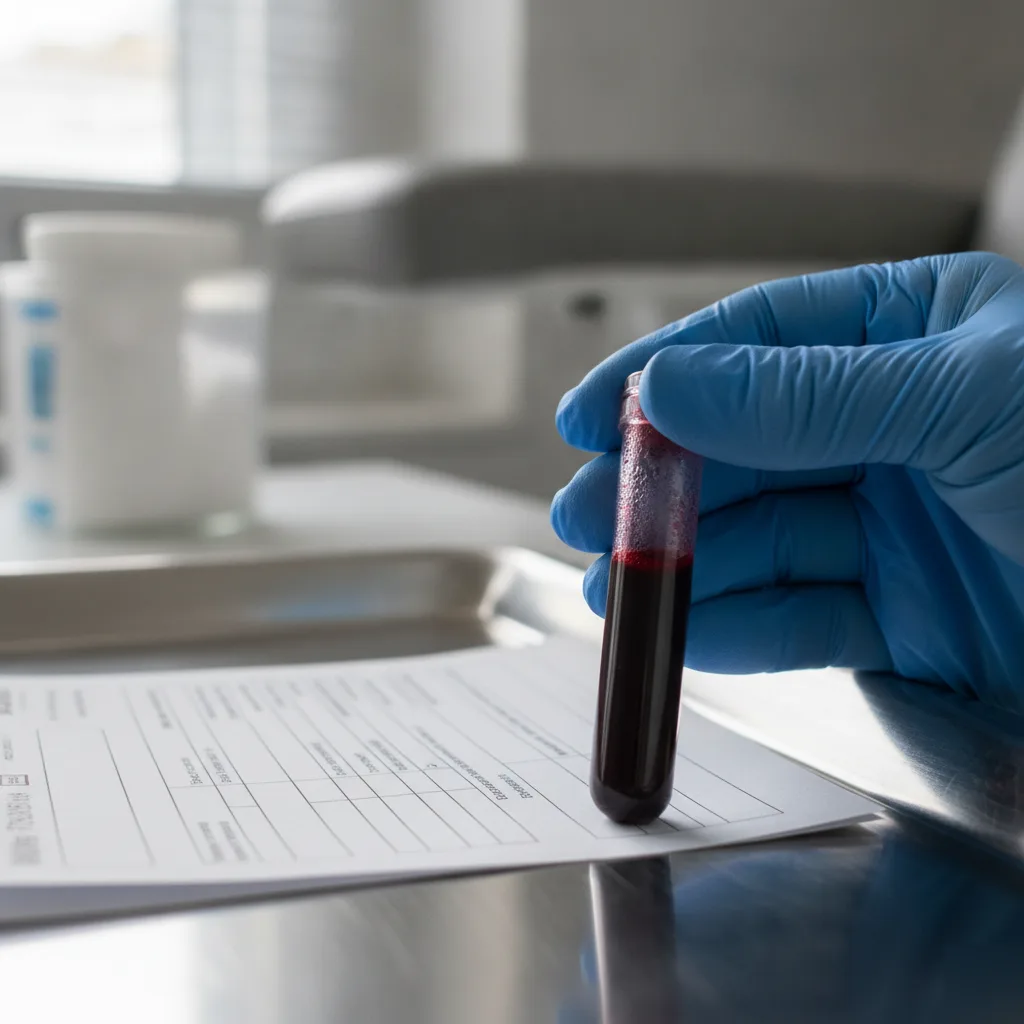
Here’s the truth: testing is simpler than most guys expect. You’re not signing up for a big production. It’s a blood draw. A short intake conversation. Then a follow-up to go over your numbers. That’s it. We see this mistake all the time – guys put off testing for years because they picture something invasive. It’s not.
So what does the actual process look like? Let’s walk through it. This is how we’d explain it to a patient sitting in our Orlando office for the first time.
- You’ll fill out a short health history. This covers symptoms, sleep, energy, and any medications.
- We draw blood, usually in the morning. Testosterone levels peak early and drop as the day goes on.
- The lab checks total testosterone. We often check free testosterone too. That’s the amount your body can actually use.
- We may also check related markers. LH, FSH, thyroid function – this helps rule out other causes.
- Results typically come back within a few days.
- You’ll sit down with a physician. We review the numbers against your symptoms, not just the lab sheet.
- Together, you’ll decide on next steps. That could be monitoring, lifestyle changes, or starting treatment.
Timing matters more than people realize. A single low reading on a rough morning doesn’t tell the whole story. Most board-certified doctors recommend two separate morning draws before making any diagnosis. One number can be misleading. Two numbers on two different days give a clearer picture of what’s normal for you.
A 42-year-old patient came in last year. He was certain his fatigue was just work stress. His first draw came back borderline. We repeated it a week later. Both were low. Paired with his symptoms, that pattern confirmed what he suspected but couldn’t prove on his own.
This is where lab work earns its keep. It turns a guess into a diagnosis.
One more thing worth knowing. Testing isn’t just about the testosterone number itself. A good evaluation also looks at symptoms, overall metabolic health, and sometimes insulin patterns. Hormone balance and how your body burns fuel are closely connected. Low testosterone rarely shows up alone. It often travels with poor sleep, weight gain, or low energy. Treating just the number without looking at the whole picture misses the point.
Book Your Consultation
Frequently Asked Questions
How do I know if I need testosterone therapy or if something else is going on?
You know for sure only after bloodwork, not from symptoms alone. Fatigue, weight gain, and low mood can mean low testosterone, but they also show up with thyroid problems, sleep apnea, or stress. A checklist can flag a pattern, but it can’t tell you the cause. Getting your total and free testosterone tested, along with a few related markers, gives you a real answer instead of a guess.
What’s the difference between low testosterone and normal aging?
Normal aging brings a slow drop, often around 1% a year starting near age 30, according to the Cleveland Clinic. Low testosterone that needs attention usually drops faster or shows up earlier than that curve. The only way to tell them apart is a blood test comparing your actual numbers to the normal range. If your levels are well below normal, it’s likely more than just aging.
Can stress or poor sleep cause the same symptoms as low testosterone?
Yes, stress and poor sleep can cause fatigue, low mood, and low libido, just like low testosterone does. That overlap is exactly why symptoms alone can’t confirm a diagnosis. A doctor looks at your sleep habits, stress levels, and bloodwork together. This full picture helps sort out whether testosterone is really the issue or if something else needs treatment first.
Is it common for men in Orlando to have low testosterone?
We see it often in our Dr. Phillips clinic, especially in men in their 40s and 50s. Busy schedules, poor sleep, and stress from work can all play a role alongside the natural age-related decline. Many Orlando men wait months before getting checked because they assume it’s just aging or stress. Testing early gives you clearer answers sooner.
What should I expect during my first testosterone test?
You can expect a short health history, a morning blood draw, and a follow-up visit to review your results. Testosterone levels peak early in the day, so morning testing gives the most accurate reading. Your doctor may also check thyroid function or other markers to rule out different causes. It’s a simple process, not something invasive or complicated.
Is it a mistake to rely on an online symptom quiz before getting tested?
Yes, relying only on an online quiz is a common mistake. These quizzes can only tell you that something feels off, not why. Two men with identical symptoms can have very different lab results, which changes what treatment, if any, makes sense. If you’re weighing whether to explore testosterone therapy, the safest first step is real bloodwork reviewed by a physician, not a checklist score.
Ready for a Svelte transformation?
Take the first step toward better health and metabolic stability today.
Our team is here to support you.