
Home » Testosterone Replacement Therapy East Orlando » Low Testosterone Treatment in Orlando | Svelte Medical Weight Loss – East Orlando
Low Testosterone Treatment in Orlando | Svelte Medical Weight Loss - East Orlando
Recognizing the Signs of Low Testosterone

Few men ever rise from bed one morning to exclaim, “My testosterone is low.” Instead, the decline creeps in imperceptibly. Perhaps you feel a smidgen more fatigued or that your gym regimen isn’t paying off anymore. You might write it off to life’s stressors or the inevitable march of time. Then, after months of trudging through each day with this strange, nagging sensation, you just know something isn’t right.
We listen to exactly this sort of story about once every seven days.
Low testosterone never shouts; it whispers. It’s the sum total of mild signs and symptoms that slowly begin to color your days. Your energy fades in the mid-morning, or Orlando’s summer humidity seems to suck the energy from you even quicker than usual. Your sleep is shot; you find yourself awake at 3 in the morning, and no matter how you try to will yourself back to sleep, you can’t. You find yourself daydreaming in mid-sentence when you sit down with clients, and you can’t find the willpower to hit the gym anymore.
There’s another set of problems, too, that men might be reluctant to discuss. Low sex drive. Erections that won’t happen when you want them to. Sudden changes in personality, or the sense that someone else is acting on your behalf. It’s not just men in their 60s who are seeing a physician for these issues, either; you see men in their late 30s and 40s as well. You’d expect to hear that sort of thing only from a man in his 60s, which is exactly what surprised many patients who came to see us about it.
If you notice any of the following signs, it’s worth discussing with your physician.
- Excessive tiredness that doesn’t seem to go away, even when you’ve had a good night’s sleep
- Reductions in lean muscle or increases in fat, often around your waistline
- Feelings of irritability, worry, or just generally being a little “blah”
- A loss of interest in sexual activity or sexual performance difficulties
- Difficulty focusing on things, as well as an increased occurrence of minor memory lapses
Some of these signs can be indicative of other health problems, as well, including thyroid problems or depression. That’s why it’s not enough to make an educated guess; you really need to have your hormone levels checked via blood test. A set of lab results will measure your body’s total and free levels of testosterone, as well as additional markers that help form a comprehensive understanding of your body’s health. Any attempt to identify and treat low testosterone without these test results is an educated guess, and a guess often leads to the wrong treatment.
In a nutshell: if the signs on that list make you look at yourself and say, “Yeah, that’s me for at least 3 or 4 items,” it’s probably no accident. You probably are suffering from low testosterone, and you should figure out exactly what symptoms may be a result of it.
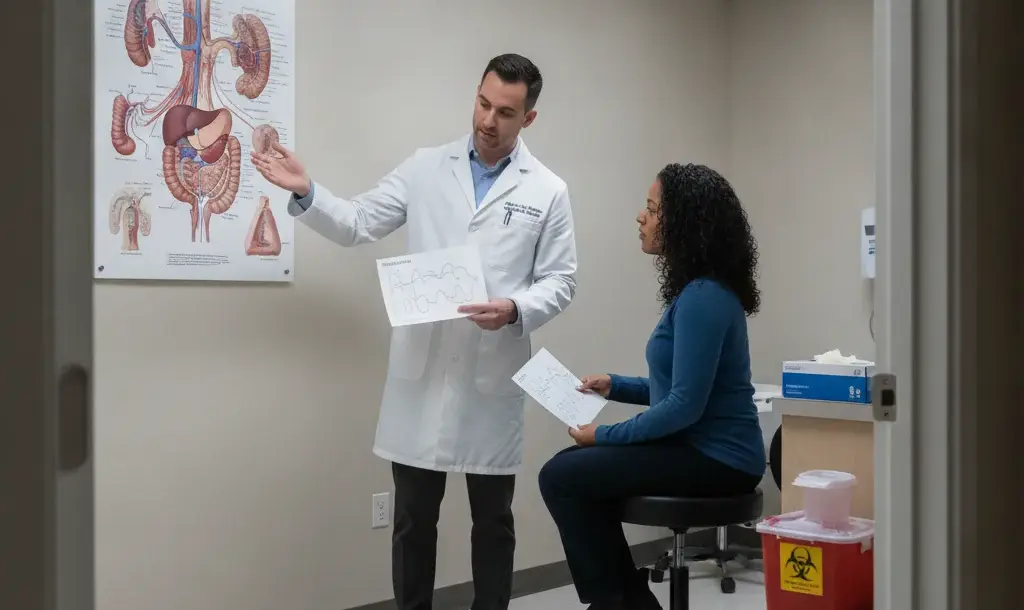
How Physicians Confirm a Low Testosterone Diagnosis
You cannot treat what you have not measured. If you are not sure what’s wrong with you, the only way to find out is to have the relevant markers measured in your blood.
A diagnosis begins with a lab test. In addition to a simple total testosterone test, we will also run tests for your free testosterone and sex hormone-binding globulin, or SHBG. Many men are not aware that testosterone levels in your bloodstream fluctuate during the day, peaking early in the morning and gradually declining as the day goes on, which is why we do the blood draw first thing in the morning, before 10 a.m.
Even that isn’t enough to diagnose low testosterone. The American Urological Association recommends at least two separate morning readings showing levels below 300 ng/dL before a clinical diagnosis is made. You might come in from a one-stop lab at an urgent care center with one number, and that one number is not the whole story. We look for Luteinizing hormone (LH) and FSH to see if the problem is coming from the brain or from the testes. We want to measure prolactin levels because high prolactin will decrease testosterone. We want a comprehensive metabolic panel and a CBC to look for liver, kidney, or blood disorder issues. We want to assess thyroid function because hypothyroidism can mimic many of the signs and symptoms of low T.
In a town that is hot and humid year round, it is easy for men to attribute their fatigue to the weather, or just a really long work week. That sort of feeling is not a big deal if you’re otherwise healthy and sleeping well. If you are not, fatigue, poor sleep, loss of muscle mass, or low sex drive are all reasons we want to look deeper into labs. This is the time for physician-supervised evaluation. Every value is assessed by our doctor with respect to where it is, and where it should be, based on that specific patient. A man in his 30s and a man in his 50s who have the same number on their lab sheet need different treatment and different goals. The labs confirm what your body is showing you; they do not take the place of the conversation. See how we do diagnosis and assessment.
When Treatment for Low T Is Not What You Need
Sometimes men come in convinced their T is low. Sometimes, it’s not.
This happens quite often. You’re a guy in your 40s who is constantly exhausted. You are tired. You lose motivation. Your workouts no longer do anything for you. You Google and you see that low T could explain everything. The symptoms line up with those in the article. But when we do bloodwork, his T is completely normal. So, what is going on with your energy? Your fatigue could be the result of a sleep disorder, untreated stress, another endocrine problem, a deficiency, or more. Sunshine in Florida does not mean you get the D. Especially if you work in an air-conditioned office on I-Drive.
If your total T is in range (or normal for your age) and your free T is also in normal range, then hormone treatment with testosterone is not going to help. It could, in fact, hurt you. If you add testosterone when your body doesn’t need it, your body stops making it, and this can affect fertility as well as cause other problems.
There are other situations in which we will not move forward with testosterone treatment:
- You want to start a family (testosterone can impact sperm counts)
- You have sleep apnea (untreated this causes fatigue and loss of energy)
- Your issues have been going on for a short time and coincide with a medication or stress in life
- You do not have any actual lab work yet, just an at-home saliva test or one early morning blood draw in a lab
We don’t treat just to treat or just because you came in and asked. With physician-supervised men’s hormone therapy, bloodwork tells you one thing, symptoms tell you another. It is both. If your labs come back with low total or low free T and your symptoms fit the profile, then we can talk about treatment options. It all starts by confirming the diagnosis. We have so many men come to our East Orlando and Lake Mary offices, expecting a certain answer and then leaving to understand that the correct answer may be different! Find out if treatment is right for you! Having the correct diagnosis is paramount; without it, all the rest doesn’t matter!
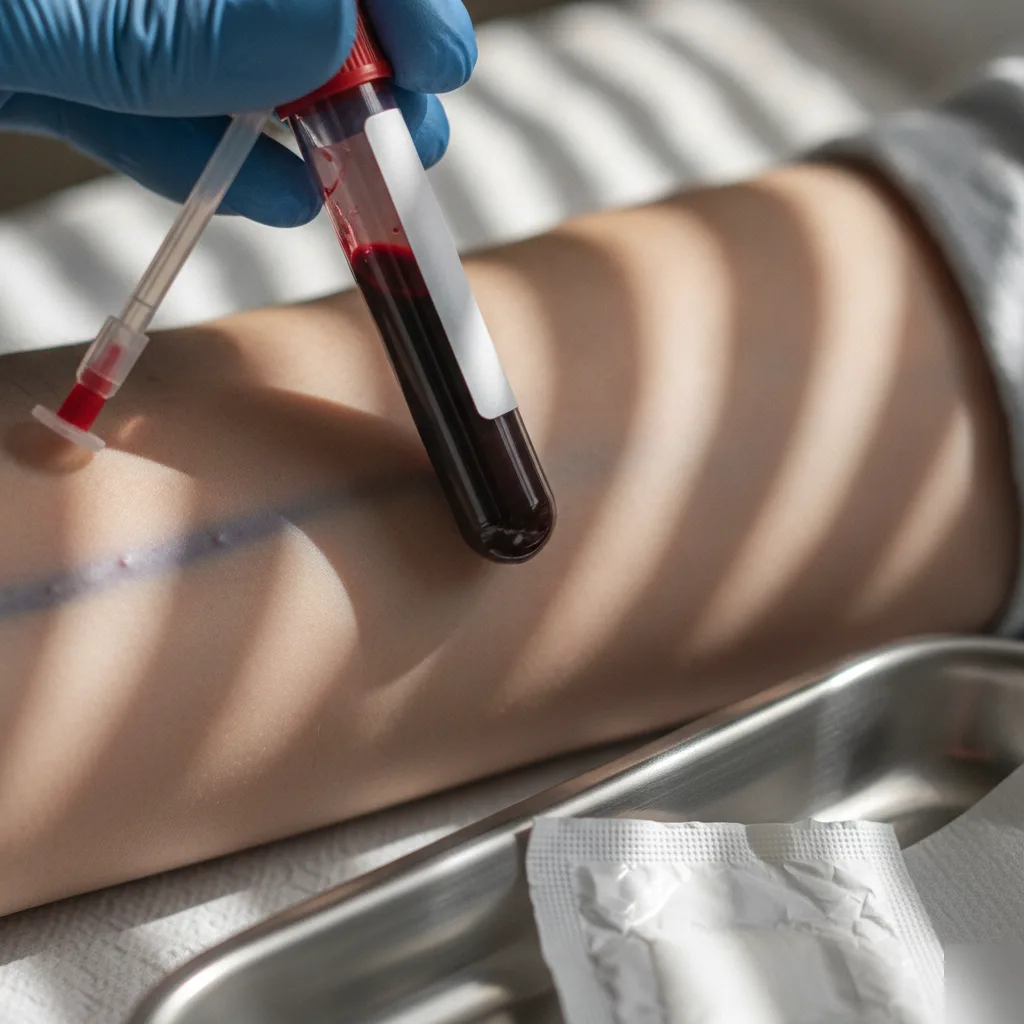
Your First Visit & Lab Work in Orlando
Many men who walk through our doors have been considering something like this for months, maybe even years. They have been experiencing symptoms for a long time: fatigue, brain fog, and belly fat that can’t be dropped. When these men call to set up an appointment, they just want a quick answer! That’s why we take this same approach with your very first visit.
A doctor goes over your health history and all your medical records. That’s not something you check-off on a tablet and forget; it’s an actual discussion about your symptoms, sleep, stress, and goals! We have to understand your full story, as low testosterone rarely presents as a single issue, but can often accompany multiple other health challenges.
After that, blood work happens. We don’t just order total testosterone; we run an entire hormonal panel. This includes total and free testosterone, SHBG, estradiol, thyroid labs, metabolic health markers, and CBC. (Our Orlando heat and humidity can mask subtle dehydration effects that may change our reading, so we have to account for that!) Blood work simply confirms what the lab data says, but we also use blood work to ensure everything we do is safe for you!
But unlike a simple telehealth prescription where a doctor is barely involved, we take your blood work results and look at them right there in clinic. Sometimes, you can fall into an unusual range; we don’t “just” treat these cases. We dig deeper and try to understand the whole picture, whether thyroid issues, estrogen levels, etc. may actually be the culprit behind your symptoms. Treating a patient incorrectly can actually make things much worse!
And when you come in to our three locations in East Orlando, Lake Mary, and Dr. Phillips, you can walk in and out of the office without having to drive your whole family out to a different clinic across town. Most of your visit should not exceed an hour, and we generally have your results available in a few days. From there, we have a follow up appointment, discuss the results, and provide you with some treatment options!
No sales pitch, no upselling, no stress. Just a very clear look at your hormone levels with some very honest advice on next steps! Schedule your visit today! If you are ready to stop guessing around and to be proactive about your lab work, give us a call and let us set up a lab appointment!
What Happens in The Months After Treatment
Starting treatment is just the beginning, as the following months and weeks are often just as important as the first step of the entire process.
Usually, four to six weeks after treatment starts, we check in with a blood draw to make sure everything is still tracking right. This includes checking your total and free testosterone, estrogen (E2), your hematocrit, and PSA. If your levels aren’t in the ideal range, you can adjust your dose, and we often see early results that would warrant a change at that point. More frequently than not, these are minor tweaks!
And that’s one thing you’d be surprised to see so few of these clinics doing! They check your labs once, twice, and then you’re on your own! This isn’t how it operates. Hormone concentrations fluctuate in response to stress levels, sleep habits, changes in physical condition, and even Orlando’s hot weather, which can change a person’s activity level and hydration. A value that was great for you in January might be off-target for you by the month of July. We’ll keep checking and listening to how you feel, beyond your blood work, as the journey progresses.
We use your symptoms as the primary guide between visits to the lab. Do you feel better? Are you sleeping better? Has your energy level returned in the afternoon? How is your mood? These conversations happen at every single check-up because labs can’t paint a comprehensive portrait. Sometimes a value on your lab work might be within normal range but that doesn’t necessarily mean you’re feeling good. Your health and happiness is important to us.
Another element of monitoring you might not be aware of is hematocrit levels. One of the side effects of testosterone therapy is that it can cause the body to make more red blood cells. The more red blood cells you make, the higher the chance you’re at risk for developing a blood clot. This is one reason why medical supervision is required, rather than optional, when starting testosterone treatment. All of your labs are seen by a physician at our clinic before any decision is made about a dose. Learn more about our monitoring process.
The monitoring we offer is a holistic one as well. Our coaches check up on your sleep, exercise, and stress level, as well. We understand that each of these factors play a role in how well your body responds to testosterone replacement. If your overall health is not the way we’d like to see it, we investigate the whole picture before changing a dose of testosterone replacement.
Treatment opens the door to improved health. Monitoring guides you down the path and ensures you can stay on it.

Book Your Consultation
Frequently Asked Questions
What should I bring to my first visit for low testosterone treatment in Orlando?
Bring any recent bloodwork you already have, plus a list of your symptoms and when they started. We ask new patients to arrive before 10 a.m. so we can draw blood while testosterone levels are highest. If you’ve had labs done elsewhere, those numbers help us see patterns instead of starting from zero. Wear short sleeves if you can, since it makes the blood draw faster. Come ready to talk openly about sleep, energy, and mood changes, even the ones that feel awkward to mention.
How long does it take to get a low testosterone diagnosis after my first appointment?
Most men get a clear answer within one to two weeks. We need at least two separate morning blood draws showing low levels before confirming a diagnosis, following American Urological Association guidelines. Results from the first draw usually come back in a few days. If your levels are borderline, we schedule a second draw to confirm the pattern before recommending anything. This two-step process protects you from starting treatment based on one incomplete number.
Can Orlando’s heat and humidity make low testosterone symptoms harder to notice?
Yes, Orlando’s year-round heat can hide symptoms like fatigue and low energy by making them feel like normal summer exhaustion. Men working indoors near International Drive often blame long hours or air conditioning for feeling drained, when the real cause is hormonal. If you’re dragging through the afternoon even after good sleep, don’t write it off as just Florida weather. Persistent fatigue paired with low libido or muscle loss deserves a lab check, not a guess.
What if my testosterone levels come back normal but I still feel tired all the time?
If your bloodwork comes back healthy, starting testosterone therapy will not fix your fatigue and could cause new problems. We commonly see this with thyroid issues, poor sleep, or vitamin D deficiency, which is surprisingly common even in sunny Orlando. Adding testosterone when your body doesn’t need it can suppress your natural production. Your doctor will look at your full panel, including thyroid function, to find the actual cause instead of treating a number that’s already normal.
Should I pause treatment if I’m trying to have a baby?
Yes, testosterone therapy can lower your sperm count, so we hold off if you’re actively trying to conceive. This is one of the situations where we pause treatment even if your labs show low levels. There are other paths to manage symptoms while protecting fertility, and your doctor will walk through those options with you. Untreated sleep apnea is another reason we may delay treatment, since it can drive fatigue on its own.