
Home » Testosterone Replacement Therapy DR Phillips » Testosterone Therapy for Muscle Mass and Energy in Orlando | Svelte Medical Weight Loss – DR Phillips
Testosterone Therapy for Muscle Mass and Energy in Orlando | Svelte Medical Weight Loss - DR Phillips
Recognizing the Signs of Low TestosteroneBefore They Cost You Muscle
Most guys don’t walk in here saying “I think my testosterone is low.” They say something like, “I just feel off.” Maybe they’ve been dragging through the afternoon for months. Or they used to hit the gym three times a week near Lake Nona and now can’t find the drive to go once. That slow fade is what low testosterone looks like.
It doesn’t happen overnight; it often creeps in gradually.
We see this every week in our Orlando office. Men in their 30s, 40s, and 50s have been losing ground and blaming it on age, stress, or a bad diet. And those things do matter. But when your body isn’t producing enough testosterone, no amount of willpower fixes the problem. Your metabolism changes from fat-burning to sugar-burning. You store more fat around your midsection. Muscles that used to respond to exercise just don’t anymore.
Here are the signs we tell patients to watch for:
- Persistent fatigue that sleep doesn’t fix
- Losing muscle tone even when you’re still working out
- Increased belly fat that won’t budge with diet changes
- Brain fog, poor focus, or irritability that seems to appear suddenly
- Low drive in the gym and in the bedroom
Sound familiar? You’re not alone, and you’re not imagining it. According to the American Urological Association, low testosterone affects roughly 2 out of every 100 men. But that number climbs fast after age 40. The tricky part is that these symptoms overlap with so many other things. Stress, poor sleep, and depression are common overlaps. That’s exactly why we don’t guess; we run labs.
A simple blood draw tells us your total and free testosterone levels. It also shows us markers like insulin and thyroid function for a complete assessment. Without that data, you’re just guessing. Guessing costs you time and muscle you won’t easily get back.
Here’s what most people don’t realize: the longer testosterone stays low, the harder it is to rebuild what you’ve lost.

Deciding If Testosterone Therapy Fits Your Goals
Not everyone with low energy or slow muscle recovery needs testosterone therapy. That’s the truth. Some guys come in convinced their testosterone is low, and their labs come back normal. The real issue might be sleep, stress, or insulin instability from years of processed food. We see this regularly at our Orlando clinic near Dr. Phillips our clinic near Dr. Phillips.
So how do you know if it’s a fit? Start with what you’re feeling. These are the patterns we hear most often:
- You’re training consistently but losing muscle or can’t add any
- Fatigue hits hard by early afternoon, no matter how much coffee you drink
- Your recovery after workouts takes days instead of hours
- You’ve noticed more body fat around your midsection even though your diet hasn’t changed
- Motivation feels flat, like someone turned the volume down on your drive
If three or more of those sound familiar, it’s worth a conversation. But feelings alone don’t tell the whole story; your bloodwork does. We require labs before treatment. This includes total testosterone, free testosterone, SHBG, and a full metabolic panel. A board-certified physician reviews every result. There are no shortcuts.
Here’s something most guys near Lake Nona or downtown Orlando don’t realize. A “low” reading on a lab report doesn’t always mean you need therapy. And a “normal” reading doesn’t always mean you’re fine. Reference ranges are broad. A 35-year-old with a total testosterone of 320 might technically fall within range but feel terrible. Context matters more than numbers on a page.
We also look at your metabolism. Are you a sugar-burner or a fat-burner? If insulin instability is driving your fatigue and weight gain, fixing that alone can improve how you feel. Sometimes testosterone therapy is the right call. Sometimes it’s one piece of a bigger plan. And sometimes it’s not needed at all.
That’s why we don’t guess. The FTC has taken action against unsubstantiated hormone therapy claims, which is exactly why we ground every decision in physician-reviewed labs rather than marketing promises. With over 18 years in Central Florida and a physician on-site for every visit, we’ll walk you through what your body is telling us. Ready to find out where you stand? Give us a call or visit our clinic near Dr. Phillips for a free consultation.
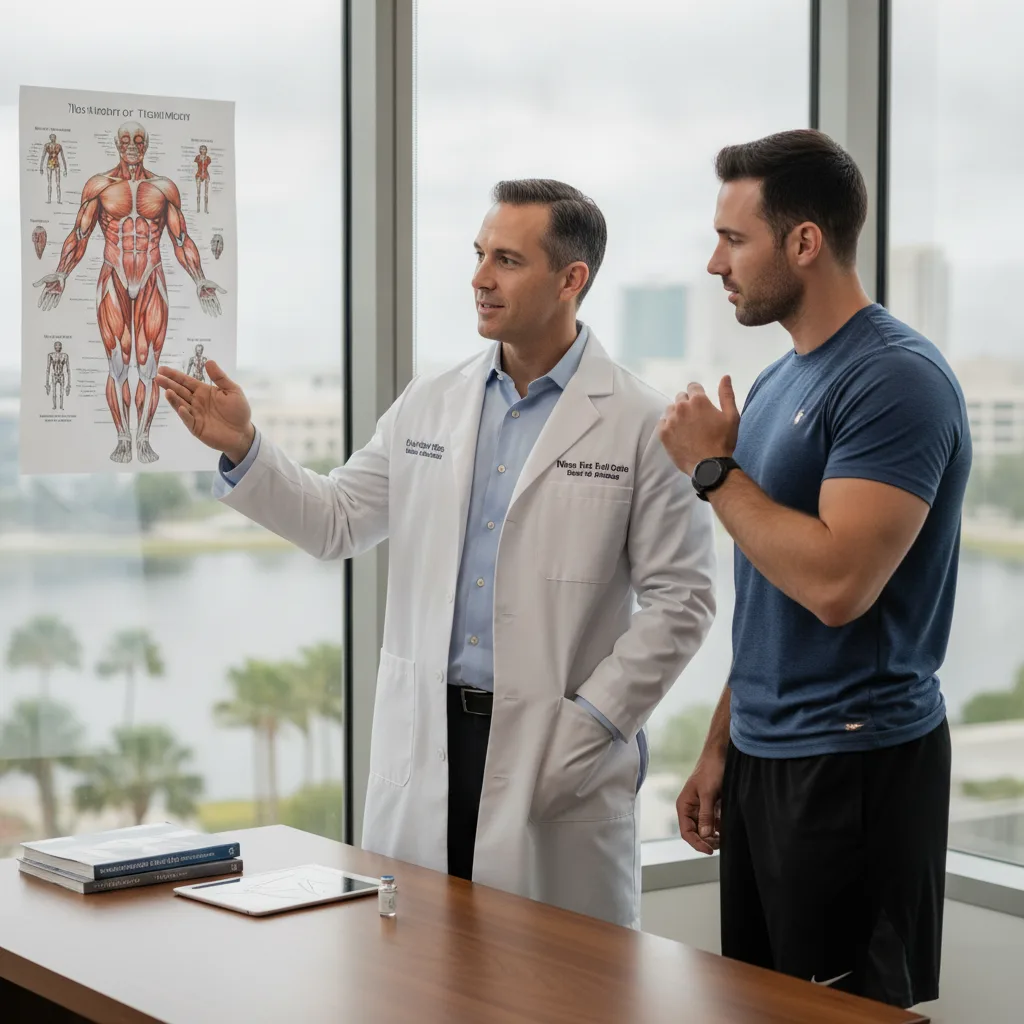
What to Expect During Your First Visit in Orlando
You walk in without a clipboard stack or a long wait in a cold room. We keep your first visit simple because you’ve probably been thinking about this for a while already.
The first thing we do is sit down and talk. We don’t rush through a checklist. We want to hear what’s going on with your energy, your workouts, your sleep, your drive. Most guys who come to us from the Lake Nona or Millenia area say the same thing: “I just don’t feel like myself anymore.” That’s the kind of detail that matters to us clinically.
Your Lab Work Comes First
Before we ever discuss testosterone therapy, we need your numbers. A board-certified physician reviews every case here in Orlando, with no exceptions. Your initial labs typically include:
- Total and free testosterone levels
- Complete metabolic panel and CBC
- Thyroid function markers
- Insulin and glucose levels
- PSA screening when appropriate
We see this every week: a guy comes in convinced his testosterone is rock bottom. Sometimes it is. But sometimes the real issue is insulin instability or thyroid dysfunction dragging everything down. That’s why labs aren’t optional; they are the foundation.
Once your results come back, the physician sits with you again. Not a tech. Not a coordinator. The doctor. We walk through each number. We explain what it means in plain language. Then we discuss whether treatment is the right move for you specifically.
Here’s what we won’t do. We won’t push you into something your body doesn’t need. If your labs show a different root cause, we’ll tell you straight. After 18 years in Central Florida, our reputation matters more than one visit.
The whole process takes about an hour. You leave knowing where you stand. If testosterone therapy for muscle mass and energy is the right path, you will have a clear picture of what comes next. You’ll know how we monitor your progress and when to expect a difference. Most guys tell us they wish they’d come in sooner.
Wondering if it’s time to find out where your levels are? Give us a call.
How Personalized Treatment Plans Are Built and Delivered
No two patients walk through our door with the same hormone profile. That’s why we don’t hand out cookie-cutter protocols.
Every treatment plan starts with lab work. We draw blood and run a full panel that goes well beyond just total testosterone. We’re looking at free testosterone, estradiol, SHBG, hemoglobin, hematocrit, PSA, metabolic markers, and thyroid function. The full picture matters because a number on one lab doesn’t tell the whole story. We see this every week. A guy comes in thinking his testosterone is “probably a little low.” The labs often reveal it’s low, along with two or three other markers nobody ever checked.
Once results come back, here’s how we build your plan:
- Our board-certified physician reviews every lab value and your symptom history during a one-on-one consultation.
- We identify the root drivers of your fatigue, muscle loss, or low energy. This often involves testosterone alone, or insulin instability may be compounding the issue.
- We determine the right delivery method and dosing schedule based on your bloodwork, body composition, and lifestyle.
- We set a follow-up timeline. Most patients get rechecked at 6 to 8 weeks. This allows us to adjust dosing before anything drifts off course.
- Ongoing monitoring continues as long as you’re on therapy. Labs don’t stop after the first round.
This isn’t a “set it and forget it” situation. Your body changes, stress levels shift, and sleep patterns evolve. Your protocol needs to keep pace with all of it. We adjust dosing based on real data, not guesswork.
Wondering if your current provider is tracking your progress? That’s a question we hear constantly from patients. Many come from areas like Lake Nona and across Orlando. They’ve tried testosterone therapy elsewhere and felt ignored after the first visit. With over 18 years in Central Florida, our physician-led team monitors patients like family. Your follow-ups aren’t optional; they’re built into the plan from day one.
The goal is measurable change you can feel in the gym and in your daily life.

Tracking Progress Through OngoingLab Monitoring
You can’t manage what you don’t measure. That’s something we tell patients who walk through our doors in Orlando. It is especially true with testosterone therapy.
Your initial labs give us a starting point. But the real story unfolds over time. We track specific markers at regular intervals to confirm your body is responding as it should. We don’t guess or hope; we measure.
What We Monitor and Why
Every follow-up panel checks more than just testosterone levels. We look at a full picture that includes:
- Free and total testosterone to confirm your levels are in the right range
- Hematocrit and hemoglobin to watch red blood cell production
- Estradiol levels. Testosterone can convert to estrogen if left unchecked.
- PSA for prostate health screening
- Metabolic markers like fasting glucose and insulin
Often, we catch a needed adjustment in the labs before a patient ever feels a symptom. That’s the whole point of monitoring. We stay ahead of problems instead of reacting to them.
Here’s something most clinics won’t tell you. Your numbers at week six will look different from your numbers at month four. Hormones don’t stabilize overnight; they shift as your body adapts. A board-certified physician reviews every result and adjusts your protocol. There is no cookie-cutter approach.
We see patients near Lake Nona and across Orlando. They came to us after trying testosterone therapy elsewhere with zero follow-up labs. They had no idea their hematocrit was climbing or their estrogen was elevated. That’s not safe medicine.
According to the American Urological Association, ongoing lab monitoring is a standard requirement for patients on testosterone therapy. We don’t skip that step, ever.
Your labs also help us connect the dots between how you feel and what’s happening inside. More energy at the gym? We can see why in your bloodwork. Still dragging by 2 p.m.? The numbers tell us where to look. This is how real progress happens, one data point at a time, with a physician guiding every decision.
Book Your Consultation
Frequently Asked Questions
What happens during my first testosterone therapy visit in Orlando?
Your first visit starts with a conversation, not a clipboard stack. We sit down and ask about your energy, workouts, sleep, and drive before anything else. Then we draw labs to check total and free testosterone, thyroid markers, insulin, and a full metabolic panel. A board-certified physician reviews your results with you in plain language. Guys from Lake Nona and Millenia often tell us the same thing: “I just don’t feel like myself.” That’s exactly what we’re listening for.
How long does it take to see results from testosterone therapy?
Most men notice changes in energy within a few weeks, with muscle and body composition shifts taking longer. Our testosterone therapy results timeline breaks down what changes first, second, and last. Early wins are usually better focus and less afternoon fatigue. Strength and lean mass improvements build over months, especially if you’re still training. Recovery time between workouts often improves before you see the mirror change. We track your labs along the way so adjustments happen based on numbers, not guesswork.
How do I know if my symptoms are low testosterone or something else?
You won’t know for certain without bloodwork, and that’s why we don’t skip it. Fatigue, brain fog, and stalled muscle gains can come from thyroid issues, insulin instability, or poor sleep instead of low testosterone. We’ve seen guys near Dr. Phillips convinced their testosterone was the problem, only to find their thyroid was the real culprit. A full panel sorts out what’s actually driving your symptoms before we talk treatment. Read more about the conditions that can look like low testosterone.
Can I still build muscle if I’m already training and not seeing results?
Yes, low testosterone can stall muscle gains even when your training and diet haven’t changed. This is one of the most common patterns we see in our Orlando office. Your body shifts from burning fat to storing it, and muscle stops responding to the same workouts. Once your levels are corrected under physician supervision, most men find their training starts paying off again the way it used to.
Does a normal testosterone lab result mean therapy isn’t right for me?
Not necessarily, because reference ranges are broad and don’t account for how you feel. A 35-year-old with a testosterone level that falls in the “normal” range can still feel exhausted and flat. That’s why a physician reviews your full picture, not just one number on a page. Context, symptoms, and metabolic markers together tell us more than a single lab value ever could.