
Home » Testosterone Replacement Therapy in Lake Mary | Svelte Medical Weight Loss – Lake Mary
Testosterone Replacement Therapy in Lake Mary | Svelte Medical Weight Loss – Lake Mary
Symptoms That Signal Low Testosterone in Active Men

You’re still hitting the gym. Still showing up for your kids’ games at the fields near Lake Mary Boulevard. But something feels off, and you can’t quite name it.
Low testosterone doesn’t always announce itself. It often creeps in slowly. Most men we see in Lake Mary have been dealing with symptoms for a year or more. They come to us before understanding why they feel unwell.
We hear a version of the same story every week. Many men in their late 30s or 40s tell us they thought they were just getting older. They figured fatigue came from work stress. Brain fog was from poor sleep. Weight gain around their midsection was from skipping a few workouts. But when you stack all those things together, the picture changes.
Here are the signs we ask about most often during a consultation:
- Persistent fatigue that sleep doesn’t fix
- Losing muscle even though your training hasn’t changed
- Low motivation or a flat mood that won’t lift
- Decreased sex drive or difficulty with performance
- Trouble concentrating at work or forgetting things you normally wouldn’t
Not sure if what you’re feeling counts? That’s common. Most men don’t connect the dots. Each symptom on its own often seems minor. Testosterone affects nearly every system in your body. The American Urological Association generally defines low testosterone as a total level below 300 ng/dL. Plenty of men with levels in the low-normal range still feel the effects.
Here’s what catches many men off guard. You can be active, eat reasonably well, and still have declining testosterone. Exercise helps, but it cannot override biology. Testosterone production naturally drops. It declines about one percent per year after age 30. For some men, that decline is steeper.
The men we see aren’t lazy. They’re frustrated because effort isn’t producing results anymore. If that sounds familiar, a simple blood panel can give us real answers instead of guesswork.

Why a "Normal" Lab Result Does Not Always Rule Out Treatment
We talk about this almost every day in our Lake Mary clinic. A man comes in holding lab results from his primary care doctor. His numbers show 350 ng/dL. His doctor told him he is “within normal range.” But he still feels terrible.
Consider this. The standard reference range for total testosterone runs roughly 264 to 916 ng/dL. That is a massive spread. A 35-year-old man at 280 is technically “normal.” He is functioning at the level of someone decades older. The number on the page doesn’t tell the whole story. The symptoms do.

What the Lab Range Misses
Reference ranges are built from population averages. They include men in their 80s. Your result might fall “within range” but still be far below where your body needs to be. We see this pattern constantly. Many men in the Heathrow area and across Lake Mary have been told nothing is wrong.
Several factors can make a “normal” result misleading:
- Total testosterone doesn’t reflect how much free testosterone is actually available to your cells
- SHBG (sex hormone-binding globulin) can bind up testosterone so your body can’t use it
- Lab draws done in the afternoon often show lower levels than morning draws
- Symptoms like fatigue, brain fog, and low drive can start well before levels hit the clinical “low” threshold
That is why we don’t just glance at one number and make a decision. We run a full hormone panel. This includes free testosterone, total testosterone, SHBG, estradiol, thyroid markers, and metabolic indicators. We look at the whole picture.
Not sure if your levels are where they should be? That is the most common reason men schedule a consultation with us.
Your body is giving you signals. If you are dragging through your days, losing muscle you used to keep easily, or noticing changes in mood that don’t make sense, a single lab value should not be the final word. We look at your symptoms alongside your bloodwork. That is how testosterone replacement therapy decisions should be made. These decisions require real medical supervision and context that matters. Reviewing the FDA Testosterone Safety Information can help you understand what regulators require of approved testosterone products and what patients should know before starting treatment.
What the TRT Process Looks Like From First Visit to First Dose
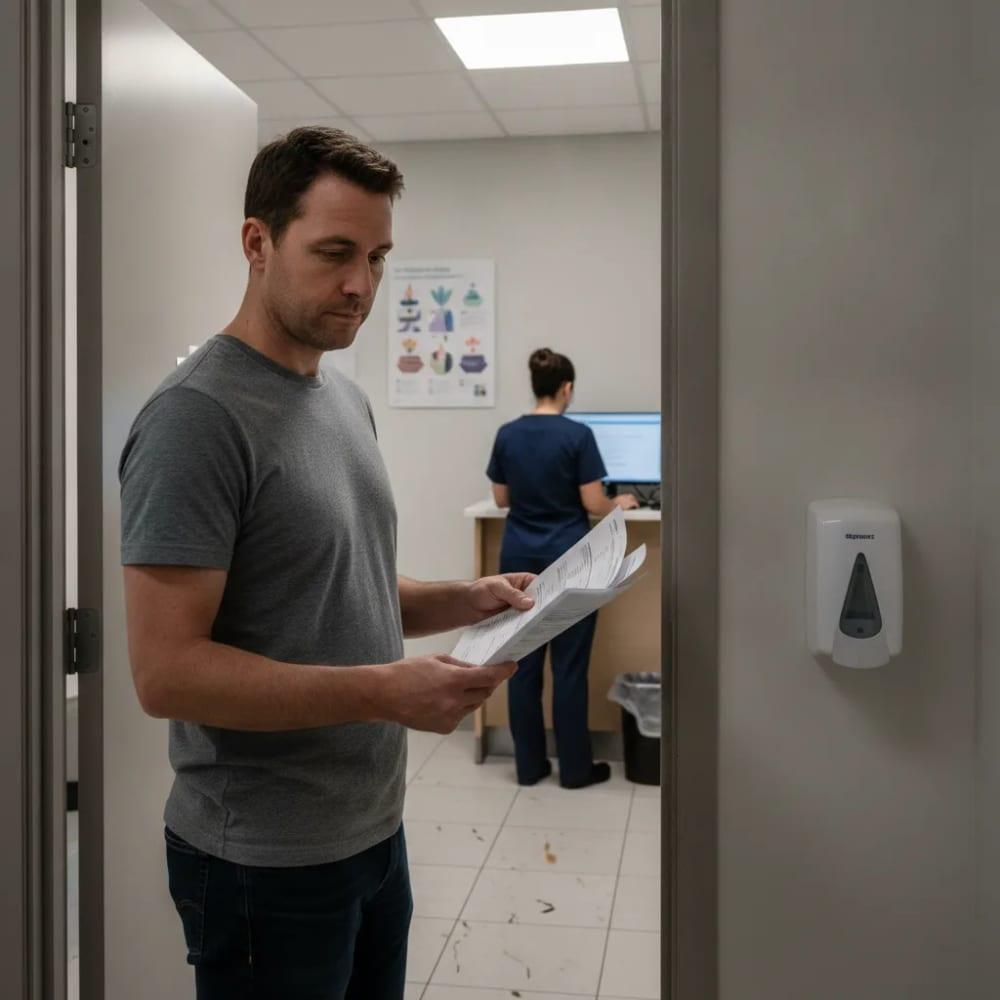
You’ve made the appointment. Now what? We get that question constantly. Here is how it works when you walk into our Lake Mary clinic.
The process is straightforward. No mystery, no runaround.
- Initial consultation and blood draw. We sit down with you. We discuss your symptoms, health history, and current concerns. Then we order a full hormone panel. We test more than just total testosterone. We check free testosterone, estradiol, SHBG, CBC, metabolic markers, and thyroid levels. A complete picture helps us understand your health.
- Lab review and diagnosis. Once results come back, typically within a few days, we schedule a follow-up. We walk through every number with you. If your levels confirm low testosterone, we discuss what that means for your body. We also explain what treatment can do.
- Treatment plan and protocol selection. We build a protocol based on your labs, your symptoms, and your goals. This includes injections, creams, or pellets. We decide on dosing frequency and supporting medications if needed. You will understand every part of it before we move forward.
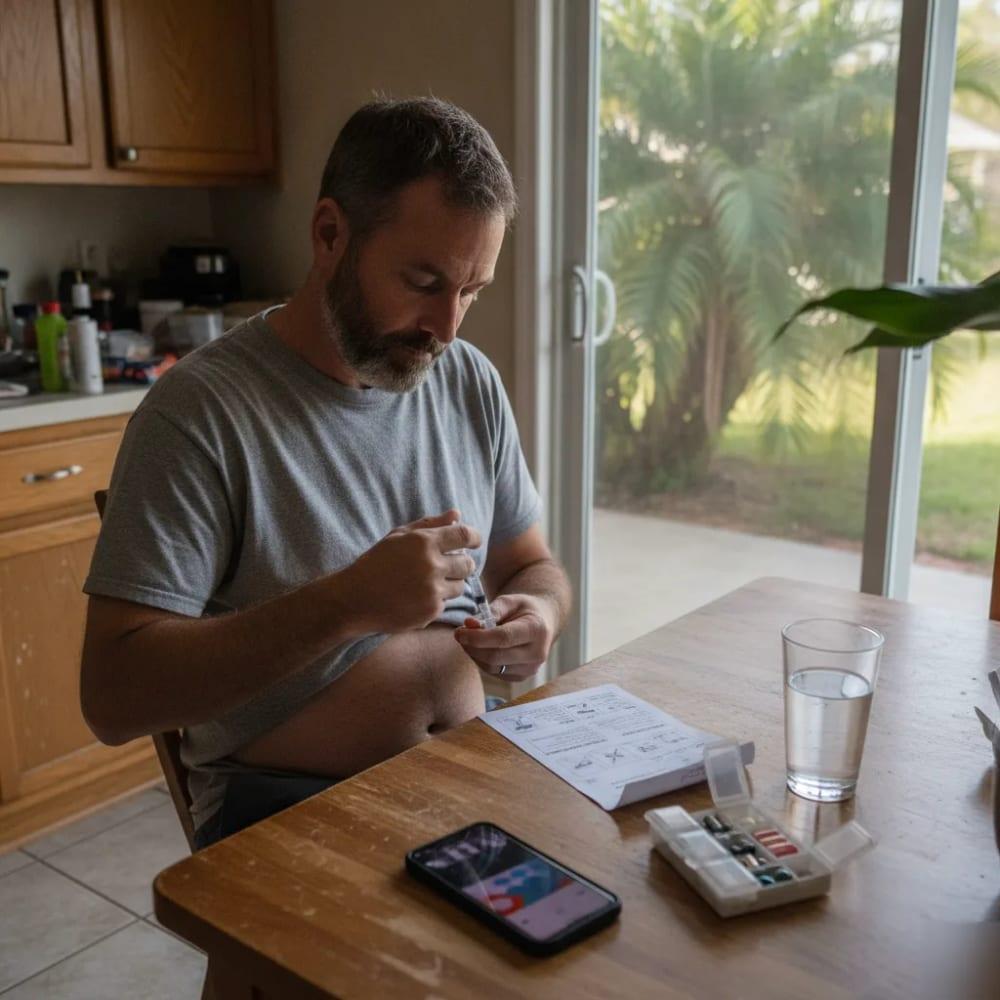
- First dose under medical supervision. Your first administration happens in our office. We show you proper injection technique if you choose to self-inject at home. We answer every question. We also schedule your first follow-up labs, typically at the 6-to-8-week mark.
Guys tell us the hardest part was just picking up the phone. The actual process? Simple.
One thing we won’t do is rush you onto a protocol without proper bloodwork. We see men come in from other clinics near the Timacuan area who started testosterone without baseline labs. Responsible medical practice requires thorough baseline testing. Clinical guidelines call for at least two separate morning blood draws confirming low testosterone before treatment begins.
The good news is that most men complete this entire process, from first visit to first dose, within about two weeks. You won’t wait months or jump through hoops. You will get answers and a clear plan, fast.
Choosing the Right Delivery Method for a Florida Lifestyle
Most men walk in thinking there is only one way to do testosterone replacement therapy: injections. That is what they have heard about from a buddy or seen online. There are several delivery methods. The right one depends on how you live your daily life here in Lake Mary.
We talk through every option during your consultation. Here’s what we see most often:
- Weekly or biweekly injections: This is the most common method. You can do these at home once we teach you, or come into the clinic. Injections offer consistent levels, low cost, and are very effective.
- Topical gels or creams: These are applied daily to the skin. They are good for men who prefer to avoid needles. You do need to be careful about skin-to-skin transfer with partners or kids.
- Subcutaneous pellets: Small pellets are placed under the skin every three to six months. This offers a ‘set it and forget it’ convenience. It is popular with patients who travel a lot or prefer not to think about daily dosing.
In Florida, specific considerations apply. If you are outdoors constantly, sweating through your shirt by 10 a.m., topical gels can be tricky. Topical gels absorb through the skin. Heavy sweating may reduce how much actually gets into your system. We discuss this with almost every patient near the Timacuan area. This includes those who spend weekends on the golf course or running trails around the lake.
The delivery method someone starts with isn’t always the one they would’ve picked on their own.
The conversation matters. We look at your schedule, your activity level, and your comfort with self-administration. We also factor in your lab results. Some men absorb topicals poorly due to body composition. Others metabolize injections faster than expected. Your physician monitors all of this. They adjust treatment as needed.
Not sure which method fits your life? Schedule a consultation and we’ll walk through it together.
There is no single perfect option. There is one that keeps your levels stable. It must also fit the way you actually live. That is what we help you figure out.
Ongoing Monitoring Keeps Your Results on Track
Starting testosterone replacement therapy is only half the equation. The other half is making sure it keeps working the way it should.
We often see this. A patient feels great at the three-month mark. They assume everything is fine and skip their follow-up labs. Then six months later, energy dips again or new symptoms show up. Regular monitoring can almost always prevent this. Your body is not static. It responds to treatment, and its needs shift over time. We stay ahead of those shifts. This helps you avoid losing ground.
What We Track and Why
Follow-up blood work is the backbone of safe testosterone replacement therapy. Here’s what we’re looking at during your monitoring visits:
- Total and free testosterone levels to confirm your dose is right
- Hematocrit and red blood cell count to watch for thickening of the blood
- PSA levels for prostate health screening in men
- Estradiol levels, because testosterone can convert to estrogen and cause unwanted effects
- Metabolic markers like cholesterol and blood sugar that can change with hormone shifts
Standard clinical guidelines recommend lab work at three-to-six-month intervals during the first year of testosterone therapy. We follow that standard closely at our Lake Mary clinic. We do not just glance at numbers. We sit with you. We explain what changed. We adjust your protocol if something is off.
Not sure if your current dose still fits? That is common after the first few months.
Your lifestyle also matters. Sleep patterns, stress, diet, and exercise all influence how your body uses testosterone. Our conversations go beyond lab results. We ask real questions about how you feel day to day. Is brain fog coming back? Are mood swings creeping in? Those details tell us things bloodwork alone cannot.
Patients near the Heathrow area and across Lake Mary count on us for ongoing attention. As a men’s hormone health specialist, we are not a clinic that writes a prescription and disappears. We partner with you to maintain your results for the long run.
Book Your Consultation
Frequently Asked Questions
How long does it take to feel results from TRT in Lake Mary?
Most men notice early changes within 3 to 6 weeks of starting treatment. Energy and mood often shift first. Muscle and body composition changes take longer, usually 3 to 6 months of consistent treatment. Your 6-to-8-week follow-up labs help us confirm your levels are in the right range. Every man responds a little differently, so we adjust your protocol based on real data, not guesswork.
My doctor said my testosterone is normal. Why do I still feel terrible?
A ‘normal‘ lab result does not always mean your levels are right for you. The standard reference range runs from 264 to 916 ng/dL. That spread includes men in their 80s. A man in his late 30s at 300 is technically normal but functioning well below where his body should be. We also check free testosterone and SHBG, which a basic panel often misses. Symptoms matter as much as numbers.
What should I bring to my first TRT consultation at your Lake Mary clinic?
Bring any recent lab work you already have, especially hormone panels or bloodwork from the past 6 to 12 months. A list of current medications and supplements helps too. Most men come in without any prior labs, and that is fine. We order a full hormone panel the same day. The consultation is a conversation, not a test. Just show up ready to talk honestly about how you have been feeling.
Can I self-inject at home, or do I have to come into the clinic every time?
Most men who choose injections do self-inject at home after their first dose. We teach you proper technique during your first visit in our Lake Mary office. It is simpler than most men expect. If injections are not your preference, we also offer creams and pellets. We match the delivery method to your lifestyle and comfort level, not just what is easiest for us to prescribe.
Is TRT safe if I am still active and working out regularly?
Yes, and many active men in Lake Mary are actually the best candidates for TRT. Being active does not protect you from declining testosterone. Levels drop about one percent per year after age 30 regardless of fitness. Treatment is managed with regular bloodwork and medical supervision. We monitor estradiol, red blood cell levels, and other markers to keep everything in a healthy range while you stay active.
How often will I need follow-up labs once I start treatment?
Your first follow-up labs are scheduled at the 6-to-8-week mark after starting treatment. After that, most men come in every 3 to 6 months depending on how stable their levels are. We do not just check testosterone. We monitor a full panel each time. This is how we catch small issues before they become bigger ones and keep your protocol dialed in over time.