
Home » Anti-Aging Hormone Therapy for Men in Lake Mary | Svelte Medical Weight Loss – Lake Mary
Anti-Aging Hormone Therapy for Men in Lake Mary | Svelte Medical Weight Loss - Lake Mary
When You Need to Know: The Signs YourHormones are Declining

You’re going to bed for eight hours every night and still waking up exhausted. You’re going to the gym but it seems like nothing changes. It’s harder to focus at work and you find yourself snapping at your kids at home. It’s often how men we see in Lake Mary start describing their situation before they ever bring up the word “testosterone.”
Men don’t usually suffer from hormone decline. Hormone decline creeps up on men. It’s one percent per year, starting at 30, as stated by the American Urological Association, and that’s why so many men attribute those symptoms to aging or stress. Men often don’t realize it’s a tangible and treatable condition that they’re feeling.
Here are the symptoms men report most frequently with us:
- Tiredness or fatigue that cannot be fixed by eating or sleeping better.
- Loss of muscle or increase in belly fat.
- Low libido or change of performance.
- Difficulty concentrating and brain fog and changes in memory.
- Decreased mood or general lack of feeling “normal.”
Have you experienced any of this before? You are definitely not the first or the only one of these symptoms. We see patients every week for 3 or 4 of these conditions and sometimes more. They think it’s stress, or maybe they think it’s depression. They think they need to eat better. And sure, lifestyle matters. But when your hormones are in such an imbalanced state, even the meal plan isn’t going to fix those levels.
This is just one thing to understand. The same symptoms can apply to men suffering from other conditions such as thyroid disorders or sleep apnea. We never diagnose without lab work. We will order a blood test first for every patient. A simple blood test gives you the exact reading of your hormone levels and removes any speculation from the discussion.
If you’re ignoring these symptoms because you’ve convinced yourself it’s just part of getting older, that’s the story we hear from men all around Heathrow and Lake Mary most often. As a men’s health physician serving Lake Mary, we make getting your hormone levels checked out a simple first step to a better tomorrow.
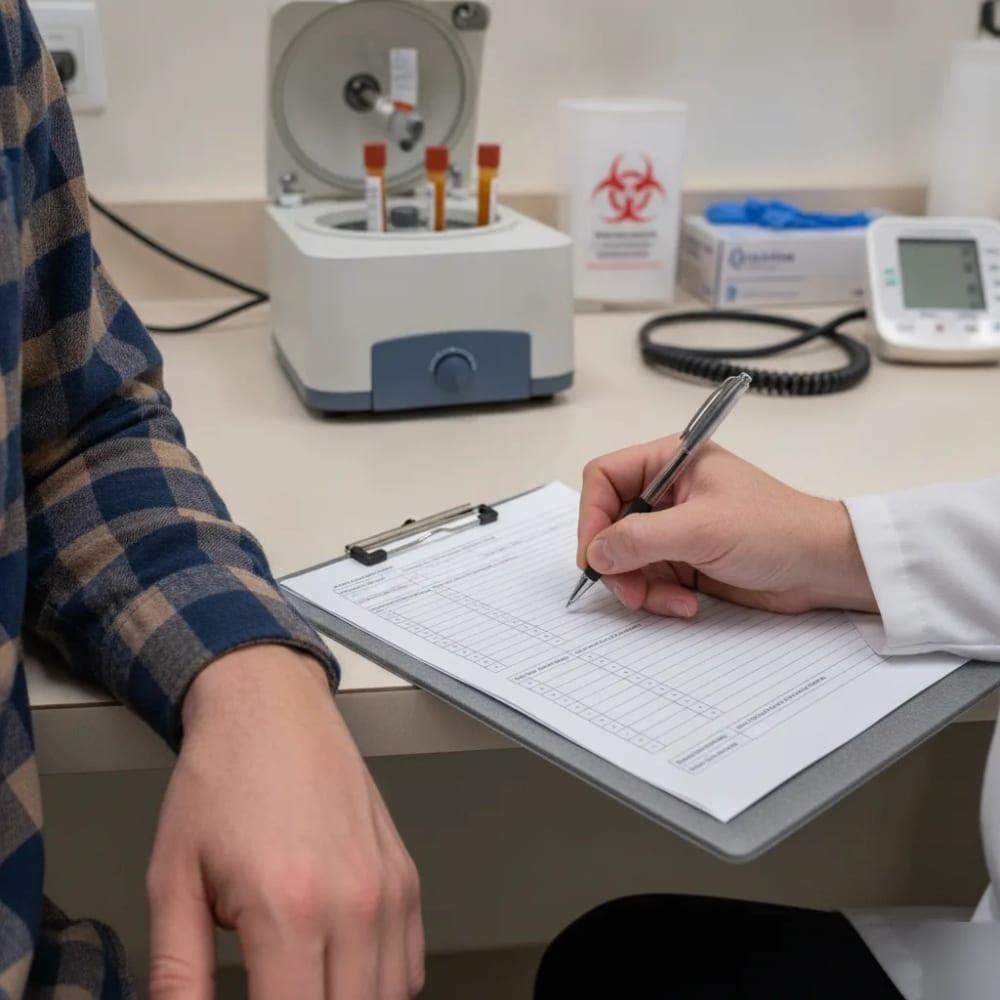
What Hormone Therapy forMen Involves Exactly
There’s an incredible amount of confusion about hormone therapy. So let’s clear that up. Hormone therapy is a medical protocol monitored by physicians where your hormone levels are brought back to normal. They are not returned to where they were when you were in your 20s, but rather at what level they need to be at for you to feel yourself.
The first step is your blood work, and that isn’t optional.
Our blood work includes a panel, not just a total testosterone test. We’re looking at free testosterone, estradiol, DHEA, thyroid and metabolic markers. The big picture. That information allows you and your provider to know exactly where to go next with your care. Without that kind of information, any plan of care is a shot in the dark, and we don’t do shots in the dark with your health.
What Comes After Your Labs
The path forward with your care will look something like this after your results are in:
- You sit down with a provider to go through all of the markers in your panel as well as what you are experiencing from week-to-week.
- We develop a custom treatment protocol from your labs, symptoms, and goals. This might include TRT, peptide therapy or some combination thereof.
- You start treatment and have follow-up lab work scheduled every X weeks as your body is adjusting and responds to the intervention.
- Protocol adjustments will be made on results. Not on the calendar. Not one size fits all protocols.
When most men come to our Lake Mary clinic, they assume they will be treated with a treatment protocol and walk away with a prescription. But that’s not what we provide, nor is what we want you to walk away with. We provide a plan and a protocol that works for your body and your body specifically.
We see this every week, too. A man may come in with the mindset that he needs testosterone replacement, but his labs may tell a totally different story. Perhaps testosterone is in range, but thyroid hormone is the thing slowing him down. Or his estrogen conversion is off. Until you test, you just don’t know. That is why the testing and diagnostics process is so important.
The treatment methods can look totally different depending on the man you’re looking to help. We might prescribe once a week injections, but others have great results with creams or implants. We discuss everything with the men that come in at the beginning of the journey so they really get it and are okay with the treatment plan moving forward.
Testing, Evaluation and Diagnostic:What We Test for
You cannot treat what you do not test. That is the premise behind each and every patient who walks through our doors in Lake Mary.
We start with a complete blood panel. Not the basic blood work you do for a regular, annual physical with your PCP. We dig much deeper. Specifically, our focus is on the blood markers that really tell you what is happening from a hormone perspective as well as other metabolic markers that might influence how you are feeling each day. Most men will be shocked at what the thorough blood work really shows.
What We Test For And Why It Matters
Here is a list of all that we will measure from your very first visit:
- Total and free testosterone: Total gives you a complete view of testosterone. Free tells you the percentage that your body can access and use.
- Estradiol (E2): Yes, men have estrogen, too. And having estrogen out of range can wreak havoc.
- SHBG (sex hormone binding globulin): This is a protein that binds to your testosterone and might lead you to believe your levels are in a “normal” range when you could still be symptomatic.
- PSA and CBC: Safety markers that we need to look at before and during any treatment.
- Thyroid function and metabolic labs: Because fatigue and weight gain aren’t always only about testosterone.
We see this almost weekly. A patient brings in lab results from elsewhere with “normal” testosterone levels, yet no one measured his free testosterone or his SHBG. His total test looked okay, but his body had no way of accessing it. That’s why those details matter.
Outside of lab values, we also conduct a clinical assessment. We want to understand your sleep patterns, daily energy cycles, mood, and any shifts in body composition. Lab results without context aren’t much help; a man might be perfectly healthy at 450 ng/dL, while another man needs higher levels. It all depends on clinical signs and history.
We don’t rush this phase. Our doctors near Timacuan take the time to go over your numbers one by one with you. You will learn what each value indicates, how it relates to your experience, and where you stand moving forward. No assumptions. No generic interpretations. Just straightforward clarity to help us create a personalized protocol.
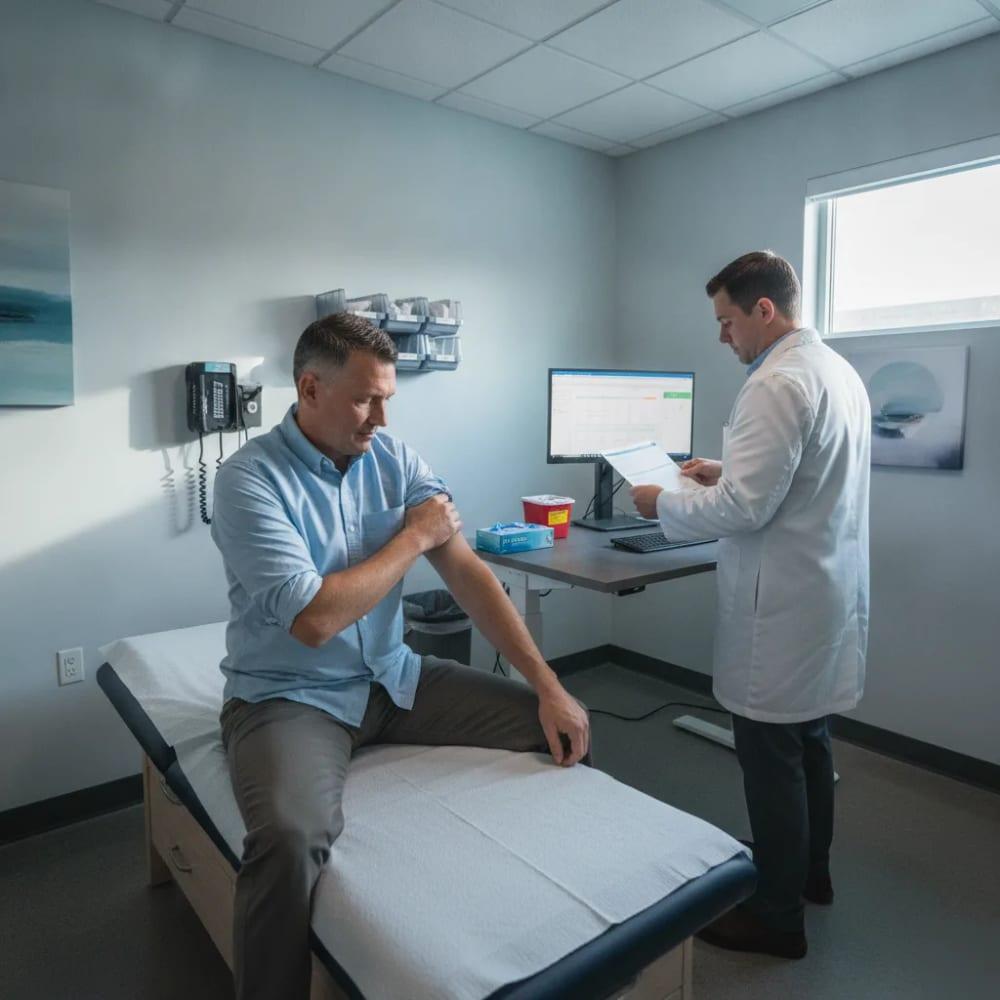
How Long It Takes to See Results, A Realistic Timeline by Symptom
We hear this question first, almost every time: “How long until I feel like myself again?” It is a valid inquiry. You are making an active decision to pursue TRT, and you deserve a sense of what lies ahead.
Here is the simple, honest response: it varies by symptom. Some aspects improve quickly. Others require more time. We cover this thoroughly with all our clients at our Lake Mary location because setting realistic expectations is key to success.
Symptoms and When They Respond
- Energy and mood (weeks 2-4): Typically the first noticeable change. You begin waking up with a lighter sense of mental fog, and your drive begins to return. At first it may seem minor, but after a few days you suddenly realize you didn’t need a third cup of coffee to get through the afternoon.
- Sleep quality (weeks 3-6): Patients in the Heathrow area frequently report sleeping more soundly and avoiding multiple nighttime awakenings. We consistently hear this feedback from men who have struggled with sleep for years.
- Sexual desire and performance (weeks 4-8): Libido often returns slowly. Some patients note changes within three weeks, but the majority observe a noticeable shift around the six-week mark.
- Body recomposition (months 2-4): Muscle and fat shifts require additional time since you are rebuilding tissue. While you won’t appear entirely different to others, by month three you may notice that some of your clothes feel looser.
- Mental acuity and concentration (months 2-5): Cognitive clarity is a real outcome, though slower than emotional improvements. The Endocrine Society states that testosterone can take up to 12 weeks to visibly impact mood and cognitive function.
The men who feel discouraged by week two often become our most satisfied by month three.
Throughout this journey, we keep a close watch on your lab results, making fine-tuned adjustments whenever needed to outcomes. You’ll notice we never guarantee you’ll wake up at 25 in just two weeks, as hormone replacement therapy isn’t a switch flipped. What we can say with certainty: the majority of men across Lake Mary who remain committed to their customized regimens experience significant, sustained relief from their symptoms within three months of beginning care. Progress isn’t an instant flip but rather a gradual curve. Still, once it kicks in, there’s no mistaking the results.
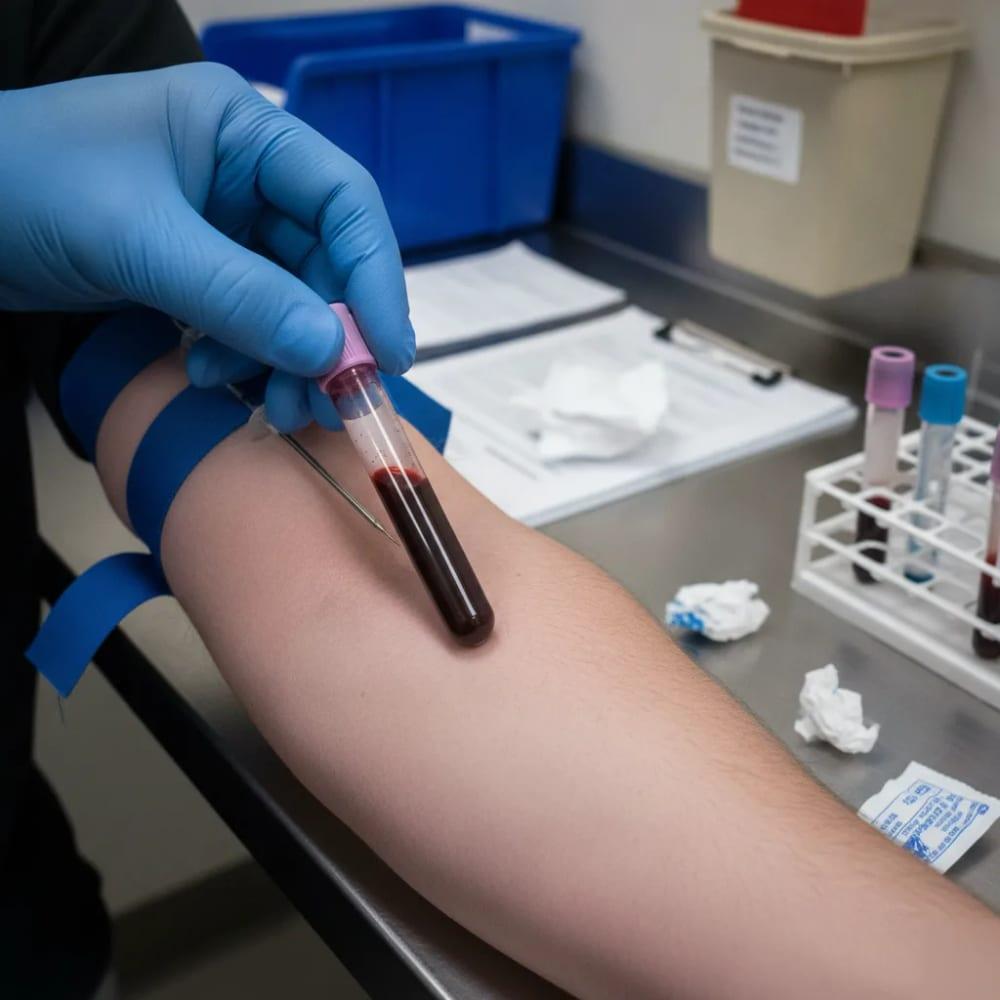
Consistent Lab Monitoring: The Heartof the Entire Treatment Journey
Getting started on hormone therapy is the straightforward piece. What demands real attention and ongoing focus is ensuring your dosages and protocols continue working effectively over the coming months and years. In our Lake Mary clinic, we regularly encounter this scenario. A patient shows up after a few weeks of therapy feeling revitalized, back to sleep well, restored energy. He assumes the hard work is done, that his regimen has found its sweet spot. Yet hormone levels and their impact on physiology naturally evolve, and without diligent follow-up testing, you may unknowingly slip below or above your therapeutic window.
That’s why all our patients receive routine blood work. It’s baked into every treatment plan from the start. Blood tests are usually scheduled at these intervals following the initiation of treatment:
- A six- to eight-week follow-up panel to gauge initial therapeutic response.
- A repeat testing session at three months to evaluate how well your hormone levels have stabilized within target range.
- Periodic bloodwork checks every three to six months, tailored to your individual progress and reported symptoms.

Book Your Consultation
Frequently Asked Questions
How long does it take to feel results from hormone therapy in Lake Mary?
Most men notice early changes within 4 to 6 weeks of starting treatment. Energy usually improves first, followed by mood and focus. Muscle and body composition changes take longer — often 3 to 6 months. Your follow-up labs guide every adjustment we make. We never change your protocol based on a calendar date alone. We change it based on what your blood work and symptoms are actually telling us.
Do I need a referral from my regular doctor to get started?
No referral is needed to book an appointment at our Lake Mary clinic. You can come in directly. Many men we see have already mentioned their symptoms to their primary care doctor and were told their levels looked “normal.” A standard physical does not include the detailed hormone panel we run. Free testosterone, estradiol, SHBG, and thyroid markers are not part of a routine annual blood draw.
What should I expect at my first visit?
Your first visit starts with a full blood panel — not a quick finger stick. You will also sit down with a provider to talk through your symptoms in detail. Nothing is prescribed at that first appointment. We review your results together and then build a treatment plan around your specific labs and goals. Plan for about an hour. Bring a list of any current medications or supplements you are taking. Read our full guide on what to expect at your first visit.
Can low testosterone symptoms look like something else entirely?
Yes, and this happens often. Thyroid disorders, sleep apnea, and high estrogen conversion can all cause the same fatigue, brain fog, and mood changes that men associate with low testosterone. That is exactly why we test a full panel before recommending anything. We have seen men come in convinced they needed testosterone replacement, only to find out their thyroid was the real issue. Testing removes the guesswork. Learn more about the conditions that mimic low testosterone symptoms.
Is hormone therapy in Lake Mary something I have to stay on forever?
Not always, but it depends on your situation. Some men use hormone therapy to restore levels during a specific period of decline and then maintain with lifestyle changes. Others stay on a long-term protocol because their bodies simply do not produce enough on their own. We have this conversation openly with every patient in Lake Mary from the start. Your treatment plan is reviewed regularly, and nothing is set in stone.
What is the difference between total testosterone and free testosterone, and why does it matter?
Total testosterone measures everything in your blood. Free testosterone measures what your body can actually use. You can have a total number that looks fine on paper but still feel every symptom of low testosterone. SHBG, a binding protein, can lock up your testosterone and make it unavailable. If your doctor only checked total testosterone, you may have gotten an incomplete picture of what is really going on.
Ready for a Svelte transformation?
Take the first step toward better health and metabolic stability today.
Our team is here to support you.