
Home » What Should I Bring to My First Low Testosterone Appointment? A Guide for Orlando Patients
What Should I Bring to My First Low Testosterone Appointment? A Guide for Orlando Patients
Why a Single Blood Test Rarely Confirms Low Testosterone
One blood test rarely tells the full story on testosterone. Levels swing throughout the day and can dip low from poor sleep, stress, or illness. Most doctors want two morning draws, on separate days, before confirming anything.
Testosterone doesn’t sit at one number all day. It peaks early morning and drops as the day goes on. A level drawn at 8 a.m. can look nothing like one drawn at 4 p.m., same man, same day. Timing matters before you even walk into the clinic.
The American Urological Association recommends confirming low testosterone with at least two separate morning blood draws, not one. A single low number could mean low testosterone. It could also mean a rough night of sleep, a bad cold, or a stressful week at work. Illness, poor sleep, even recent weight changes can temporarily suppress testosterone.
We see this a lot in practice. A patient gets one test done at a random walk-in lab, the number comes back low, and now they’re convinced something is seriously wrong. Sometimes it’s true. Often it’s not the full picture yet.
- Morning draws only, testosterone is highest between 7 and 10 a.m. and testing later skews results low
- Two separate days, one low reading isn’t enough to confirm anything on its own
- Fasting status, some panels ask you to avoid food for several hours beforehand
- Recent illness or poor sleep, either one can temporarily crash your numbers
- Medication timing, certain drugs affect hormone levels and should be noted before your draw
So what does this mean for your first appointment? Don’t panic over one number. And don’t assume you’re finished after one draw either. Ask your provider directly if a repeat test is needed and when. Bring your first results if you already have them, that history matters more than most patients realize.
Symptoms matter just as much as the number on the page. A man with a borderline-low level and clear symptoms, fatigue, low sex drive, muscle loss, often gets treated differently than a man with the same number and no symptoms at all. The lab value alone never tells the whole story.
This is exactly the kind of nuance that gets missed at quick urgent-care visits or online-only testosterone services.
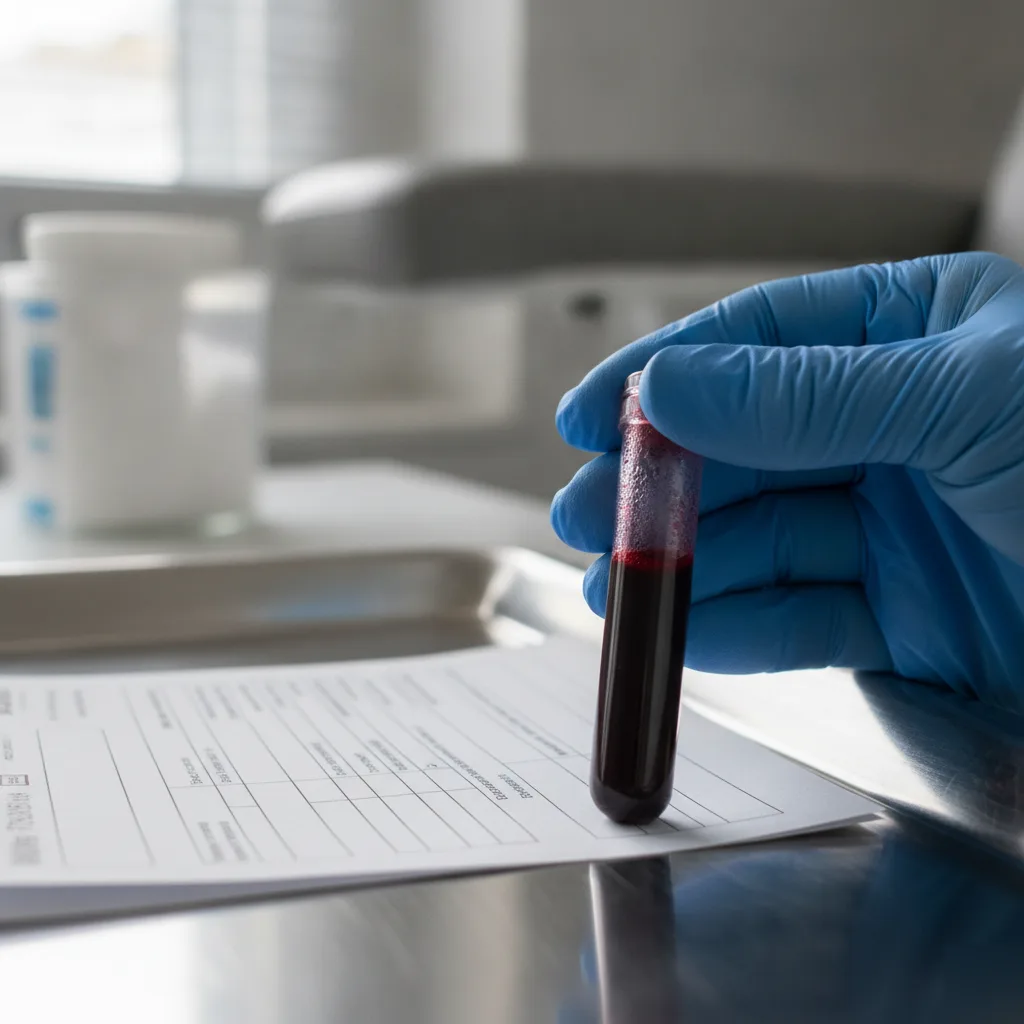
The Documents and Records Worth Bringing
Paperwork isn’t glamorous. But it changes what happens in that first visit. We’ve seen two versions of this appointment play out hundreds of times. One patient walks in with old labs, a med list, and a rough symptom timeline. The other walks in empty-handed. The first patient usually leaves with a real plan. The second usually leaves with an order for more bloodwork and a follow-up date.
So what helps? Recent bloodwork matters most, if you have it. A total testosterone level drawn within the last six to twelve months gives your provider a starting point instead of a guess.
- Any recent lab results, especially total and free testosterone, PSA, and a complete blood count
- A current medication and supplement list, including dosages
- Your primary care physician’s name and contact info, in case records need to be requested
- A short written timeline of symptoms, when they started and how they’ve changed
- Insurance card and photo ID, even for a cash-pay or membership visit
Don’t have old labs? That’s fine. Most men walk in without them, and a board-certified physician will simply order fresh bloodwork on the spot. But if you’ve had testosterone checked at an urgent care or through a primary care visit sometime in the last year, that number matters. It saves you a draw and gives the doctor a trend line instead of one data point.
A family history summary helps too, especially anything involving prostate cancer, heart disease, or blood clots. These aren’t disqualifiers. They’re context. A physician managing your care needs the full picture before writing a treatment plan, not after.
One more thing worth bringing: a list of past treatments you’ve tried, even ones that failed. Testosterone gels that irritated your skin. Supplements that did nothing. This history shapes what gets recommended next.
If you’re ready to turn that paperwork into an actual plan, our low testosterone treatment program in Dr. Phillips is built around lab-confirmed diagnosis and physician oversight at every step, not guesswork.
Bring what you have. Skip what you don’t. The goal isn’t a perfect folder, it’s a clearer conversation.

What Tests Typically Happen at a First Low T Visit
Your first visit isn’t just a conversation. It’s a full check under the hood. Most patients walk in expecting a quick chat and a prescription. That’s not how it works, and it shouldn’t be. A real diagnosis needs real numbers.
Blood work sits at the center of everything. Timing matters more than most people realize. Testosterone follows a daily rhythm, it peaks in the morning and drops by evening. That’s why most Orlando clinics, including ours, ask patients to schedule labs before 10 a.m. A test drawn at 4 p.m. can show artificially low numbers, even in a man with perfectly normal levels.
So what gets checked? Here’s the typical panel we run on a new patient.
- Total testosterone and free testosterone, drawn on two separate mornings to confirm the pattern
- Luteinizing hormone and follicle-stimulating hormone, which show whether the signal is coming from the brain or the testes
- Estradiol, since testosterone converts to estrogen and imbalance here causes its own symptoms
- Complete blood count and a metabolic panel, to check overall health before starting any treatment
- PSA, a prostate marker required before and during testosterone therapy for men over 40
We also check prolactin and thyroid function on many patients. Low T symptoms overlap with thyroid problems more than people expect. A good doctor rules that out early, not after you’ve already started treatment.
Beyond the lab slip, there’s a physical exam. Nothing invasive, nothing to dread. It usually covers blood pressure, weight, waist measurement, and sometimes a quick check for signs like reduced muscle mass or breast tissue changes, which can point toward hormone imbalance. The physician will ask about sleep, stress, and how your energy has changed over the past year. This part matters just as much as the labs. Numbers tell one story, your daily life tells another, and a physician who’s board-certified knows how to read both together.
One thing we tell every new patient: don’t panic if your first test comes back borderline. Low T diagnosis isn’t based on a single number. It’s the pattern across two mornings, plus your symptoms, plus your exam. We’ve seen men get told they’re fine by a general practitioner after one rushed test, only to find a real deficiency once we repeated it correctly.
This is exactly why lab-based diagnosis matters so much before anyone talks about treatment.
Book Your Consultation
Frequently Asked Questions
What should I bring to my first low testosterone appointment?
Bring any recent bloodwork, a list of current medications, and your primary care doctor’s contact info. Also bring your insurance card, photo ID, and a short written timeline of your symptoms. If you’ve tried treatments before, even ones that failed, write those down too. This paperwork helps your Orlando provider build a real treatment plan instead of starting from scratch on day one.
Do I need to fast before my testosterone blood test in Orlando?
Some panels require fasting for several hours before the draw, so ask your clinic ahead of time. Testosterone testing works best when scheduled before 10 a.m., since levels peak in the morning and drop later. Most Orlando clinics schedule morning draws for this reason. Skipping food when asked keeps your results accurate and avoids a repeat visit.
Is one low testosterone test enough to get a diagnosis?
No, one test rarely confirms low testosterone on its own. The American Urological Association recommends two separate morning blood draws before any diagnosis . A single low number could come from poor sleep, illness, or stress instead of an actual hormone problem. If your first result looks low, expect your provider to ask for a second morning draw before moving forward.
What if I don’t have any old lab results before my appointment?
That’s fine, most men walk in without any prior labs. A board-certified physician will simply order fresh bloodwork on the spot. If you had testosterone checked at an urgent care or primary care visit within the last year, though, bring that result. It saves you a draw and gives your doctor a trend line instead of a single number.
Why do Orlando clinics ask for morning blood draws specifically?
Morning draws give the most accurate testosterone reading because levels peak between 7 and 10 a.m. and drop as the day goes on. A test drawn at 4 p.m. can look artificially low, even in a healthy man. This is why Orlando clinics, including many practicing near Dr. Phillips, schedule new patient labs early. If you’re ready to get an accurate baseline, our low testosterone treatment program in Dr. Phillips follows this same morning-draw protocol for every new patient.
What symptoms should I track before seeing a doctor about low T?
Track fatigue, low sex drive, muscle loss, and mood changes, along with when each one started. Write down whether symptoms have gotten worse, stayed the same, or improved over time. Symptoms matter as much as the lab number itself. A man with borderline-low levels and clear symptoms often gets treated differently than a man with the same number but no symptoms at all.
Ready for a Svelte transformation?
Take the first step toward better health and metabolic stability today.
Our team is here to support you.