
Home » Testosterone Replacement Therapy DR Phillips » Low Testosterone Treatment in Orlando | Svelte Medical Weight Loss – DR Phillips
Low Testosterone Treatment in Orlando | Svelte Medical Weight Loss - DR Phillips
Signs and Causes of Low Testosterone
Most men don’t suddenly realize their testosterone is low. The change is gradual. You might notice yourself dragging through the afternoon. Workouts feel less effective, and sleep doesn’t offer real rest. Over time, your drive might just fade away.
We hear this story regularly from men across Orlando. Many come in believing it’s just stress, aging, or “how things are now.” Yet, once we review the lab results, the numbers often reveal a different picture.
Low testosterone can manifest in unexpected ways. Here are the common signs we observe:
- Constant fatigue that coffee can’t fix
- Loss of muscle mass even when you’re still active
- Increased body fat, especially around the midsection
- Brain fog, poor focus, trouble remembering things
- Low mood or irritability that feels out of character
Many men identify with these symptoms. The American Urological Association reports that about 40 percent of men over 45 experience testosterone levels below the normal range.
What’s Causing It
Age does play a role, with testosterone typically dropping about one percent per year after 30. However, age isn’t the complete explanation. We see men in their 30s and early 40s across Orlando, including those near Lake Nona, presenting with levels usually associated with someone 20 years older.
Poor sleep can greatly reduce testosterone production. Chronic stress also contributes. High-carbohydrate diets lead to insulin spikes, which disrupt hormone balance. When the body remains in sugar-burning mode, insulin stays high, negatively impacting testosterone. Additionally, excess body fat converts testosterone into estrogen through aromatization. For a broader clinical overview of how these factors interact, this overview of low testosterone symptoms and treatment options outlines similar findings.
Often, these factors combine. Sedentary work, processed foods, poor sleep, and weight gain can each negatively affect hormone levels, and together, their impact can be greater.
Once we identify what causes your levels to drop, we can develop a precise plan. This isn’t guesswork. Our approach uses lab work and physician oversight to address the actual cause.
Deciding If Testosterone Treatment Is Right for You
You may have already researched your symptoms online, or perhaps your partner noticed changes first. Regardless, if something feels off and you seek answers, you’re not far from help. Our low testosterone treatment near Bay Hill puts a board-certified physician and a full hormone panel within easy reach.
We tell every patient who visits our Orlando clinic that low testosterone treatment extends beyond merely achieving a number on a lab report. It focuses on your daily well-being. Two men might have identical testosterone levels; one feels good, while the other struggles to get through the afternoon without feeling exhausted. This is a common observation.
To determine if treatment suits you, begin with an honest self-assessment. Consider these questions:
- Has your energy dropped noticeably over the past six months to a year?
- Do you struggle with motivation, focus, or mental sharpness at work?
- Have you gained weight around your midsection despite no real change in diet?
- Is your sleep quality poor even when you’re getting enough hours?
- Has your interest in physical activity or intimacy faded?
If three or more of these questions resonate with you, bloodwork is the appropriate next step. This involves actual lab results reviewed by a board-certified physician, not a guess or a generic supplement.
Symptoms resembling low testosterone can sometimes indicate other conditions, such as thyroid issues, insulin resistance, or depression. For this reason, we require lab tests before recommending any treatment. With over 18 years of experience in Central Florida, we follow a thorough diagnostic process.
Uncertainty about the need for treatment is common. Many men visiting us near the Dr. Phillips area arrive with vague symptoms, knowing only that something has changed. After reviewing their lab results and medical history, the situation often becomes clear quickly.
We do not make the decision for you. Instead, we provide all the necessary information for you to decide with confidence. This includes real data and a thorough conversation, free of pressure or gimmicks. If treatment is appropriate, we will explain the process clearly. If it’s not, we will inform you of that as well. You can always visit our Orlando clinic near Dr. Phillips for a free consultation.

What to Expect at Your First Visit
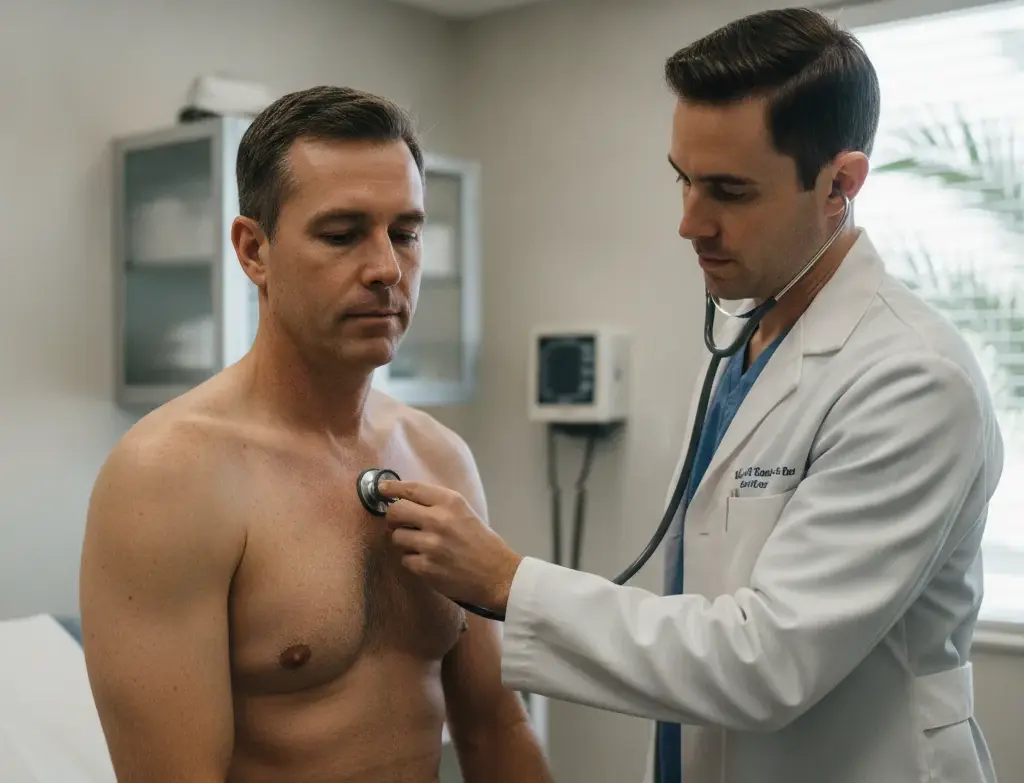
When you arrive, you won’t encounter a stack of clipboards or a long wait in a cold room. We prefer to sit down together and discuss what you’re experiencing.
Your first visit for low testosterone treatment at our Orlando office begins with a detailed discussion. We want to understand your energy levels, sleep patterns, mood, and drive. Many patients from neighborhoods like College Park or Thornton Park have lived with these symptoms for months, or even years. Often, they’ve been told it’s just stress, aging, or “how it is.” We take these concerns seriously.
The Lab Work Comes First
Our process starts with obtaining precise numbers. A board-certified physician, not a technician or sales representative, reviews your bloodwork. We examine your total and free testosterone levels alongside other important markers. This reveals what is truly happening within your body. Here is what this initial workup typically includes:
- A full blood panel, including testosterone, thyroid function, and metabolic markers.
- A one-on-one consultation with our physician to review your symptoms and health history.
- A body composition assessment to establish a clear baseline.
- A frank discussion about treatment options and whether you are a suitable candidate.
Often, a patient arrives convinced something is wrong but unsure of the cause. Their lab results confirm the issue. This clarity is a significant step forward.
We do not pressure patients into treatment if their levels don’t indicate a need. Some men with borderline numbers respond effectively to initial lifestyle adjustments. Others clearly require medical intervention. We provide an honest assessment in every case.
The visit typically lasts about an hour. You leave with a clear understanding of your situation. There is no guesswork or uncertainty. If low testosterone treatment is appropriate, we develop a personalized plan based on your specific lab results and lifestyle. This is not a generic, one-size-fits-all approach.
If you suspect your symptoms are related to low testosterone, your first visit provides answers. Call us to schedule your consultation.

Low Testosterone Treatment in Orlando: The Diagnostic and Treatment Process
Every case begins with bloodwork. We rely on actual lab results showing your total testosterone, free testosterone, and a full metabolic panel, not online quizzes or guesses. These labs are conducted right here in Orlando. We proceed only after thoroughly reviewing your numbers.
We frequently hear patients say, “My doctor told me my levels were normal.” However, “normal” encompasses a broad range. A man in his 30s with a testosterone level of 280 might technically be within the reference range, yet experience significant symptoms. We assess your results within their full context, considering your age, symptoms, and body composition. The numerical value is only one piece of the puzzle.
What the Process Looks Like
This process has been refined over 18 years of treating patients across Central Florida. Our board-certified physician supervises every step, from the initial visit to follow-up labs. Here is an overview of how it works:
- Schedule a consultation. You will meet with our medical team to discuss your experiences, such as fatigue, brain fog, reduced drive, or weight gain around the midsection.
- Get your labs drawn. We order a full hormone panel to determine your current levels precisely.
- Review results with the physician. This is a thorough discussion where we explain every marker and its implications for you.
- Build a treatment plan. If low testosterone treatment is suitable, we will outline the approach, including dosing, frequency, and lifestyle adjustments.
- Monitor and adjust. We conduct follow-up labs at regular intervals. This allows us to track your progress and make necessary adjustments.
Most men from the Lake Nona area and throughout Orlando report noticing changes within a few weeks. Improved sleep often occurs first, followed by increased energy. The more significant shift typically happens around the six-to-eight-week mark, once your body has had time to stabilize.
Patients often do not expect that we also examine insulin stability during this process. Hormones do not function in isolation. If your metabolism consistently operates in a sugar-burning mode, it can further depress your testosterone levels. We connect these factors as part of our full clinical oversight.
Ongoing Monitoring and Follow-Up Care
Starting low testosterone treatment is one step in a longer process. What occurs after the initial injection or prescription is critical. In our Orlando clinic, we often see patients feel better within weeks, then assume their treatment is complete and stop attending follow-up lab appointments. This is when potential problems can arise.
Your body’s response to treatment is not linear. Hormone levels can fluctuate, red blood cell counts may increase, and estrogen conversion can occur. Without consistent bloodwork, managing your treatment becomes impossible. We make sure our patients avoid this risk.
Here’s what ongoing monitoring looks like with us:
- We recheck your labs four to six weeks after starting low testosterone treatment to assess your body’s response.
- We review your symptoms at every visit, considering your overall well-being alongside your numerical results.
- We adjust dosing based on both your lab results and how you feel daily.
- We monitor hematocrit, PSA, and liver function at regular intervals for early detection of any issues.
- We schedule follow-up labs every three to six months once your levels are stable.
While numbers provide some insight, your energy, sleep, mood, and drive complete the picture. Our board-certified physician personally reviews every lab panel. This means you are not assessed by a nurse practitioner following a script or an algorithm from a distant telehealth company.
Patients from the Lake Nona area and throughout Orlando frequently report previous experiences with online clinics, where they received a prescription shipped to their door without further physician interaction after the initial call. We emphasize that this approach does not align with medical practices.
Effective follow-up care involves a medical professional who understands your baseline, monitors your progress, and identifies potential issues early. The American Urological Association stresses the importance of ongoing monitoring for hematocrit and cardiovascular markers during testosterone therapy.
We established our practice on the foundation of long-term patient relationships, rather than isolated visits. You deserve a team that comprehensively monitors your health, adjusts treatment as your body changes, and prioritizes your safety and well-being. This is our standard for follow-up care.
Book Your Consultation
Frequently Asked Questions
What should I bring to my first low testosterone appointment?
Bring a list of your current medications and any recent lab work you may have. You do not need to fast beforehand, though we may ask you to for certain blood markers. Wear something comfortable since we also do a quick body composition check. Most men from around Dr. Phillips finish their first visit in under an hour. Come ready to talk openly about your energy, sleep, and mood. The more honest you are, the clearer your results will be.
How long does it take to get lab results back?
Most lab results come back within a few days of your blood draw. Once your physician reviews them, we schedule a follow-up call or visit to walk through everything together. We never leave you guessing or hand you a printout with no explanation. You will understand what your numbers mean and what options make sense for you. Patients near Thornton Park often tell us this part feels different from a typical doctor visit. It is slower, clearer, and focused on you.
How soon will I notice a difference after starting treatment?
Most men notice better energy and sharper focus within the first few weeks. Sleep quality and mood often improve early, while muscle and body composition changes take longer. Everyone responds at a different pace, since your starting point and lifestyle both matter. We recheck your levels along the way to confirm your plan is working as expected. If something feels off, we adjust it. This is not a one-time prescription and goodbye approach.
Is your Orlando clinic easy to reach from Lake Nona or College Park?
Yes, our clinic near Dr. Phillips is a short drive from both Lake Nona and College Park. Many of our patients commute from these areas for appointments before or after work. Parking is simple and visits are scheduled to respect your time. We know Orlando traffic patterns can be unpredictable, so we build in flexibility when booking. You will not be sitting in a waiting room for long once you arrive.
What if my testosterone levels are normal but I still feel off?
Normal lab numbers do not always mean everything is fine. Symptoms like fatigue, brain fog, or low mood can point to thyroid issues, insulin resistance, or other hormone imbalances. This is why we run a full panel instead of checking testosterone alone. Our physician reviews your complete picture, not just one number. If low testosterone is not the cause, we help you understand what is happening next.