
Home » Women’s Health Clinic — Lake Mary » Comprehensive Women’s Hormone Panel in Lake Mary | Svelte Medical Weight Loss – Lake Mary
Comprehensive Women's Hormone Panel in Lake Mary | Svelte Medical Weight Loss - Lake Mary
Signs You May Needa Hormone Panel

You’re tired all the time. Not the kind of tiredness that a good night’s sleep fixes. The kind that sits in your bones by 2 p.m. and won’t let go.
That’s one of the most common things we hear from women walking into our Lake Mary clinic. They’ve tried more sleep, more water, more vitamins. Nothing moves the needle. And nobody’s checked their hormones.
We see this almost every week. A woman in her late 30s or 40s often comes in. She feels something is wrong, but her regular bloodwork looks “normal.” Standard labs often miss the specific markers that tell the real story. They don’t test for estradiol, progesterone, DHEA-S, free and total testosterone, or thyroid antibodies. These important markers get missed constantly.
So what should actually make you pick up the phone? Watch for these:
- Fatigue that doesn’t improve with rest or lifestyle changes
- Weight gain around the midsection that won’t respond to diet or exercise
- Mood swings, irritability, or anxiety unlike your usual self
- Low libido or changes in how your body responds during intimacy
- Brain fog, poor concentration, or forgetting words mid-sentence
Any one of those can point to a hormone imbalance. Two or more together? That’s a pattern worth investigating.
But not every symptom screams for attention. Some are quiet. Hair thinning at the temples. Trouble falling asleep even when you’re exhausted. Periods that suddenly change in flow or timing. Women near the Heathrow area and across Lake Mary tell us they chalked these things up to stress for months before getting tested.
Often, you knew something was off. You just didn’t realize a hormone panel could confirm it. This test gives us real numbers to work with, not guesses. It provides a clear starting point instead of another round of “everything looks fine.”
Panel vs. Single Hormone Tests
Here’s something we see almost every week in Lake Mary. A woman comes in with lab results from another provider showing her thyroid levels are “normal.” But she still can’t sleep. Still gaining weight. Still feels like a different person than she did two years ago.
That’s the problem with testing just one hormone at a time.
A single hormone test gives you one number, a single snapshot. It can’t tell you how that hormone interacts with everything else happening in your body. Your hormones don’t work alone; they work as a system. Estrogen affects cortisol. Progesterone affects thyroid function. DHEA influences how you respond to stress. Pull one thread, and the whole picture shifts.
What a Full Panel Actually Covers
A women’s hormone panel checks multiple markers in one draw. We’re looking at the hormones that matter most for how you feel day to day:
- Estradiol, progesterone, and testosterone
- Thyroid markers including TSH, free T3, and free T4
- DHEA-S and cortisol levels
- Follicle-stimulating hormone (FSH) and luteinizing hormone (LH)
Each of these tells us something different. Together, they tell us the real story. Many women who’ve been told “your labs look fine” had incomplete testing done. Not wrong testing. Just not enough of it.
Think of it this way. Checking only estrogen is like reading one chapter of a book and guessing the ending. You might get lucky. But you’ll probably miss something important.
A lot of frustration comes from this. You know something’s off, and your doctor runs a test or two. When results come back in range, you’re sent home with no answers. We take a different approach at our clinic near the Timacuan area. We run the full panel to see the connections between your hormones, not just isolated numbers.
According to the Endocrine Society, hormone levels should be interpreted in context with symptoms and other lab values. We do exactly that. The panel gives us context, and your symptoms provide direction.
Preparing for YourHormone Panel Visit
Good news: you don’t need to do a lot before your appointment. But a few small steps can make a real difference in the accuracy of your results.
We draw blood for your women’s hormone panel in the morning. Hormone levels shift throughout the day. Early morning gives us the most reliable baseline. Most patients schedule between 8 and 10 a.m. at our women’s health clinic in Lake Mary. If you’re still having menstrual cycles, we’ll ask you to come in on a specific day of your cycle. This timing matters. Estradiol and progesterone fluctuate dramatically depending on where you are in your cycle. We see this every week: someone comes in on day 21 expecting one thing, and the numbers tell a completely different story than they would on day 3.
Here’s what to keep in mind before your visit:
- Fast for 10 to 12 hours before your blood draw. Water is fine, coffee is not.
- Take your regular medications unless our team tells you otherwise.
- Skip biotin supplements for at least 48 hours. Biotin can interfere with certain hormone tests and affect your results.
- Write down your current symptoms, how long you’ve had them, and any supplements you’re taking.
- Bring a list of medications including birth control, thyroid meds, or anything prescribed by another provider.
That symptom list is more useful than you might think. Numbers on a lab report only tell part of the story. Your lived experience fills in the rest. Maybe you’ve been waking up drenched in sweat three nights a week. Or your energy crashes hard every afternoon around 2 p.m. near the Timacuan area. You can barely get through your workday. Those details help us connect what your blood shows with what your body is actually doing.
Not sure if you need to adjust anything else? Give us a call before your appointment.
The blood draw itself takes about 10 minutes. We process the panel quickly. Most patients have results within a few business days. Then we sit down together and go through every marker.

What to Expect During YourBlood Draw in Lake Mary
Most women tell us they were nervous before their first visit. That’s normal. But the actual process is quick, and we walk you through every step before anything happens.
Here’s how a typical appointment goes at our Lake Mary clinic:
- You check in and fill out a short health history form. We ask about your symptoms, your cycle, any medications you’re taking, and what’s been bothering you most.
- One of our medical staff sits down with you to review the form and answer questions. We do not rush this. If something on the panel doesn’t make sense, we explain it right there.
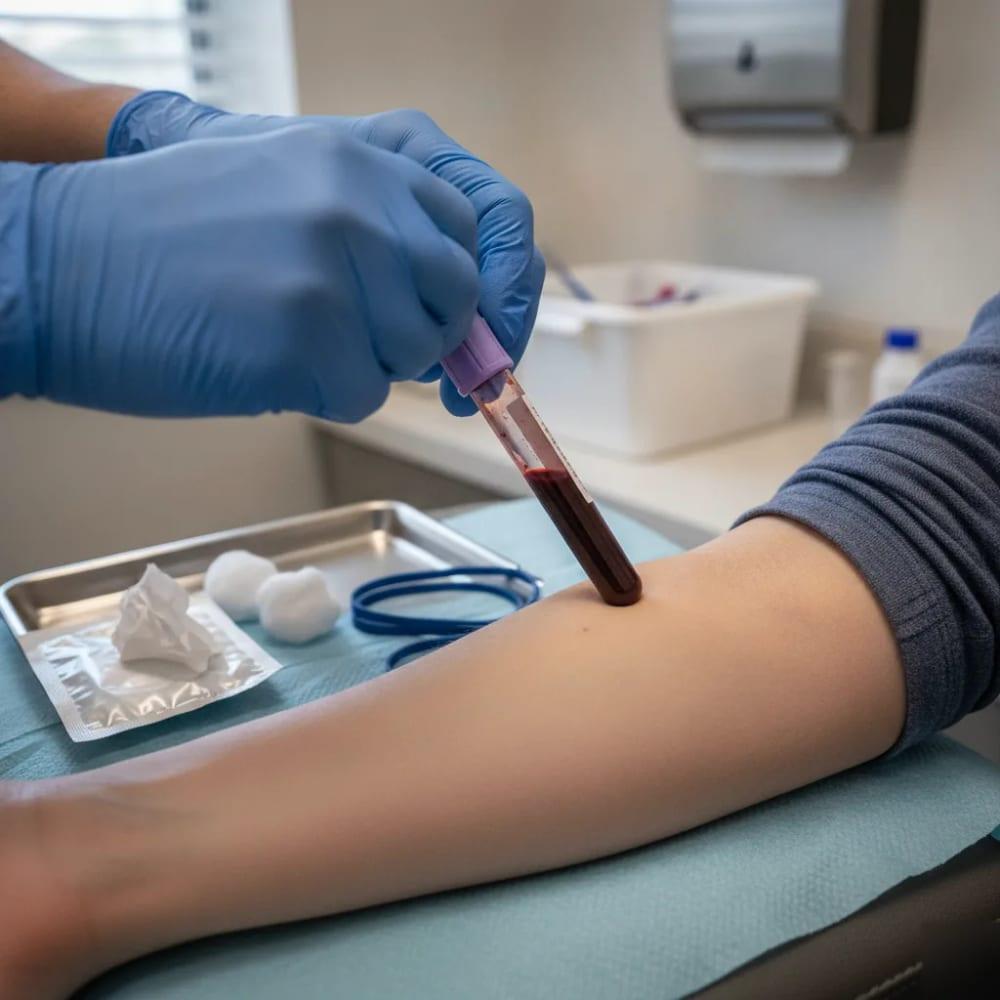
- We draw your blood. It’s a standard venous draw from the arm. The whole thing takes about five minutes, sometimes less.
- Your samples go directly to the lab. Results typically come back within five to seven business days.
- We schedule a follow-up to review your results with you. We do not just hand you a printout.
Many women say the anticipation was worse than the draw itself.
One thing we always mention is timing. For premenopausal women, the day of your cycle matters. We usually recommend drawing blood on day 3 or day 21, depending on which hormones we’re focusing on. Progesterone levels look completely different at various points in your cycle. Getting the timing right directly affects your results. Our staff will help you pick the right day when you call to schedule.
If you’re postmenopausal or already on hormone therapy, timing is simpler. We’ll still give you clear instructions on fasting and when to take any current medications before your appointment. Women near the Heathrow area often stop in first thing in the morning since fasting is easier that way.
We see patients every week who put this off for months because they didn’t know what to expect. Now you do. The blood draw is the easy part. What matters most is what we do with those results afterward.

Reviewing Your Results With a Provider
Numbers on a lab report don’t mean much without context. That’s where we come in.
Once your women’s hormone panel results are back, we sit down with you and go through every marker. This is not a rushed five-minute visit. It’s a real conversation about what your body is telling us. We see this every week in Lake Mary: women get lab work done elsewhere but never have anyone explain the results. They’re left staring at a PDF full of reference ranges that don’t make sense.
What We Actually Look At Together
Your results aren’t just “normal” or “abnormal.” We look at patterns across multiple hormones, because one number in isolation rarely tells the full story. Here’s what we walk through with you:
- We compare each hormone level to where it should be for your age, cycle phase, and symptoms.
- We identify relationships between markers, like how your estradiol ratio to progesterone can explain sleep problems or mood shifts.
- We flag anything trending in a direction that could cause issues down the road, even if it’s technically still in range.
- We connect your lab data to the specific symptoms you described during your initial visit.
- We outline clear next steps, whether that’s monitoring, lifestyle changes, or a treatment plan under medical supervision.
Here’s something most people don’t realize. “Normal” reference ranges on lab reports are based on broad population averages. A progesterone level that’s normal for a 25-year-old isn’t normal for a woman in perimenopause near Heathrow in Lake Mary who can’t sleep through the night. Context matters more than the number itself, which is why we interpret results according to the AACE position statement on menopause rather than a generic reference range alone.
We don’t just hand you a treatment protocol and send you home. Our providers explain why we recommend what we do. You’ll understand the reasoning behind every decision. This clarity builds trust and helps you notice important body changes during follow-up.
Not sure your previous labs were read correctly? Bring them in. We’re happy to take a second look and give you an honest assessment.
Book Your Consultation
Frequently Asked Questions
What should I bring to my hormone panel appointment in Lake Mary?
Bring a list of your current medications and any supplements you take. This includes birth control, thyroid medication, or anything prescribed by another doctor. Also write down your symptoms and how long you’ve had them. Our Lake Mary clinic uses this information along with your lab numbers. Numbers alone only tell half the story. Your symptom list helps us connect what your blood shows to what your body is actually feeling day to day.
How long does it take to get results after a hormone panel test?
Most patients get their results within a few business days. The blood draw itself only takes about 10 minutes. Once your panel is processed, we schedule a follow-up visit to go through every marker together. We don’t just hand you a printout and send you home. We walk through estradiol, thyroid markers, cortisol, and everything else so you understand what it means for your specific symptoms.
Do I need to schedule my hormone panel around my menstrual cycle?
Yes, if you’re still having periods, cycle timing matters a lot. Estradiol and progesterone levels change dramatically depending on where you are in your cycle. Someone tested on day 21 will see very different numbers than on day 3. When you book your appointment in Lake Mary, our team will help you pick the right day. This makes sure your results actually reflect what’s happening in your body.
What’s the difference between a single hormone test and a full panel?
A single hormone test only gives you one number, like a snapshot of one hormone alone. A full panel checks estradiol, progesterone, testosterone, thyroid markers, DHEA-S, cortisol, and FSH and LH together. Your hormones work as a system, not alone. Estrogen affects cortisol. Progesterone affects your thyroid. Checking just one is like reading a single chapter of a book and guessing the ending. A full panel gives us the whole story.
How should I prepare the morning of my blood draw?
Fast for 10 to 12 hours before your appointment, but water is fine. Skip biotin supplements for at least 48 hours since biotin can throw off certain hormone results. Take your regular medications unless our team tells you otherwise. We draw blood in the morning, usually between 8 and 10 a.m., because hormone levels shift throughout the day. Morning draws give us the most reliable baseline to work from.
What symptoms suggest I need a women’s hormone panel?
Fatigue that doesn’t improve with rest, midsection weight gain, mood swings, low libido, and brain fog are the top signs. Women near Heathrow and across Lake Mary often tell us they blamed these on stress for months before getting tested. One symptom alone might mean little. Two or more together is a pattern worth checking. A panel gives you real numbers instead of another round of “everything looks fine.”
Ready for a Svelte transformation?
Take the first step toward better health and metabolic stability today.
Our team is here to support you.