
Home » Why Do I Need to Come In Before 10 A.M. for My Blood Draw?
Why Do I Need to Come In Before 10 A.M. for My Blood Draw?
A blood draw before 10 a.m. is recommended because testosterone and cortisol are highest in the early morning, and many lab markers need a fasting sample to read accurately. It comes down to your body clock and your last meal. Testosterone follows a daily rhythm: it peaks in the early morning and falls through the day, so a late draw can make normal levels look low. Fasting markers like glucose, insulin, and triglycerides are most reliable after 8 to 12 hours without food, and with an early slot, most of that fast happens while you sleep. The result is a true baseline for your physician and a fair way to compare future results.
Why Is Testosterone Tested in the Morning?
Testosterone is tested in the morning because the body makes the most of it in the early hours, and levels drop as the day goes on. Doctors call this a circadian pattern, meaning a cycle that repeats roughly every 24 hours. Levels rise overnight during sleep and peak shortly after waking.
That daily swing creates a real diagnostic risk. A draw taken in the late afternoon can show a lower number than your true level, and on paper, that number could look like low testosterone when it isn't. Clinical practice guidelines for diagnosing low testosterone in men generally call for a morning, fasting sample. Many physicians also repeat the test on a second morning to confirm a low result before calling it a diagnosis.
| Time of draw | What testosterone usually does | Why it matters for diagnosis |
|---|---|---|
| Early morning (before 10 a.m.) | Near its daily peak | Matches how reference ranges are set, so results are easier to interpret |
| Midday | Starting to decline | Readings may drift lower than your true baseline |
| Late afternoon or evening | Often at or near its daily low | Can make normal levels look low and lead to a repeat test |
Our Hormone Level Testing for Men covers testosterone, thyroid, and metabolic markers. Our physician reviews the results rather than relying on a lab flag, and that review is only as good as the sample behind it.
Does the Morning Rule Matter More for Younger Men?
Yes, the morning-to-afternoon testosterone swing tends to be larger in younger men and flattens somewhat with age. A man in his 20s or 30s may see a bigger drop between a morning draw and a late-day draw than a man in his 60s.
Even so, a morning draw is still the standard for men of every age. The reason is comparison. Lab reference ranges for testosterone are built largely from morning samples, so a morning result is measured against the right yardstick. Compare an afternoon result to that same range, and it can look abnormal for reasons that have nothing to do with your health.
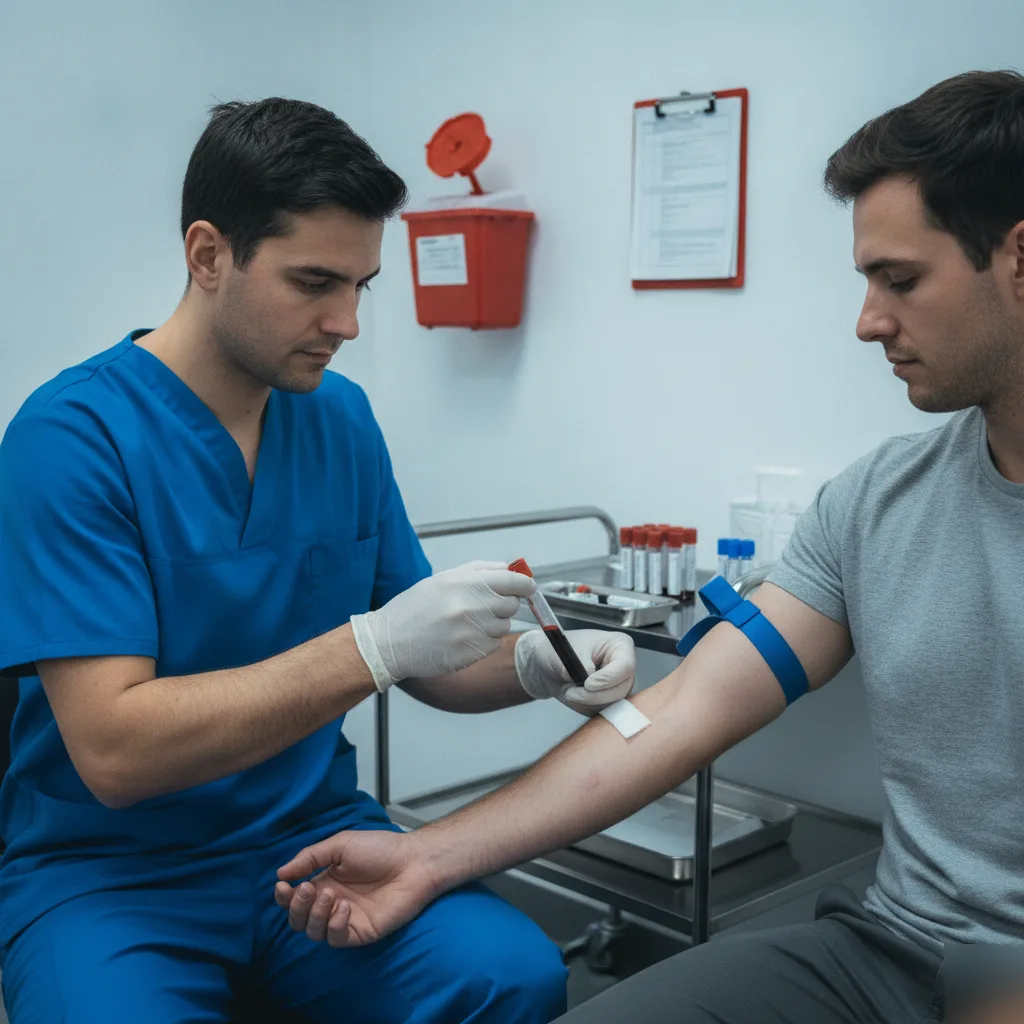
Do I Need to Fast Before My Blood Draw?
For many panels, yes. Fasting for 8 to 12 hours gives accurate readings for blood sugar, insulin, and triglycerides. Your lab instructions will tell you whether your specific order requires a fast.
Fasting means no food, no sweet drinks, and no cream or sugar in coffee. Plain water is usually fine, and it keeps you hydrated for the draw.
A recent meal changes your blood chemistry for hours. After you eat, glucose rises, your body releases insulin to handle it, and triglycerides (a type of fat carried in the blood) climb as the meal is digested. Draw blood during that window and your metabolic health can look worse than it is.
An early appointment makes the fast far easier. Stop eating after dinner, come in first thing, and you sleep through most of the 8 to 12 hours instead of going hungry through a workday.
Accurate fasting numbers matter here because these markers guide our Medical Weight Loss for Pre-Diabetes and Metabolic Syndrome program. They also inform decisions about GLP-1 therapy such as semaglutide, a weekly injection that helps regulate appetite and insulin response.
Common fasting-related markers include glucose, which is your blood sugar level at rest, and insulin, which shows how much insulin your body needs to manage that glucose. A lipid panel (cholesterol measurements) is commonly drawn fasting, and triglycerides are the lipid marker most affected by a recent meal. A1C, an average of blood sugar over about three months, doesn't need fasting itself, but it's often drawn alongside fasting labs.
What Other Hormones Change by Time of Day?
Testosterone is not the only hormone with a daily cycle. Cortisol, thyroid-stimulating hormone (TSH), and some reproductive hormones also rise and fall over 24 hours.
Cortisol is the body's main stress hormone. It peaks soon after waking and falls through the day, so morning values are the standard reference point. A late-day cortisol result means something quite different from a morning one.
TSH is the signal your brain sends to tell the thyroid how hard to work. Because it shifts across the 24-hour cycle, drawing at a similar morning time keeps thyroid results comparable from one visit to the next.
LH and FSH (luteinizing hormone and follicle-stimulating hormone) are pituitary messengers that regulate the reproductive glands; LH is the main signal for the body to make testosterone. Both are released in pulses rather than at a steady rate, so any single reading is a snapshot.
A panel with many markers is only useful when every marker is measured under similar conditions. When testosterone, thyroid, and metabolic markers are all drawn in the same fasting, early-morning window, your physician can read them together and see how they relate, instead of adjusting for different conditions behind each result.
Does Timing Matter for Women's Hormone Panels Too?
Yes. Morning draws help with fasting markers and thyroid for women as well. For women who still have menstrual cycles, the day of the cycle can matter as much as the time of day, because estrogen and progesterone shift across the month.
Please follow the specific instructions given for the Comprehensive Women's Hormone Panel. Perimenopause can make cycles irregular, so the right day to test may not be obvious; ask your care team which day to test. Accurate timing supports our Women's Health evaluations for perimenopause, low libido, and hot flashes and night sweats, where the goal is to connect your symptoms to what your labs actually show.
What Happens If I Get My Blood Drawn in the Afternoon?
An afternoon draw can produce misleading numbers, which may lead to a repeat test and a delay in your plan.
On the hormone side, a falsely low testosterone result could suggest treatment is needed when it isn't. A late-day number can also make your starting point look different than it really is, which affects how later results are interpreted.
On the metabolic side, if you ate before an afternoon appointment, glucose and triglycerides may read high and suggest a problem that a fasting sample would not show.
Most often, the fix is coming back on another morning. That second visit costs you time and pushes back the conversation about your plan.
An off-time draw isn't dangerous. It's just less useful for making careful, lab-driven decisions. If an afternoon slot is your only option, let the care team know so your physician can take the timing into account when reading the results.
How to Prepare for a Morning Blood Draw
Preparation for a morning blood draw starts the night before: finish dinner early, drink water, and get a full night of sleep. Use this checklist:
- Stop eating at the time you are told. Count back 8 to 12 hours from your appointment, or follow the exact cutoff on your instructions.
- Drink plain water the evening before and the morning of your draw.
- Skip alcohol the night before. Alcohol can affect triglycerides and other markers.
- Avoid a hard workout the day before. Intense exercise can temporarily shift some lab values.
- Ask before skipping any prescribed medication. Don't stop a prescription on your own.
- Tell staff about biotin or hair, skin, and nail supplements. Biotin can interfere with some lab tests, including certain hormone and thyroid assays.
- Wear short or loose sleeves so the draw site is easy to reach.
- Bring a current list of your medications and supplements, including any hormone therapy. That list helps your physician interpret each result in context.
Don't take a dose of a medication or supplement only to “look better” on your labs. The point of the blood draw is an accurate picture of where you are today. A result nudged in one direction leads to a plan built on the wrong starting point.
Plan your coffee for after the draw. Rules about black coffee vary from test to test, so follow the instructions you receive for your specific panel.
Why Consistent Timing Matters for Follow-Up Labs
Follow-up labs are only useful if they are drawn under the same conditions as your first ones, so your physician compares like with like.
Ongoing monitoring and optimization depend on spotting real trends. Say your first draw was at 7:30 a.m. after a fast and your next one is at 2 p.m. after lunch: any change in the numbers could come from the clock and the meal rather than from your treatment. When you can, book the same early time slot for each follow-up.
For patients on Testosterone Replacement Therapy (TRT) or BioTE bioidentical hormone pellet therapy, steady timing helps your physician judge whether the dose is right. A dose decision should rest on a true trend, not on a sample drawn at a different point in the day.
For weight loss patients, repeat metabolic labs show whether insulin, glucose, and triglycerides are actually improving. Beyond the number on the scale, those markers are some of the clearest signs that a physician-supervised program is working.
Should I Time My Draw Around My Testosterone Injection or Pellet?
Often yes, because testosterone levels change in the days after an injection or as a pellet settles in. Ask your care team when in your dose cycle to come in.
The principle is the same as morning timing: drawing at the same point in your dose cycle each time makes results comparable. A sample taken right after an injection and one taken just before the next can look very different, even when the dose is correct.
Don't change your dosing schedule on your own to fit a lab appointment. Move the appointment instead, or call the clinic to ask which timing your physician prefers.
How the First-Visit Blood Panel Shapes Your Plan in Lake Mary
At Svelte Medical Weight Loss Centers Lake Mary, the first visit includes a comprehensive blood panel and a physician consultation. Your personalized plan is built from that sample, so it needs to be accurate.
Dr. Richard Bragg, board certified by the American Board of Family Physicians, personally reviews lab results. Each plan is based on your labs, symptoms, and goals before anything is prescribed, not on a one-size template. Svelte has been in operation since 2008, the same year Dr. Bragg served as President of the Seminole County Medical Society.
An early draw often fits a workday better than people expect. For busy professionals along International Parkway, coming in first thing can leave time to make it to the office.
Many Seminole County patients arrive with primary care labs already flagged for pre-diabetes or high triglycerides. Those earlier results are a useful signal. Still, a fresh fasting panel drawn under consistent conditions gives a clear starting point for a lab-driven plan and for every comparison that follows.
In the hot Central Florida months, drink water the evening before your visit. Veins are usually easier to find when you aren't dehydrated.
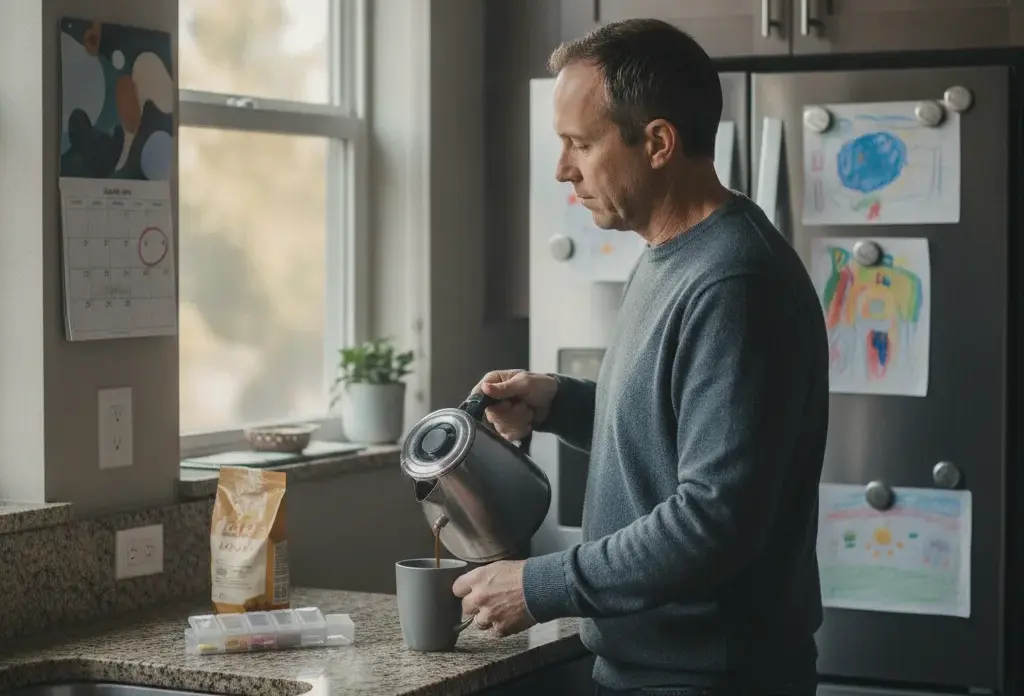
Key Takeaways for Your Morning Lab Visit
- Testosterone and cortisol peak early in the day, so a before-10 a.m. draw shows your true levels.
- Fasting markers need 8 to 12 hours without food, and an early appointment makes that fast easy to complete.
- The same timing at every follow-up keeps your results comparable and your plan on track.
An early, fasting blood draw gives your physician numbers that reflect your health rather than your schedule. To start with a physician-reviewed lab panel, schedule your first visit with our Lake Mary team and ask for an early-morning time.
Book Your Consultation
Ready for a Svelte transformation?
Take the first step toward better health and metabolic stability today.
Our team is here to support you.