
Home » Who Reviews Your Hormone Lab Results? An Orlando Patient’s Guide
Who Reviews Your Hormone Lab Results? An Orlando Patient's Guide
Why This Question Matters More Than 'Did a Doctor See It'
A doctor seeing your hormone labs and a doctor understanding them are two different things. Many results get a quick sign-off based on whether numbers fall inside a printed range. The real question is whether someone connected those numbers to your symptoms, your history, and your goals.
Most people ask one thing about their labs. Did a doctor look at it? It feels like the safe question. But it’s the wrong one, and it can leave you stuck feeling tired, heavy, or foggy for years.
Here’s how it often works. Your blood goes to a lab. A machine runs it. Software flags anything outside the reference range in bold or red. Then a provider scans the report, sees nothing flagged, and signs off. Technically, a doctor saw it, but nobody studied it.
That gap is where a lot of patients fall through.
Reference ranges are built from large groups of people. They show what’s common. They don’t show what’s right for you. A 45-year-old woman with a borderline thyroid level and a man with testosterone at the very bottom of normal can both get a “looks fine” note. And both may feel anything but fine.
So what should real review look like? It means someone reads your numbers next to your life. That includes things like these:
- Your symptoms, like fatigue, weight gain, low libido, or poor sleep
- When the blood was drawn, since testosterone and cortisol shift a lot through the day
- Your medications and supplements, because some can skew results
- Trends over time instead of one snapshot
None of that shows up as a red flag on a printout. It takes a person who knows what to look for.
We see this all the time. A patient from Winter Park came to us after two years of being told her labs were normal. Her TSH sat inside the range. Her weight kept climbing, her energy kept dropping, and she’d started blaming herself. Her cells were storing fat instead of using it for fuel. That wasn’t a willpower problem. It was a metabolic one.
You get rebound hunger that feels real but isn’t. A quick sign-off on “normal” labs won’t catch that pattern.
But a physician who reads the whole panel will.
This is why we require labs before any treatment decision, and why our board-certified physician reviews them personally. Not a template. Not an auto-generated portal message. After 18 years in Central Florida, we’ve learned the numbers only matter when someone explains them to you in plain language.
Feeling unheard is common. It’s also fixable. The next time you get results back, don’t just ask if a doctor saw them. Ask who interpreted them, and what they mean for how you feel.

The Two-Step Process Behind Every Lab Result
Your blood sample makes two very different trips before anyone talks to you about it. First it goes to a lab. Then the results come back to the physician who ordered them. Each stop has its own experts, and each one answers a different question.
Step one is about accuracy. Step two is about meaning.
At the lab, trained medical laboratory scientists run your sample on calibrated machines. They confirm it was labeled correctly, stored at the right temperature, and processed on time. In the U.S., any lab testing human samples must follow federal CLIA rules for quality. A lab director, often a pathologist, oversees that work. But here’s the part most people don’t realize. The lab never sees your chart. They don’t know your symptoms, your medications, or why you came in.
What comes back is a report full of numbers. Each value sits next to a reference range. Anything outside that range gets flagged, usually with an H or an L.
And a flag isn’t a diagnosis.
So who decides if a number matters? Your physician does. This is step two, and it’s where the real work happens. A board-certified doctor reads your results against everything else they know about you. Context. Always context.
When we review hormone labs, we work through a set of checks before we draw any conclusions:
- Check the timing of the draw. Testosterone runs highest in the morning, so an afternoon sample can read falsely low.
- Compare the numbers to your symptoms. Fatigue, weight gain, poor sleep, and mood changes all shape how we read a borderline value.
- Read related markers together. TSH means more next to free T4.
- Ask about medications and supplements. High-dose biotin, found in many hair and nail products, can throw off some thyroid tests.
- Decide the next move. That might mean a retest, a lifestyle change, or a treatment plan with follow-up labs.
Skip any one of those steps and you can miss the real story. We see it all the time.
One patient from Winter Park came to us with a stack of normal results from another office. Her fasting glucose looked fine. No flags anywhere. That explained the rebound hunger she’d fought for years. She wasn’t weak or lazy.
A machine can’t make that connection. Neither can a reference range.
Here in Orlando, plenty of people get labs drawn at a large retail lab and then wait. Days, sometimes weeks. The numbers pop up in a patient portal with no explanation, and if you’ve ever opened one of those reports at 11 p.m. trying to make sense of it, you know the feeling.
That gap between results and a real conversation is where anxiety grows. It’s also where good care should step in. Your physician should walk you through what each marker means, what’s worth watching, and what’s worth treating.
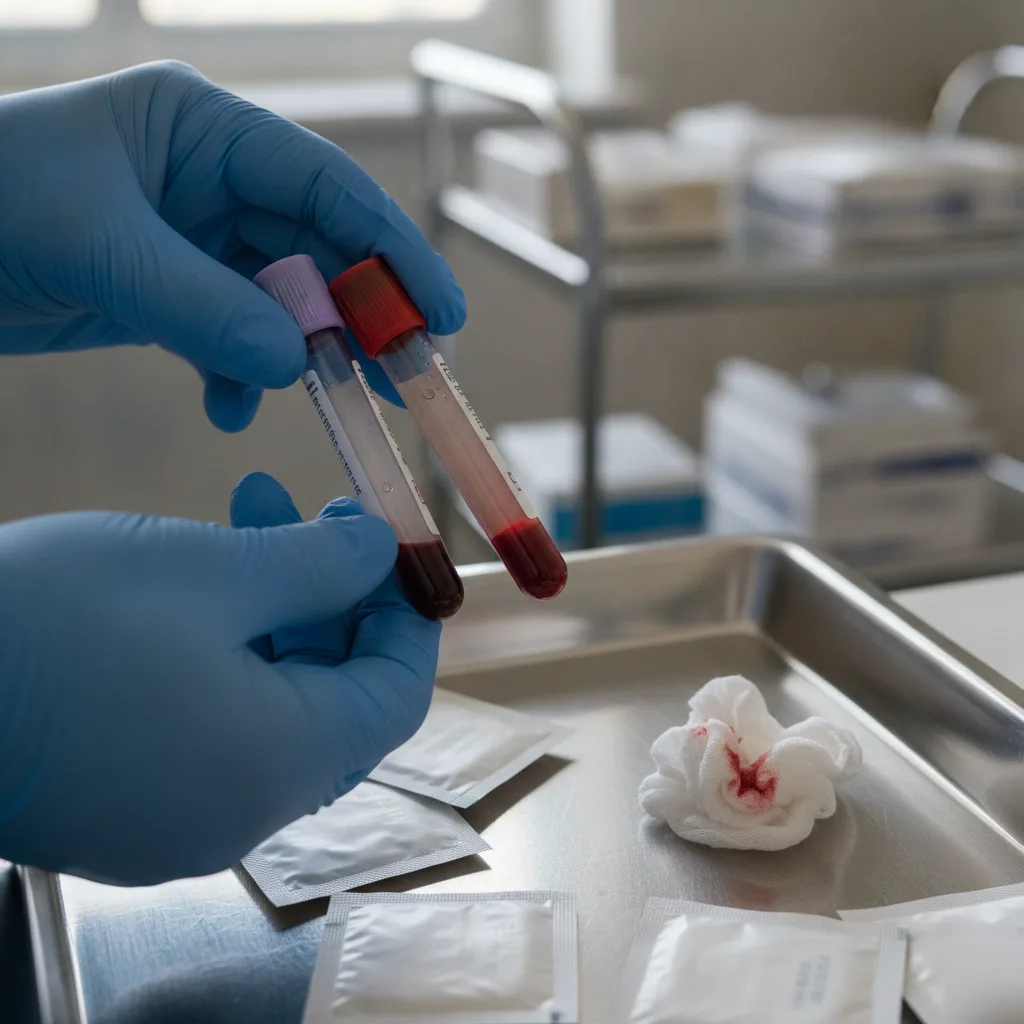
Who Is Qualified to Interpret Hormone Panels
Here’s something most patients never think to ask. The person who runs your blood test isn’t the person who reads it. Lab technicians process the sample and report the numbers. That’s their job, and they’re good at it. But they don’t decide what those numbers mean for your body.
Interpretation is a clinical job. It takes medical training, a license, and context about you as a person.
So who’s qualified? The answer depends on training and on who’s supervising the care. In most medical settings, these are the people who can review and act on a hormone panel:
- Medical doctors (MD) and doctors of osteopathic medicine (DO), including family and internal medicine physicians
- Endocrinologists, who focus only on hormone and gland disorders
- Nurse practitioners, who can review labs within their training and Florida’s practice rules
- Physician assistants working under a supervising physician’s oversight
Each of these providers can read a hormone panel. But they don’t all bring the same depth. A physician has years of training in how hormones affect each other. One number out of range rarely tells the whole story.
Now for who isn’t qualified. Health coaches, personal trainers and supplement sellers can’t interpret your labs. Neither can an app. They might be helpful in other ways, and some give solid nutrition advice. Still, reading lab values and making medical calls is outside their lane.
Why does this matter so much? Because a number can look “normal” and still be wrong for you.
We see this all the time in our Orlando clinic. A woman came in last year with a printout from an online lab. Every value was flagged green. She’d been told she was fine. But she was exhausted, gaining weight around her middle, and fighting constant rebound hunger by mid-afternoon. Her cells were storing fat instead of burning it for energy. The numbers weren’t “bad.” They just hadn’t been read together.
That’s the difference a trained eye makes. Not just reading values. Connecting them.
There’s another layer too. A qualified provider looks at your symptoms, your medications and your health history before deciding anything. The nurse who called with your results may not have seen the full picture. Ask who reviewed the panel. You’re allowed to ask, it’s your health.
We’ve worked with patients across Central Florida for more than 18 years. In that time, one rule has never changed for us. Labs are required, and a board-certified physician reviews them. Every patient. Every time. We aren’t a franchise with a remote doctor signing off from another state. Our physician is on-site in Orlando and reviews your labs before any treatment decision is made.
If you’ve had labs done and nobody walked you through them, that’s worth fixing.
Book Your Consultation
Frequently Asked Questions
What is the most accurate hormone test?
The most accurate test is the one drawn at the right time of day and read by someone who checks it against your symptoms. A morning blood draw for testosterone is far more reliable than an afternoon one, since levels drop later in the day. A single number on a page, even a correct one, means little without a physician connecting it to your health picture.
Why don’t doctors want to check hormone levels?
It’s often less about not wanting to and more about time and training. Many providers run a quick scan for flagged values and move on, since reference ranges make that feel sufficient. If your Orlando provider seems rushed, ask specifically who reviewed your full panel and how they interpreted borderline results.
What are common signs your hormones are out of balance?
Common signs include fatigue, weight gain, poor sleep, low libido, mood swings, and rebound hunger that feels uncontrollable. Many people get told their labs are normal even while feeling these symptoms daily. That mismatch usually means the numbers were checked against a printed range, not against your actual life. A real review looks at your symptoms alongside the data, which is the kind of personal read described on our hormone results page.
What is the difference between a lab flagging a result and a doctor reviewing it?
A lab flag just means a number fell outside a general reference range used for the whole population. It says nothing about your symptoms, your medication list, or when your blood was drawn. A real review means a physician reads that number next to your history and decides if it matters for you. Many Orlando patients assume a flag or its absence settles the question, when it’s really just the starting point.
Why do two people with the same lab numbers get different advice?
Because the numbers alone don’t tell the whole story. A 45-year-old with borderline thyroid results might need treatment if she’s exhausted and gaining weight, while another person with the same number feels fine. That’s why plain lab values without context can lead two people down very different paths, even locally in Orlando.
How long does it usually take to get hormone lab results explained after a draw?
Results often show up in a patient portal within a few days, but an explanation can take much longer if nobody walks you through it. Many Orlando patients read numbers alone at night with no context for what they mean. A proper review includes a conversation about timing, trends, and next steps, not just a portal message. If you’re waiting without answers, it’s worth asking directly who is reviewing your hormone labs and when you’ll hear back.
Ready for a Svelte transformation?
Take the first step toward better health and metabolic stability today.
Our team is here to support you.