
Home » Who Reads and Reviews Your Hormone Lab Results in Orlando
Who Reads and Reviews Your Hormone Lab Results in Orlando
The People Involved in Your Hormone Test, Step by Step
Several trained people handle your hormone test before you ever see a number. The lab team draws, runs and checks your sample for accuracy. But the physician who ordered the test is the one who reads your results against your symptoms and health history.
Most patients picture one person looking over their blood work. In reality it’s a short chain of trained people. Each one has a clear job. And once you know who does what, you can ask better questions.
Here’s how a typical hormone test moves from your arm to your treatment plan.
- The ordering physician picks the tests. Your doctor chooses which hormones to check based on your symptoms, goals and history. This person is responsible for reviewing your results.
- A phlebotomist draws your blood. This trained tech labels your tubes and records the draw time. Timing matters because hormones like cortisol and testosterone rise and fall during the day.
- A medical laboratory scientist runs your sample. These lab professionals operate the machines and run daily quality checks. They don’t diagnose you. Their job is accuracy.
- The lab director oversees the whole process. Licensed labs work under a director, often a pathologist. This person signs off on the lab’s methods and quality standards.
- The lab’s system flags anything out of range. You’ll see an H or L next to some values. If a result is dangerously off, the lab calls your doctor directly.
- Your physician reads and interprets the results. This is where a number becomes a plan. Your doctor weighs each value against how you feel, your medications and your other labs.
- You review the results together. A good provider explains each value in plain language. Then you decide on next steps as a team.
Notice the pattern? The lab measures. Your physician interprets. Two very different jobs.
That last step is the one that matters most.
Here’s something that catches people off guard. Under the federal 21st Century Cures Act, many labs now release results to your patient portal right away. So you might see your numbers before your doctor does. That’s often when the worry starts.
We see this with Orlando patients all the time. Someone gets a portal alert late on a Tuesday night, spots a red flag beside their estradiol and spends hours searching online. By the time they call us, they’re sure something’s wrong. Usually the value sits just outside the lab’s general range, on its own it means very little. But a reference range is built from a broad population. It isn’t built around you.
So who should you call if a result looks scary? Call the office that ordered the test. Not the lab. The lab can’t tell you what a number means for your body or your plan.
That’s why our physician personally reviews every lab result before we make any treatment decision. Labs aren’t optional in our program. We’ve practiced in Central Florida for more than 18 years. In that time we’ve learned that the story around a number tells you more than the number itself. A slightly high reading in someone who feels great isn’t the same as that reading in someone who’s exhausted and gaining weight.
Does your provider sit down and explain each value with you? If the honest answer is no, it’s fair to ask for that. You deserve to understand your own body.

Why a 'Normal' Range Doesn't Always Mean Normal for You
Your lab report says everything’s normal. So why do you still feel off?
We hear this almost every week in our Orlando office. A patient brings in results from another clinic. Every number sits inside the reference range. But they’re tired, gaining weight around the middle, and sleeping badly. Something doesn’t add up.
Most people never get told this part. A reference range isn’t a health target. It’s a statistical snapshot. Labs build it by testing a large group of people and keeping the middle 95 percent. That group includes people who are sick or overweight. It also includes people much older than you.
Normal just means common.
And common isn’t the same as healthy. Testosterone is a good example. A typical range is very wide. A 40-year-old man near the bottom gets the same ‘normal’ flag as one near the top. They won’t feel the same, though. Not even close.
A physician looks past the flag. When we review hormone labs, we ask a different set of questions. Here’s what gets checked:
- Where your number sits inside the range, not just whether it’s in it
- How today’s results compare with your last panel
- Do your symptoms line up with what the numbers show?
- Your age and medications, plus the time of day your blood was drawn
No single number tells the whole story. The pattern does.
Take a patient we’ll call Dana. She’s a 47-year-old teacher from Winter Park. Her TSH came back normal at her last checkup. She’d been eating ‘healthy’ for months and still couldn’t lose a pound. Her thyroid sat near the edge of the range too, it explained the fatigue and the midafternoon cravings. She wasn’t lazy. Her metabolism was stuck burning sugar instead of fat.
This matters a lot for weight. It also drives rebound hunger, that hungry-again-an-hour-later feeling. A quick glance at the flags will miss it every time.
Ranges also shift from lab to lab. One lab in Orlando might print a slightly different range than another across town. Your results should be read by someone who knows how that lab sets its numbers. Then there are panels that leave out key markers altogether –
But that’s a bigger topic. For now, here’s what to hold onto.
The goal isn’t to chase a perfect number. It’s to find the level where you feel and function your best. That takes a physician who sits down and reads your results with you. Not a computer that prints a flag and moves on. After 18 years in Central Florida, we’ve learned the real answers usually live between the lines of a lab report.
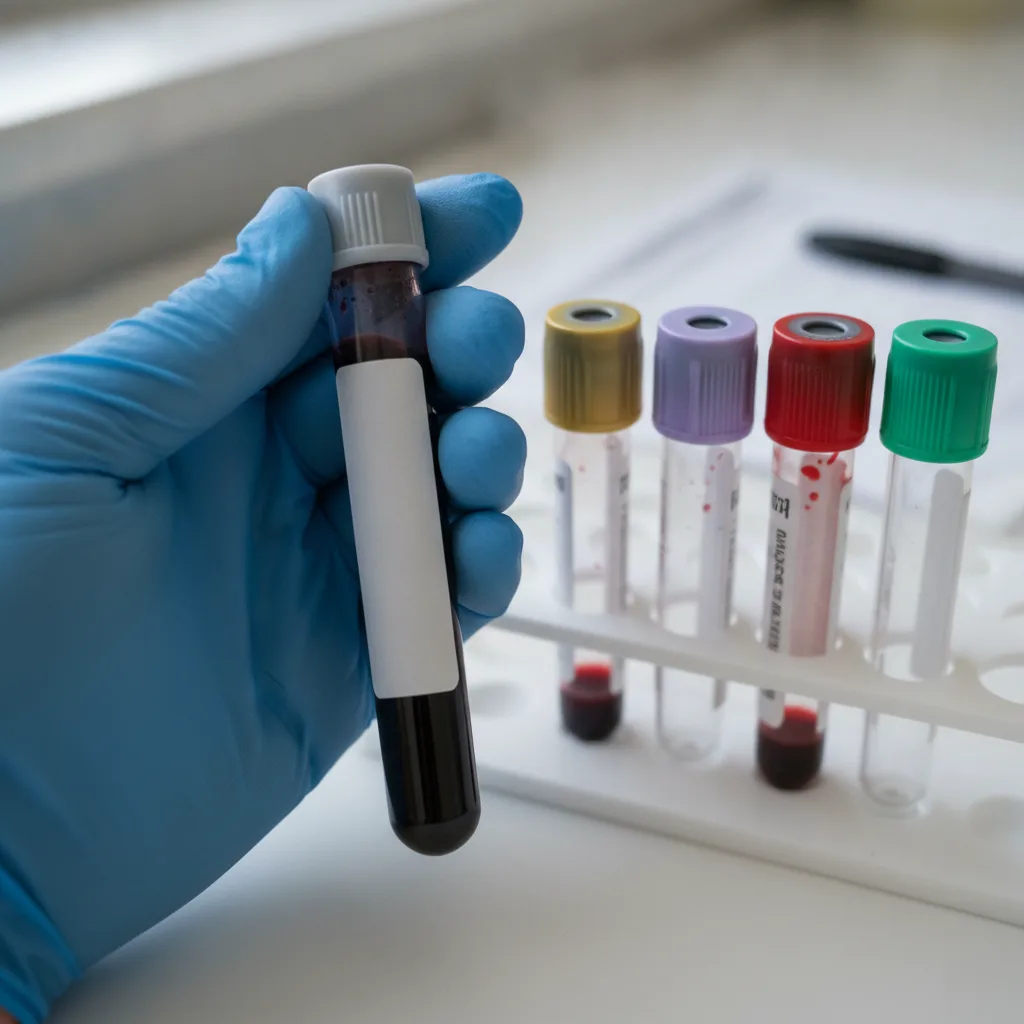
Lab Technician vs. Licensed Provider: What Each Role Does
Your blood passes through a lot of hands. Most of them never see your face.
So who reads and reviews your hormone lab results? Two very different groups touch them. One group measures. The other group decides what those numbers mean for your body.
The lab side starts with a phlebotomist. That’s the person who draws your blood at a clinic or draw station here in Orlando. Their job is a clean sample that’s labeled right and kept at the right temperature. Next, a medical laboratory scientist runs it. They load your sample into an analyzer and check the machine’s quality controls first. If a value looks dangerous, they flag it fast.
Here’s what the lab team handles from start to finish:
- Drawing and labeling your blood sample
- Quality control checks before any result goes out
- Flagging values that fall outside the reference range
- Calling critical results to the provider who ordered the test
That’s skilled, careful work. But it stops at the number.
A lab tech won’t tell you why you’re exhausted at 3 p.m.
A licensed provider is the one who interprets. That means an MD, DO, nurse practitioner or physician assistant. They ordered the test, so they know the reason behind it. Lab technician vs. licensed provider comes down to this. The provider asks what you ate last night, what medications you take, and how your energy has felt.
Reference ranges come from big population averages. Normal on paper isn’t always normal for you, a result can sit inside the range and still explain your symptoms. Only a clinician can connect those dots.
We saw this with a patient from Winter Park. Her portal showed every value in black. Nothing flagged. She’d read online that meant she was fine. To our physician, that pattern meant her body was stuck burning sugar instead of fat. It explained the rebound hunger she’d been blaming on weak willpower.
We see this mistake all the time. People treat the portal like a final verdict, it’s really just raw data.
And what if no provider ever calls you back? That gap is real. Some services send results with a template note and a provider you’ll never meet –
Before you accept any hormone result as final, ask these questions:
- Who reviewed my labs, and what license do they hold?
- How do these numbers fit the symptoms I described?
- Which results sit near the edge of the range?
- What’s the plan if something needs to change?
Clear answers tell you a real clinician is involved. Vague answers tell you something else.
At our Orlando clinic, a board-certified physician reviews every lab panel before any treatment starts. No exceptions. We’ve done it this way for over 18 years in Central Florida. You sit down with us and go over your numbers in plain language. Not just a message in a portal.
Book Your Consultation
Frequently Asked Questions
Who reads my hormone lab results before treatment starts?
The physician who ordered your test is the one who reads your results, not just the lab. A lab team draws and runs your sample for accuracy, and a lab director oversees quality standards, but only your doctor weighs those numbers against your symptoms and health history. In our Orlando office, a physician personally reviews every lab result before any treatment plan moves forward. If you want to understand this full review process, our hormone testing page walks through each step.
What are common signs that my hormones might be out of balance?
Common signs include fatigue, weight gain around the middle, poor sleep, low mood, low sex drive, hair thinning, and trouble concentrating. These signs often show up even when your lab report says everything is normal. That gap is exactly why a doctor needs to read your numbers alongside how you feel. Orlando patients often bring in reports with no flagged values, yet they still feel off for months before getting a full picture.
Why don’t some doctors want to check hormone levels?
Hormone levels also shift by time of day and age, which makes results harder to explain in a short appointment. This isn’t about hiding information. It’s often about limited time and incomplete testing panels that skip markers tied to your symptoms.
Should I worry if my portal shows a result before my doctor calls?
You shouldn’t panic right away. Under federal rules, many labs release results to your patient portal before your doctor has reviewed them, so you may see a flagged number first. A single high or low mark often means very little on its own, since reference ranges are built from a broad population, not from your personal health picture. Call the office that ordered the test, not the lab, if a result worries you.
Does a normal hormone range mean I’m healthy?
Not always. A normal range is a statistical snapshot from a large group of people, including some who are sick or much older than you. Common isn’t the same as healthy for your body. A physician looks at where your number sits inside the range, compares it with past results, and checks it against your symptoms before deciding anything is truly fine.
Are hormone lab ranges the same at every Orlando lab?
No, ranges can differ slightly from one lab to another, even across Orlando. Each lab builds its reference range from its own tested population, so the same number can look different depending on where the blood was drawn. That’s why your results should be read by someone familiar with how that specific lab sets its numbers, not just compared to a generic online chart.
Ready for a Svelte transformation?
Take the first step toward better health and metabolic stability today.
Our team is here to support you.