
Home » What Symptoms Should Push Me to Schedule Hormone Testing Sooner?
What Symptoms Should Push Me to Schedule Hormone Testing Sooner?
Schedule hormone testing soon when several symptoms show up together and last for several weeks or more: lower sex drive, erectile changes, fatigue that sleep does not fix, muscle loss, new belly fat, poor sleep, or low mood. The signal is a cluster of changes, not one bad week. Stalled weight loss despite steady effort is a strong reason to test now. So are recent labs already flagged for pre-diabetes or high triglycerides. A blood panel that checks testosterone, thyroid, and metabolic markers can show what is driving the symptoms. A physician should review those results alongside your symptoms, rather than leaving you with a lab printout that only marks numbers as high or low.
On this page
- What symptoms mean you should get hormone testing soon?
- Which symptoms need a doctor right away instead of waiting?
- Why does a cluster of symptoms matter more than one?
- Can stalled weight loss be a hormone problem?
- What symptoms in women point to hormone testing sooner?
- What happens if you wait too long to check your hormones?
- What a first hormone testing visit includes
- Why Lake Mary adults often delay hormone testing
- The bottom line on symptoms and timing
What symptoms mean you should get hormone testing soon?
The symptoms that should move hormone testing up your calendar are lower sex drive, weaker or less frequent erections, tiredness that sleep does not fix, losing muscle, gaining belly fat, and mood changes like irritability or low motivation.
These symptoms overlap because three hormone systems affect the same parts of your body. Testosterone affects drive, muscle, and energy. Thyroid hormone sets how fast your body burns fuel. Insulin, the hormone that moves sugar from your blood into your cells, also decides how much fat your body stores. When one of these drifts out of range, several symptoms can show up at once, and they can look a lot like the others.
That overlap is why no single symptom names its own cause. Lower sex drive and muscle loss can point to low testosterone. Erectile changes can point to low testosterone, but also to blood sugar problems or blood vessel health. Fatigue that sleep does not fix can come from low testosterone or an underactive thyroid, and low mood or irritability can track with either one. New belly fat can point to insulin resistance or low testosterone.
“Soon” here means booking within a few weeks once symptoms have lasted a month or more. It doesn't mean waiting for next year's annual physical.
Many men blame these changes on age or work stress. Age and stress are real factors, but these signs can also be measured with a blood test, so you don't have to guess.
Body and energy changes
Body changes often show up first in the gym or at the end of the workday. You may notice constant fatigue, a hard afternoon crash, or workouts that feel harder while producing less. Strength drops. Shirts fit differently because muscle size shrinks while fat builds around the middle. Recovery may also feel slower than it used to.
Sexual health and mood changes
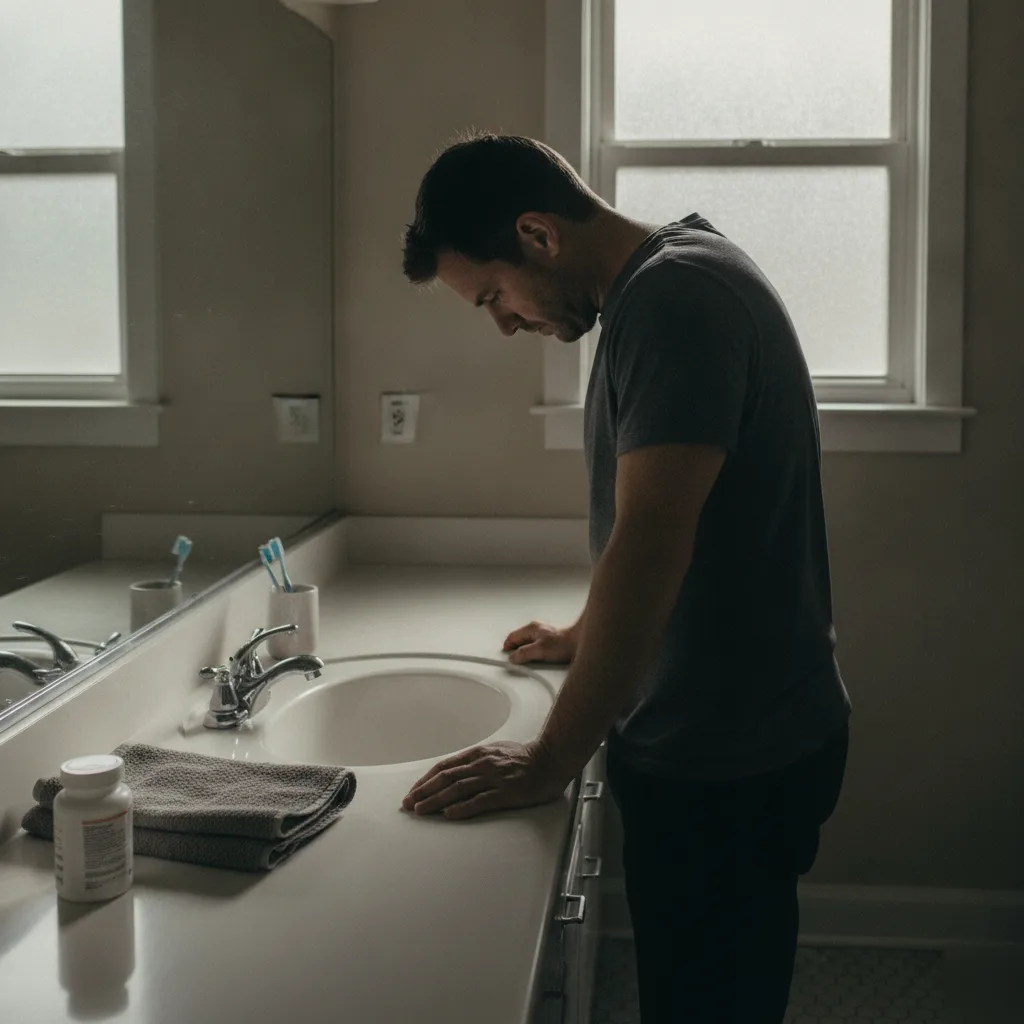
Sexual health and mood changes are often the symptoms men mention last, even though they can be the clearest signals. Watch for lower libido, changes in erections, and fewer morning erections. Brain fog, a shorter temper, and low drive at work can come along with them. Sleep often suffers as well. You may sleep a full night and still wake up tired, which then makes the mood and focus problems worse.
Which symptoms need a doctor right away instead of waiting?
Some symptoms are not a “schedule soon” issue. Chest pain, fainting, a sudden severe headache, or sudden vision loss need emergency care or a 911 call, not a hormone appointment.
A second group calls for a doctor visit within the same week. These symptoms can signal problems beyond routine hormone balance, such as a thyroid disorder, very high blood sugar, or a problem with the pituitary gland (the small gland at the base of the brain that tells other glands how much hormone to make). Some of these conditions move quickly, so speed matters more than convenience.
| Call 911 or go to the ER | See a doctor this week |
|---|---|
| Chest pain or pressure | A new lump in a testicle |
| Fainting or passing out | Breast swelling or tenderness in a man |
| Sudden, severe headache | Racing heartbeat with weight loss you did not plan |
| Sudden loss of vision | Extreme thirst with frequent urination |
If you have a symptom in the left column, get emergency help first. Hormone testing can follow once you are stable. If you have a symptom in the right column, call your primary care doctor or an urgent care clinic and describe it plainly. A lump, a racing heart, or extreme thirst is a reason to be seen this week, even if you also have the slower symptoms described above.
This table is general guidance, not a diagnosis. When in doubt, call for medical advice.
Why does a cluster of symptoms matter more than one?
One symptom can have many causes, but two or three together make a hormone cause more worth checking. Low drive plus fatigue plus new belly fat is a clear reason to test sooner.
Consider a hypothetical pair. Feeling tired after a heavy work month is normal. Losing interest in sex during a stressful stretch is also common. Either one alone could be stress. But if both continue after the busy season ends, and your waistline is growing even though your eating has not changed, stress becomes a weaker explanation. That combination is what a blood panel can help sort out.
Duration matters as much as the mix. Symptoms that last for several weeks or more deserve a look. A rough week passes, while a hormone shift usually does not.
A short symptom log makes your visit far more useful. Keep it on your phone for two weeks before the appointment. Each time a symptom shows up, write it down in plain words, such as “afternoon crash” or “woke up tired.” Note the time of day and what came before it, like a poor night's sleep or a late client dinner, and rate it from 1 to 10 so changes over the two weeks are easy to spot.

Can stalled weight loss be a hormone problem?
Yes. When weight stops dropping despite steady effort, low testosterone, an underactive thyroid, or insulin resistance can be part of the reason, and testing can show which one is involved.
Insulin science explains a lot of stalled progress. Insulin works like a storage signal. After you eat, insulin rises and tells your body to put sugar away, often as fat. When insulin stays high most of the day, as it does with insulin resistance, the body keeps getting the “store” message and has a hard time releasing stored fat. That is a body chemistry problem, not a character flaw, which is why our weight loss protocol is grounded in insulin science and GLP-1 therapy rather than generic calorie restriction.
Weight regain after bariatric surgery is another reason to check hormones and metabolic markers. Surgery changes how the body digests food and signals hunger, so post-surgical physiology needs its own evaluation. Regain is common and deserves medical attention, not blame.
Labs tell part of the story. Body composition and metabolic rate testing can add detail labs alone miss, such as how much of your weight is muscle versus fat and how many calories your body burns at rest. We do this testing in-clinic at Svelte Medical Weight Loss Centers Lake Mary and use it as the basis for your personalized plan.
Labs already flagged by your primary care doctor
Pre-diabetes, high triglycerides, or high blood pressure on recent labs are a reason to test hormones now, not later. Those flags often travel with insulin resistance and low testosterone. Many patients in Seminole County arrive with lab work already flagged by primary care but no structured next step after the result. We run physician-supervised programs for patients with lab-confirmed pre-diabetes, elevated triglycerides, or metabolic syndrome, so that evaluation can be the next step.
What symptoms in women point to hormone testing sooner?
Women should test sooner when hot flashes, night sweats, irregular periods, low libido, new weight gain around the middle, or sleep and mood changes start in their late 30s to 50s.
Perimenopause is the stretch of years before periods stop for good. During perimenopause, estrogen and progesterone rise and fall unevenly, so symptoms can start well before menopause itself. Many women are surprised to feel these changes in their early 40s while their periods are still fairly regular.
Thyroid problems can look a lot like perimenopause. Both can cause fatigue, weight gain, mood shifts, and poor sleep. That overlap is why a comprehensive women's hormone panel helps: it checks more than one system at once instead of assuming the cause. Women can have low testosterone too. Women make testosterone at lower levels than men, and low testosterone can be one factor in low libido even when estrogen looks normal.
Our Women's Health Clinic offers physician-led evaluation for women experiencing perimenopause, low libido, or symptoms tied to hormonal imbalance. Weight loss evaluation for women also accounts for perimenopause, thyroid function, and other female hormonal factors.
What happens if you wait too long to check your hormones?
Waiting usually means living longer with symptoms that could be measured. Some issues, like rising blood sugar or an untreated thyroid problem, can also get harder to manage over time.
Low testosterone left unchecked is linked with lost muscle and bone strength and with more fat around the middle. That extra belly fat can then worsen insulin resistance, which makes the original symptoms harder to reverse.
Pre-diabetes is a warning stage, not a final diagnosis. Without changes, pre-diabetes can move toward type 2 diabetes, so catching rising blood sugar early gives you more options and more time. An underactive thyroid tends to slow energy, weight control, and mood together, and the symptoms rarely fade on their own.
The daily cost matters too. Poor sleep wears down patience at home. Low drive can strain a relationship. Brain fog and fatigue make focus at work harder, and people often adjust their lives around the symptoms without realizing how much they have changed.
None of this means something serious is happening to you. It means a blood test can replace months of guessing with real numbers.
What a first hormone testing visit includes
A good first visit includes a full blood panel and a sit-down review with the physician, so your results are read alongside your symptoms instead of just flagged high or low by a lab.
At Svelte Medical Weight Loss Centers Lake Mary, the first visit includes lab work and a medical evaluation. It is a physician consultation, not a sales pitch. Dr. Richard Bragg, a family physician board certified by the American Board of Family Physicians since 1995, personally reviews the labs.
The men's hormone panel covers testosterone, thyroid, and metabolic markers. For women, a comprehensive women's hormone panel is available, with evaluation that accounts for perimenopause, thyroid function, and other female hormonal factors. Metabolic markers typically include measures such as blood sugar and blood fats, which connect hormone results to weight and heart health.
Timing affects the numbers. As general practice, testosterone is often checked in the morning, when levels tend to be highest. A single low result is usually confirmed with a repeat test before anyone calls it low testosterone, which protects you from starting treatment based on one off day.
Treatment only comes after lab-confirmed results. Options may include testosterone replacement therapy (TRT), which supplements the testosterone your body is not making enough of, or BioTE bioidentical hormone optimization. BioTE uses small pellets placed under the skin to deliver steady hormone levels, and Svelte is a Certified Platinum Level Biote Provider. Every plan is built from your labs, symptoms, and goals before anything is prescribed, with ongoing monitoring and optimization afterward.
How to prepare for your appointment
Bring your two-week symptom log and any recent labs from your primary care doctor, especially results flagged for blood sugar, triglycerides, or blood pressure. Write down every medicine and supplement you take, including doses, since some can affect hormone levels. When you book, ask whether you should fast before the blood draw and what time of day to come in.
Why Lake Mary adults often delay hormone testing
Many Lake Mary adults put off hormone testing because busy work schedules, travel, and Florida heat make it easy to blame symptoms on stress or skipped workouts.
Lake Mary and the Heathrow corridor have a high concentration of corporate headquarters and professional services employers along International Parkway. Frequent travel, client dinners, and irregular hours are normal here. When you are tired all the time, it feels logical to blame the schedule. Sometimes the schedule is the cause. Sometimes it is hiding a hormone problem that would show up on a blood test.
Weather adds another layer. In Central Florida, heat and humidity limit outdoor exercise from May through October, with the heat index regularly above 100°F. “Just exercise more” advice often falls short during those months, and people may assume weight gain is only about missed workouts. People new to Lake Mary face a different delay: many relocators from the Northeast and Midwest arrive with established weight and metabolic health concerns and are still searching for a new physician-supervised program in their new city.
Svelte has been in operation since 2008. Dr. Bragg completed his family practice residency at Florida Hospital in Orlando from 1992 to 1995 and served as President of the Seminole County Medical Society in 2008. He personally oversees programs rather than delegating them to coaches or non-physician staff.
The bottom line on symptoms and timing
A group of symptoms lasting a month or more, such as low drive, fatigue, muscle loss, belly fat, or stalled weight loss, is your cue to schedule hormone testing sooner. Red-flag symptoms like chest pain, fainting, or a new testicular lump need urgent care first, with hormone follow-up after.
If you live in Lake Mary or nearby in Seminole County and these symptoms sound familiar, book a first visit at Svelte Medical Weight Loss Centers Lake Mary. That visit includes a full blood panel reviewed by Dr. Bragg, so any plan starts with your own numbers.
Book Your Consultation
Ready for a Svelte transformation?
Take the first step toward better health and metabolic stability today.
Our team is here to support you.