
Home » Testosterone Replacement Therapy East Orlando » Women’s Health Clinic — East Orlando » Perimenopause Treatment in Orlando | Svelte Medical Weight Loss – East Orlando
Perimenopause Treatment in Orlando | Svelte Medical Weight Loss - East Orlando
Recognizing the Signs of Perimenopause

Have you woken up at 3 in the morning, soaked to the bone, for the third time this week? Does your period seem to be coming a fortnight ahead of schedule, or is it simply skipping the calendar entirely? By midday you’re drained, and by the end of the day, you’re short-tempered. Your brain feels thick, like it’s wading through mist.
If that sounds like your life, our East Orlando women’s health clinic can help you find answers.
This isn’t some kind of random collection of issues. It is your body speaking to you.
Although many women begin to notice signs of perimenopause around their early to mid-40s, we have a high number of women in their late 30s coming into our Orlando, East Orlando offices sharing the same stories. Central Florida’s year-round heat and humidity can intensify these symptoms, particularly during the long stretches from May through October when overnight lows often stay above 75 degrees. Something as mild as a slight flush in other parts of the U.S. can feel like a full-blown hot flash in Waterford Lakes, causing you to toss and turn at night.
But because the symptoms don’t usually all start together, you might write off each individual symptom as stress, fatigue, or just part of aging. But there are signs to watch for, and it’s important to spot them early.
Every week we hear about these typical indicators:
- Your menstrual cycle has shifted earlier, become more sporadic, or increased its overall flow
- You are having hot flashes or night sweats that keep you from feeling comfortable all day long
- You experience a greater intensity of anxiety or irritability, or are feeling depressed
- Your memory and ability to focus are worsening or you struggle to finish your sentences in the middle of them
- Your interest in sex has dwindled, or you have pain associated with sex
- You can’t seem to lose weight any longer; even diet and exercise aren’t doing anything to get rid of those new pounds around your tummy
It happens over and over: women tell us that they knew something was up, but couldn’t quite name the cause. Perimenopause isn’t usually very conspicuous; your symptoms do not have any clear or obvious indicators. During perimenopause your levels of estrogen and progesterone are unstable, with spikes sometimes happening and sometimes falling, which causes many of the unpredictable symptoms you may be feeling.
But know this: You aren’t crazy. Your body is going through change, there is a biological reason why you’re experiencing what you’re experiencing, and the best way to start feeling better is understanding what’s going on.
To Have or Not To Have? Considerations About Hormone Therapy and Weight Loss Support
We get asked the same question frequently: “I’m not sure if I should be on hormone therapy or if I should be on a weight loss plan.” The answer is, you likely need both.
Perimenopause does more than just cause hot flashes and mood changes. It changes the way your body manages fat stores, burns calories and reacts to exercise. Reduced levels of estrogen can slow your metabolism.
It all comes down to the impact that progesterone fluctuations can have on your sleep quality. If you’re not getting the good, deep sleep that you need, cortisol (the “stress” hormone) goes up and this tells your body to store fat around the midsection, almost as if you are trying to prepare for winter. This is why you might find that you’re struggling to lose weight, even if you aren’t making any changes in the food that you eat or how much exercise you’re doing. Again, it’s not that there’s anything wrong with willpower or discipline here; the hormonal imbalance adds another layer of metabolic difficulty. This is why we don’t practice hormone imbalance treatment and weight management as separate programs.
Bioidentical hormone replacement therapy can be instrumental in bringing estrogen and progesterone back into more youthful balance in your body, helping you sleep better, to have more energy and experience fewer cravings. But there are some times when it may not reverse the weight that’s been gained. This is where physician-directed weight management can help. Depending on your lab results and your medical history, there may be options for the use of a weight-loss medication such as semaglutide or tirzepatide (also called a GLP-1 agent), a prescription for a lipotropic injection, or advice for how to use intermittent fasting. A board-certified medical doctor reviews your complete health picture before recommending any specific approach.
With the warm climate in Orlando, many women choose to exercise outdoors through their 40s and 50s. If you’re out walking in the river trails by the Econlockhatchee River regularly, for example, or you swim early in the morning, it can feel particularly discouraging if the scale starts to show more pounds when you look in the mirror. You’re still putting in the same amount of exercise, but your body is no longer doing the same work it used to. Not every woman who goes through perimenopause and menopause will need medication for the purpose of losing weight. For some, it may be just optimizing your hormones. For others, using both together may make sense, and that determination comes only after we get a good look at your blood work, symptoms and lifestyle choices as one integrated story. This is why your initial visit is so very important in getting the right path in place for your individual journey and goals.
If you’ve been working with an OB-GYN for the purpose of resolving your hormone-related concerns and have worked with a separate program for weight management, it may be helpful to think about a combined program approach. To have one medical team work on all of this at once can make a big difference in how things turn out.
When to Go See an OB-GYN
Not every symptom that a woman encounters in her 40s must be resolved in the office. There are times when you should go to your OB-GYN first. If your menstrual bleeding is heavy enough to soak through a pad or tampon in a hour, you should see a gynecologist first. This is also true for bleeding between periods or after intercourse, and any postmenopausal bleeding when you haven’t had a period for a year. These symptoms can, indeed, occur during perimenopause, but they can also signal things like fibroids or uterine polyps or something else entirely that your OB-GYN needs to rule out with imaging or perhaps with a biopsy. It’s always best to find this out first before you move to hormone therapy with us.
Pelvic pain is another symptom to take note of. It might be a dull ache, sharp cramping outside of your periods, or continuous pressure. East Orlando heat can make it even worse during the hot summer, and it’s easy to dismiss it as just aging. But don’t do that. You should at least get a pelvic exam and perhaps an ultrasound.
Here is a rough rule of thumb: If your main complaint is structural, as in it feels wrong in your reproductive system, then go to your GYN first. However, if your main concern is more systemic, that is, you feel off and you have multiple complaints that your mood and energy and sleep and your weight have all shifted all at once, that’s the type of presentation that we’re seeing all the time in our clinic. This means there is a hormonal imbalance, and this is where we will excel at perimenopause treatment for women.
We often have women come to us who were recently to their OB-GYN, who did everything that was checked, who had a normal pap, a normal ultrasound, and yet they were still not feeling their best. This is the most common type of situation that we are hearing about in our office: everything was structurally normal, but there was still something else going on. And, of course, you can’t get that information without a blood test and looking at your hormones.
We are never going to advise you not to see your gynecologist. Rather, we will ask you whether you are up to date on all of your screenings before we build a treatment plan around your health. Good healthcare is not competitive; it’s collaborative. But once all the structural things have been checked off the list and you still have those brain-foggy days, the hot flashes, the weight-gain and you’re still tired, that’s our department now. We’re ready to help you feel like yourself again in East Orlando.
What to Expect at Your First Hormone Consultation
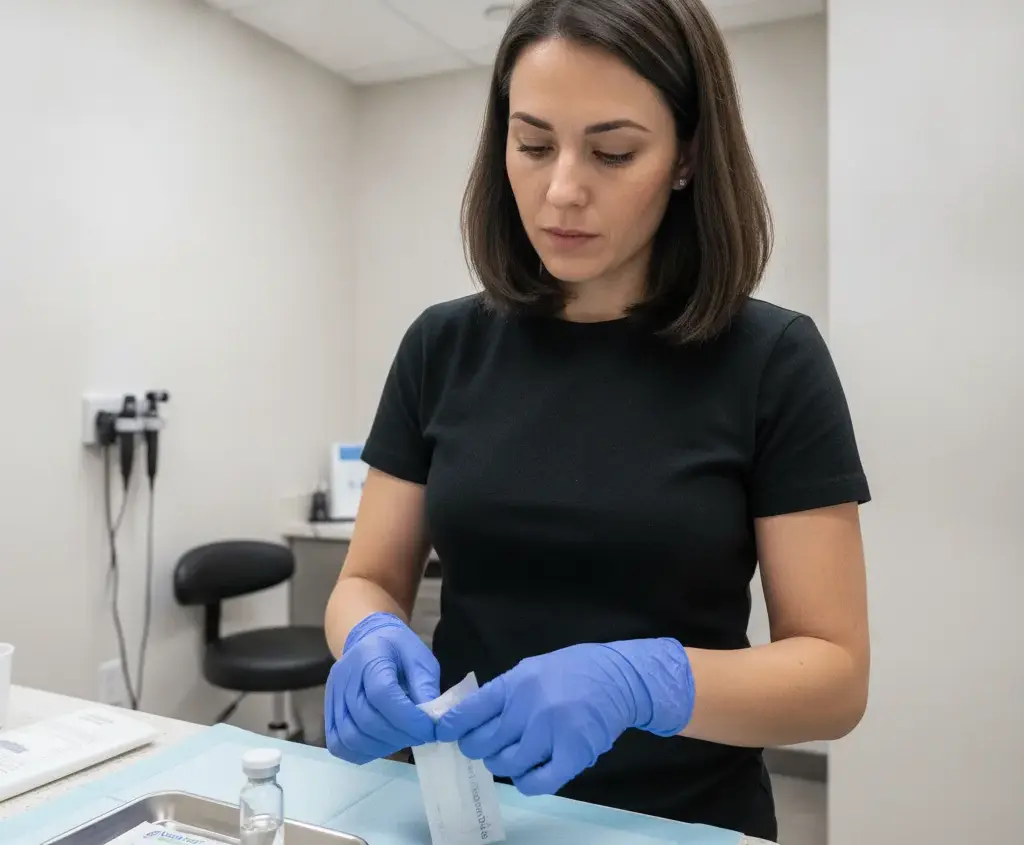
First and foremost, you will walk into our clinic and sit down with a physician and not a sales rep or a chatbot. You will see a board-certified MD who will take the time to review your symptoms and past medical history, including your treatment goals, before discussing treatment options. The first step of your initial consultation includes some baseline blood work. We will look at your estrogen, progesterone, testosterone, thyroid values, and several other hormones that give us a clear picture of where your hormone balance stands at this time.
Many of the women who come to our East Orlando location have walked into other clinics where they attempted to describe their symptoms but did not feel as though they were heard completely. We hear you. We will listen and test you thoroughly, and look at the bigger picture of your health. During your appointment you can expect:
- A detailed review of your symptoms, how long you’ve been experiencing them, and your past treatment history.
- Blood lab tests are drawn onsite. So we can give you accurate information about your hormone levels and not make any assumptions about your health.
- A full review of your past medical history, current medications, and any risk factors for health risks.
- Customized recommendations of your treatment options, designed for your specific findings, rather than a general protocol for everyone.
More often than not, ladies tell us they wish they would have come in sooner.
East Orlando heat and humidity year-round can make perimenopause seem twice as bad. This is common to hear from patients from Waterford Lakes, Avalon Park, Union Park or other communities who thought the Florida weather just made everything worse. While that may be part of the issue, the reason it happens is hormonal, so you can get the proper treatment. It is important to learn the difference.
Your lab results usually come back in a few days. Afterward, together, we create a treatment plan that could mean you are using bioidentical hormones with our Biote pellet therapy or other treatments based on what your results show. By using both hormone optimization and weight loss treatments together in our practice, we have a unique opportunity to treat the hormone shifts of perimenopause that often cause the unwanted weight and sluggish metabolism that won’t respond well to exercise.
If you held back before because you weren’t sure what to expect, you hopefully now have a better idea. It’s a real doctor’s consultation with a board-certified MD, and our focus is always on YOU.

How Bioidentical Hormone and Pellet Therapy Works
Hormone levels in your body don’t drop all at once. Your hormone levels go up and down with dips, peaks and plateaus over months and years and it’s that instability of perimenopause that can be tough to work through. Bioidentical hormone treatment helps by filling in the missing pieces by replacing with hormones that are molecularly exactly the same as the ones you make naturally.
Here is where there is a big difference most people don’t know. While synthetic hormones are close to what you make, they are not quite the same. Your bioidentical hormones are exact matches. They come from a plant source and then are blended together into exact copies of your estradiol and progesterone, which are recognized by your body as naturally occurring.
Pellet therapy is the next step in hormone treatment. A tiny pellet is slipped right under the skin, near your hip, about the size of a grain of rice. You don’t even need stitches. It takes just a few minutes. It releases hormones at a low dosage all day and all night, so you don’t have to remember to put on a hormone cream each morning or take a pill each day. The constant flow of low dosages isn’t something to be taken lightly. Hormone creams or pills give peaks of the hormone in your body, then as they start to fade away, a low point is hit in your system while with pellets there is a more steady flow all day.
We are a certified Biote provider of hormones, which means we follow a set protocol of hormone use. Biote has extensive research and ongoing training for all of us to use.
The insertion is performed in our office in East Orlando. Most patients who are from Waterford Lakes, Avalon Park, and the UCF corridor area are back to normal, full time activities by 24 to 48 hours. It may be one or two days longer during the humid summer months in Central Florida. It is worth noting that pellets are not the only method of hormone delivery. For some, topical creams or oral progesterone (in the form of pills, capsules, or gels) is a more appropriate method. For others, a combination is best. This is one of the many reasons why physician care is important. A board-certified medical doctor will thoroughly review your labs, symptoms, and health history before recommending any specific treatment, ensuring there is no guesswork and no generic, one-size-fits-all protocol.
It can take three to six weeks for results to kick in. Many patients say their hot flashes get better first. They fall asleep easier, and then their mood, energy and libido come back slowly as their body begins to feel like themselves again. Pellets usually need to be re-inserted every three to five months.

Book Your Consultation
Frequently Asked Questions
What age does perimenopause usually start?
Perimenopause often starts in your early to mid-40s, though some women notice signs in their late 30s. We see both age groups regularly at our East Orlando clinic. Symptoms like irregular periods, night sweats, and brain fog tend to build slowly over months or years. That slow buildup is why many women blame stress or aging instead of hormones. If your period patterns have changed and you feel off, it’s worth getting your hormone levels checked.
What happens at my first perimenopause appointment?
Your first visit focuses on reviewing your symptoms, bloodwork, and lifestyle together as one connected picture. A board-certified doctor looks at your hormone levels alongside things like sleep, weight changes, and energy. This full review helps set the direction for your plan, whether that means hormone therapy, weight support, or both. We don’t rush this step because your results depend on getting the starting point right.
Do I need hormone therapy or help losing weight?
You might need both, and that’s more common than you’d think. Declining estrogen slows your metabolism, while progesterone changes disrupt sleep and raise cortisol, which encourages belly fat storage. That’s why we don’t run hormone and weight programs separately. Depending on your labs, your plan might include bioidentical hormone therapy, GLP-1 medications, or structured lifestyle guidance. Some women only need hormone support, while others benefit from combining both approaches.
When should I see an OB-GYN instead of coming to you for perimenopause?
You should see an OB-GYN first if you have very heavy bleeding, soaking through a pad every hour, or bleeding between periods or after sex. Postmenopausal spotting after 12 months without a period also needs a gynecologist’s evaluation before starting hormone therapy. These symptoms can overlap with perimenopause, but they can also point to fibroids or polyps that need imaging or a biopsy. Getting that clarity first keeps your treatment plan safe and accurate.
Does Orlando’s heat make perimenopause symptoms worse?
Yes, Central Florida’s heat and humidity often intensify hot flashes and night sweats. From May through October, overnight lows in areas like Waterford Lakes often stay above 75 degrees, turning a mild flush into a sleep-disrupting event. Bloating can also feel worse during summer humidity, which sometimes gets mistaken for other issues. If your symptoms feel stronger in Orlando’s warm months, that pattern is common and worth mentioning at your visit.
Why am I gaining weight even though I haven’t changed my diet or exercise?
This usually points to hormonal changes, not a willpower problem. Declining estrogen slows your metabolism, and poor sleep from night sweats raises cortisol, which signals your body to store belly fat. Many active Orlando women who walk trails along the Econlockhatchee River or swim regularly still see the scale climb during perimenopause. Reviewing your bloodwork helps identify whether hormone therapy, weight management support, or both will get you back on track.