
Home » Testosterone Replacement Therapy East Orlando » Women’s Health Clinic — East Orlando » Female Hormone Testing in Orlando | Svelte Medical Weight Loss – East Orlando
Female Hormone Testing in Orlando | Svelte Medical Weight Loss - East Orlando
Signs Your Symptoms Point to a Hormone Imbalance

You’ve been tired for months. It’s not the kind of tiredness a good weekend can fix. Instead, you feel a deep, bone-level exhaustion that makes you wonder what is wrong.
That’s one of the most common things we hear from women who visit our Orlando clinics. They’ve tried better sleep habits, new supplements, even cutting out caffeine, but nothing works. This deep fatigue rarely appears on its own; instead, it often comes with other symptoms that seem unrelated yet share a single root cause.
We often see a common pattern. A woman in her late 30s or 40s notices hair thinning around her temples. She gains weight around her midsection despite eating the same way she always has. Her mood swings become unpredictable. She snaps at her kids and then feels guilty for hours. Sleep is a mess; she falls asleep fine but wakes up at 2 a.m. drenched in sweat. Her doctor runs a basic metabolic panel and says everything looks “normal.”
But it doesn’t feel normal.
These symptoms often appear together when estrogen, progesterone, or testosterone levels shift. Central Florida’s year-round heat and humidity can make hot flashes and night sweats feel more unbearable. Women across the East Orlando and Waterford Lakes areas tell us they assumed it was just stress or the weather, but it wasn’t.
Other signs worth paying attention to:
- Low libido that appeared gradually over months or years
- Brain fog so thick you forget words mid-sentence
- Joint stiffness or muscle loss you can’t explain
- Anxiety or depression that started without a clear trigger
When a woman describes three or more of these symptoms together, her lab work often confirms what she already suspected. The numbers are clear, but you need the right tests to get them. A standard blood panel at your annual checkup won’t check free testosterone, DHEA-S, or estradiol levels. These are the markers that truly show what’s happening inside your body. This is why our women’s health clinic Orlando FL 32825 makes specific female hormone testing a priority. It looks where general screenings do not.
When Hormone Testing Isn't the Right First Step
Sometimes the symptoms you are feeling have nothing to do with hormones. It’s important to remember this.
If you’ve been dealing with sudden weight changes, extreme fatigue, or hair loss, your first call should probably be to your primary care doctor. Thyroid disorders, iron deficiency anemia, and even undiagnosed diabetes can mimic hormone imbalance closely. A basic metabolic panel and CBC might reveal the real cause before you ever need female hormone testing. If your doctor recently changed a medication, that alone could explain mood shifts or sleep trouble. Give it a few weeks before assuming hormones are the problem.
If you’re under 30 with regular cycles and no specific symptoms beyond occasional stress or tiredness, hormone panels often come back normal. That doesn’t mean your struggles aren’t real; it simply means the answer probably lives somewhere else. Sleep quality, nutrition gaps, chronic stress from Orlando’s long commute corridors along I-4 and the 408 – these factors can wear people down in ways that look hormonal but are not.
We also see women who’ve already had hormone testing done within the last three to six months. Unless something major changed, repeating labs that soon rarely tells us anything new. Your body needs time to respond to interventions.
Here is a situation. If you’re over 35 and notice a pattern of symptoms clustering together – irregular periods, brain fog, low libido, and stubborn weight gain – this combination points strongly toward hormonal shifts. One symptom alone may not indicate hormones. But three or four together over several months? That’s when testing becomes the smart move.
We’d rather tell you that you don’t need us right now than run labs that won’t change your care plan. If testing is the right step, we will know it. And if it’s not, we will say so.
What a Female Hormone Panel Checks
Many women come in thinking we’ll just check their estrogen and consider the job done. That’s not our approach. Your hormones do not operate alone; they work together like a team. If one player drops off, the whole system feels it.
A complete female hormone panel looks at several important markers. Estradiol is the main form of estrogen your body uses. It affects everything from bone density to mood to how well you sleep at night. But estradiol alone doesn’t tell the full story.
We also check progesterone. This hormone balances estrogen’s effects. When progesterone runs low, you might notice heavier periods, increased anxiety, or trouble staying asleep past 3 a.m. This is one of the most common complaints we hear.
Testosterone matters for women too; most people don’t realize that. Low testosterone in women can show up as fatigue, low libido, and difficulty building muscle even when you’re working out consistently. Orlando’s year-round warm climate means many of our patients stay active outdoors, so when exercise suddenly stops producing results, it’s a sign worth investigating.
Then there’s thyroid function. TSH and free T3/T4 levels play an important role in metabolism, energy, and weight. A sluggish thyroid mimics hormone imbalance symptoms very closely. Without checking it, we would be guessing. DHEA-S rounds out the picture by measuring adrenal function, as chronic stress can deplete DHEA quickly.
Patients often tell us afterward, “I had no idea all of those things were connected.” But they are. A board-certified medical doctor reviews your full panel, because isolated numbers mean little. The ratios between hormones matter just as much as individual levels. Your estrogen-to-progesterone ratio and your free versus total testosterone – these relationships reveal what’s driving your symptoms.
Blood draw timing matters too. For premenopausal women, we typically test on specific cycle days to get precise readings. Post-menopausal women have more flexibility. Either way, we will tell you exactly when to come in so your results reflect your body’s true state.
How Blood Draw Testing Works, Start to Finish
You don’t need to do much to get started. Knowing what to expect removes the guesswork from your visit.
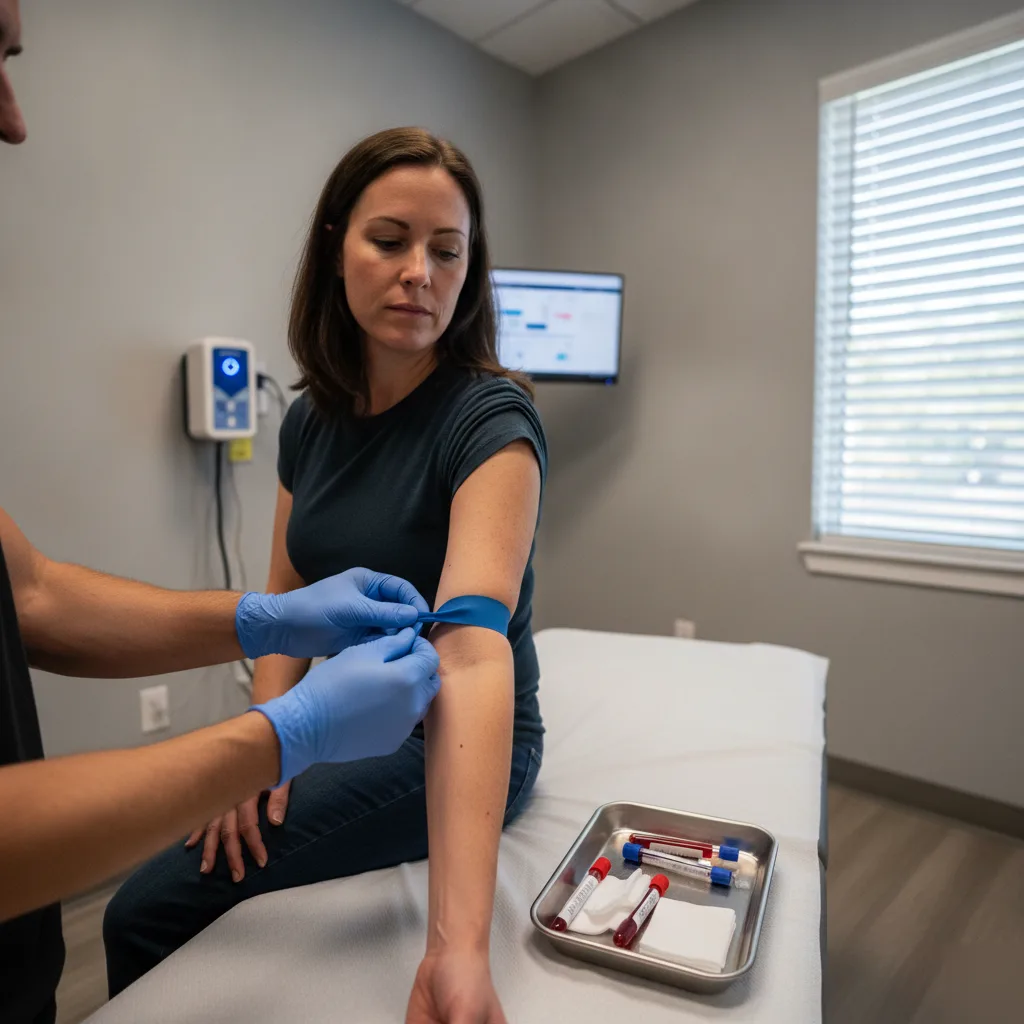
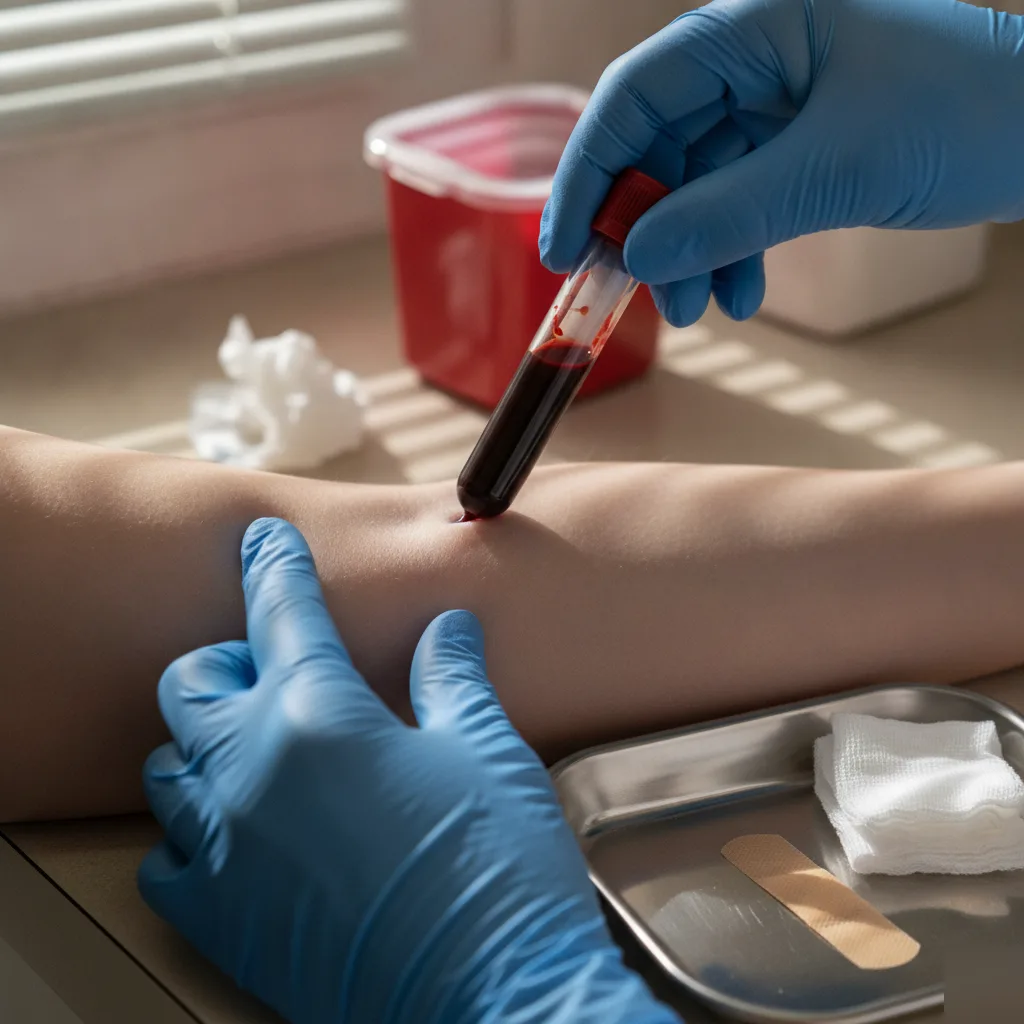
Most female hormone panels require a blood draw, usually from a vein in your arm, and the whole process takes about five minutes. Before your appointment, we will ask you to fast for eight to twelve hours. This means no food and no coffee, just water. Fasting matters because eating can shift insulin and cortisol levels. This can throw off your results. We also recommend scheduling your draw in the morning. Cortisol peaks early in the day, so a morning sample gives us the most accurate baseline.
If you’re still having menstrual cycles, timing is even more important. Estradiol and progesterone fluctuate throughout your cycle. We typically draw on day three for estradiol and FSH, then again around day twenty-one for progesterone. That second draw tells us whether you ovulated. Skip the correct timing, and it’s like reading a clock with no hands.
Here’s what happens once you’re in the chair:
- A brief review of your current symptoms and any medications you’re taking.
- A standard venipuncture blood draw from your arm.
- Samples go to the lab for processing; results usually come back within a few business days.
- A physician reviews your results and schedules a follow-up to discuss every number with you.
We don’t just hand you a printout and send you home.
Orlando’s heat and humidity can affect how you feel before and after a draw. Dehydration is common here, especially during summer months when temperatures sit above ninety degrees for weeks. Drink plenty of water the night before. Hydrated veins are easier to access, the draw goes faster, and you will feel better walking out.
One thing we often see – women apologize for not knowing what their labs mean. You don’t need to know; that’s our job. A board-certified medical doctor reviews every panel, not a tech, not an algorithm. Your results get the attention they deserve.

Turning Test Results Into a Treatment Plan
Numbers on a lab report don’t fix anything by themselves. What matters is what happens next.
Once your results come back, you will sit down with a physician who reviews each marker in context. This means not just estradiol or progesterone in isolation. Your thyroid panel, your cortisol rhythm, your testosterone level, your symptoms, and your goals are all considered. A board-certified medical doctor looks at the full picture, because a single number that’s “in range” can still be incorrect for you. We see this often. A woman’s progesterone might technically fall within the reference range. Yet, she may not be sleeping, her cycles could be erratic, and she might feel like a different person. That number alone doesn’t tell the whole story.
So the physician connects the dots between your labs and your life.
This is what that process looks like. If your estrogen is dropping and you’re dealing with hot flashes or brain fog, the conversation might turn to bioidentical hormone replacement therapy. If testosterone is low and you’ve lost muscle tone or drive, Biote pellet therapy could be the right fit. Sometimes the answer isn’t hormones at all. Perhaps your thyroid needs attention first, or your cortisol levels suggest a stress pattern that medication won’t solve on its own.
Orlando’s year-round heat and humidity can make certain hormone-related symptoms harder to distinguish. Night sweats from perimenopause feel a lot like a rough August night near the Waterford Lakes area. This is why lab data matters more here than guesswork.
Treatment plans aren’t one-size-fits-all prescriptions. They’re built around your specific lab values, your daily routine, and what you want to feel like again. As a Biote-certified provider, we can offer pellet therapy when it’s the right match, but we won’t push it if your labs point somewhere else. We operate with straightforward honesty.
Your plan also includes follow-up testing, usually at the 6 to 8 week mark. That recheck confirms your levels are moving in the right direction. It gives the physician a chance to adjust dosing before minor issues become larger ones. If you’ve been wondering what to do with your results, or if you haven’t gotten results yet, we are here for that conversation.
Book Your Consultation
Frequently Asked Questions
Do I need to fast before my hormone panel?
No, you do not need to fast for most of the markers in this panel. Estradiol, progesterone, testosterone, and thyroid levels do not require an empty stomach. However, we do check fasting insulin and glucose as part of our metabolic screening. If you can avoid eating for 8 hours before your blood draw, we get the clearest picture of how your body handles sugar and stress hormones together.
How long does it take to get my hormone panel results?
Most women hear back within a few business days after their blood draw. A physician at our East Orlando location reviews every result personally before your follow-up visit. This is not a computer printout you interpret on your own. Your doctor connects your numbers to your actual symptoms, whether that’s fatigue, weight gain, or sleep trouble, and builds a plan around what your body is really doing.
Can I bring in recent lab work instead of testing again?
Yes, if your bloodwork is less than 90 days old, we can often use it instead of redrawing blood. Many women visiting our East Orlando clinic already have thyroid or estradiol results from an OB-GYN or primary care visit. Bring whatever you have to your appointment. We will review it together and only test the markers that are still missing from your picture.
What if I recently started or stopped birth control?
If it’s been less than six to eight weeks, we usually recommend waiting before running a full panel. Your hormone levels are still adjusting during that window, and testing too early can give you readings that don’t reflect your true baseline. The same applies during early pregnancy or breastfeeding. Waiting a few extra weeks gives you a more accurate starting point for your treatment plan.
What symptoms mean I should get a hormone panel?
If three or more symptoms sound familiar, it’s worth getting tested. Common signs include persistent fatigue coffee doesn’t fix, hot flashes or night sweats, low libido, brain fog, and stubborn weight gain despite eating well. Some women also notice thinning hair, joint stiffness, or mood swings that feel out of character. These symptoms overlap with so many other conditions that guessing rarely helps. Actual lab numbers give you a real answer instead of a theory.
Does Orlando’s climate make it harder to know if my symptoms are hormonal?
Yes, Orlando’s year-round heat and humidity can mask fatigue and poor sleep, making it harder to tell what’s hormonal and what’s just the weather. Many women also spend long hours in air-conditioned offices along corridors like the 408 and 417, which can quietly lower vitamin D levels despite all the sunshine outside. That’s why our panel checks vitamin D and metabolic markers alongside your core hormones, so nothing gets blamed on the climate by mistake.