
Home » Testosterone Replacement Therapy East Orlando » Testosterone Injections in Orlando | Svelte Medical Weight Loss – East Orlando
Testosterone Injections in Orlando | Svelte Medical Weight Loss - East Orlando
Signs Your Fatigue and Muscle Loss Point to Low Testosterone

You’re sleeping seven or eight hours and still dragging through the afternoon. You used to keep up at the gym, but now your recovery takes days. And the weight around your midsection just won’t move no matter what you do.
Sound familiar? We hear this almost every day.
Low testosterone doesn’t announce itself with a single, obvious symptom. Instead, it creeps in. You might blame stress, age, or just a bad week. But when multiple signs show up together, they paint a clear picture. Here’s what to watch for:
- Persistent fatigue that coffee can’t fix, even after a full night’s rest
- Muscle loss or weakness despite consistent exercise and decent protein intake
- Increased body fat, especially around the belly, that resists diet changes
- Low libido or changes in sexual function that feel out of character
- Brain fog and irritability that make it hard to focus at work or stay patient at home
Orlando’s heat and humidity can make fatigue feel normal. Many people in the East Orlando area assume their exhaustion comes from long commutes and Florida summers. Sometimes it does. But when tiredness pairs with mood changes and shrinking muscle mass, this is your body sending a signal worth investigating.
The American Urological Association notes that testosterone levels below 300 nanograms per deciliter often indicate a clinical deficiency. A simple blood draw confirms where you stand. Many men and women who come to us have been brushing off these symptoms for months, sometimes years.
Not every case of fatigue means low testosterone. Thyroid issues, poor sleep quality, and vitamin deficiencies all overlap. Physician-supervised evaluation matters before starting any treatment. A board-certified men’s health doctor near Waterford Lakes reviews your labs, your history, and your full picture, not just one number on a chart.
But if you’re nodding along to three or more of those signs, consider getting checked soon.
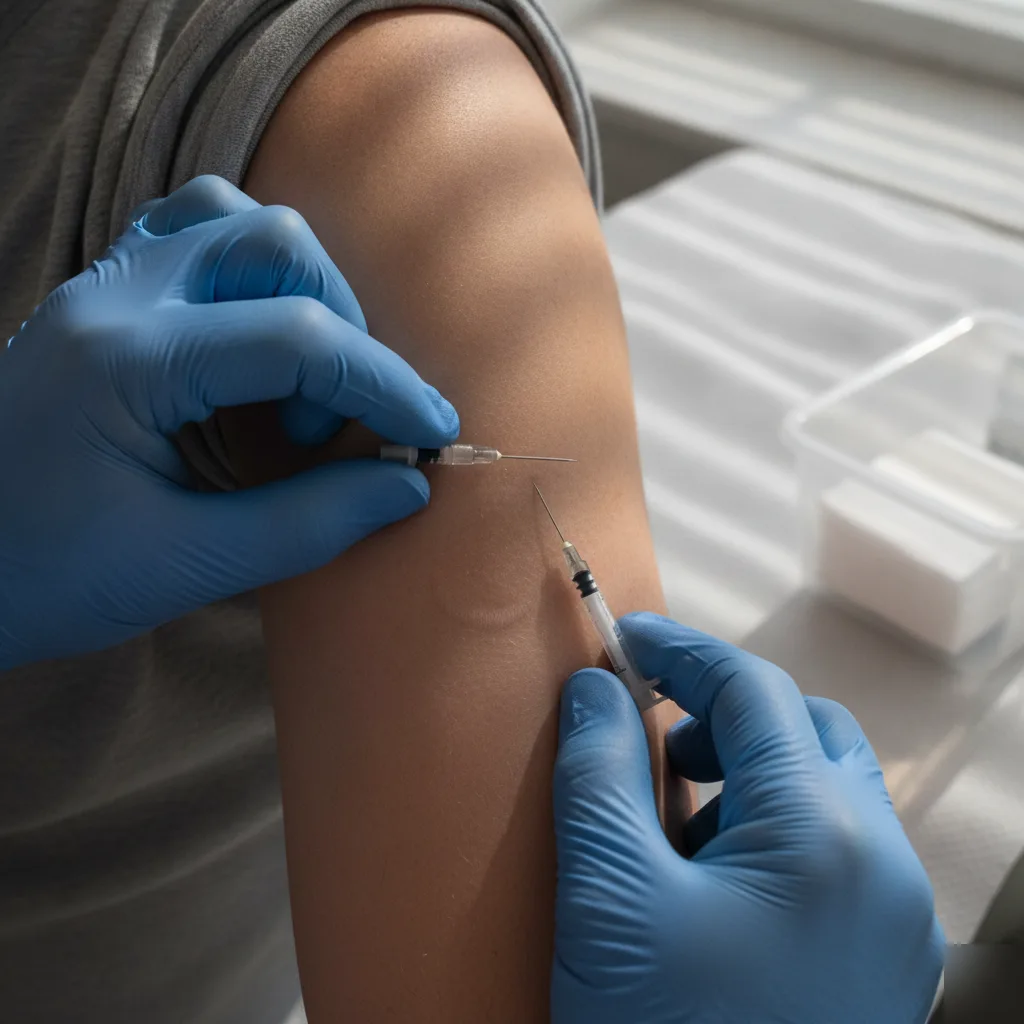
Getting Started with Testosterone Injections in Orlando
The first step is simple: call us to book your bloodwork appointment.
Before we prescribe anything, we need to see your numbers. A blood panel tells us your total testosterone, free testosterone, estradiol, PSA, CBC, and metabolic markers. We run these labs because medicine relies on data, not guesses. Your symptoms matter, and the labs confirm what’s happening inside your body. Many men arrive knowing something feels off, they are tired, their workouts don’t yield results, or their mood has shifted without reason. The bloodwork connects these observations.
Orlando’s climate plays a role many don’t expect. Year-round heat and humidity can mask fatigue as “just the weather,” so men here often wait longer than they should to get checked. We see this often: someone finally comes in after two or three years of dragging through Central Florida summers, convinced their exhaustion was normal. It wasn’t.
Your first visit includes a full review with a physician, not just a quick telehealth screen. A board-certified medical doctor sits with you, going over your labs, your health history, and your goals. If testosterone injections are the right fit, we’ll build a protocol around your specific levels. If they are not the right fit, we will tell you that as well.
Here’s what the process looks like once you’re a candidate:
- Complete your initial blood panel at one of our Orlando-area clinic locations.
- Meet with the physician to review results and discuss symptoms.
- Receive your injection protocol with dosing, frequency, and follow-up schedule.
- Begin treatment with ongoing lab monitoring at regular intervals.
- Adjust your protocol based on how your body responds over the first 8 to 12 weeks.
And monitoring doesn’t stop after the first round of labs. We recheck your levels regularly because your body changes. Stress, sleep, weight, even seasonal shifts in activity can affect how you metabolize testosterone. A protocol that worked in January might need a small tweak by July. Physician-supervised care matters greatly. It is not a set-it-and-forget-it situation. If you’ve been putting this off, the hardest part is already behind you. Making the call is the first step.

When Testosterone Injections Aren't the Right Answer
Here’s the honest truth. Not everyone who feels tired, sluggish, or off needs testosterone.
We see this regularly. Someone comes in convinced their testosterone is low, but their labs tell a different story. Often, their levels are within a healthy range. The real culprit could be poor sleep, chronic stress, or a thyroid issue nobody checked for. It might even be vitamin D deficiency; this is common even in sunny Orlando. Feeling lousy doesn’t automatically mean low T. It means something needs investigating.
If your bloodwork comes back normal, testosterone injections won’t fix what’s wrong. Adding hormones your body doesn’t need can cause problems. These include acne, mood swings, elevated red blood cell counts, and fertility issues you didn’t anticipate. Physician-supervised care matters greatly for this reason. A board-certified medical doctor should review your full picture before anyone reaches for a needle.
And sometimes the symptoms are real, but the timing isn’t right. Men actively trying to conceive should know that exogenous testosterone can suppress sperm production. This is a conversation you need to have with your doctor before starting treatment, not after.
There are also cases where lifestyle changes help first. Dropping excess body fat, getting consistent sleep, and managing stress can raise testosterone levels naturally. We would rather you try those steps and come back for retesting than start a protocol you don’t need. This is how good medicine works.
So when should you skip testosterone injections?
- Your total and free testosterone levels fall within normal reference ranges
- You haven’t addressed sleep, nutrition, or stress factors yet
- You’re planning to start a family in the near future
- Your symptoms point toward thyroid, adrenal, or other hormonal imbalances instead
The right answer is always the one your labs and your body support. We would rather tell you that you don’t need treatment than put you on something that won’t help. We take that straight-forward honesty seriously.

Injections Versus Pellets and Gel: Choosing the Right Delivery Method
You have options, which is a good thing. But it also means you need to understand what each delivery method does in your body, not just what sounds easiest.
Testosterone injections deliver a measured dose directly into muscle tissue, usually every one to two weeks. Your levels rise quickly after the injection, then taper down before the next one. Some people feel that cycle; others don’t notice it at all. The advantage is control. If your doctor needs to adjust your dose, it happens at the very next visit. There is no waiting, no guessing. We can fine-tune things fast. This matters a lot during those first few months when your body is still responding to treatment.
Pellet therapy works differently. Small pellets get inserted under the skin, typically near the hip, and release testosterone slowly over three to six months. As a Biote-certified provider, we offer this method for patients who want steady levels without the need for weekly schedules. It’s a minor in-office procedure. But here’s the trade-off: once those pellets are in, the dose is set. Adjustments must wait until the next insertion cycle.
Topical gels absorb through the skin daily. They keep levels more even day to day, but they come with practical concerns. You must avoid skin contact with partners or children until the gel dries completely. Orlando’s heat and humidity can cause extra sweating, which affects absorption. Patients who have tried gels often tell us they tire of the daily routine and the worry about transfer.
So which one is right? That depends on your lab results, your lifestyle, and how your body metabolizes testosterone. A patient working outdoors in Lake Nona’s summer heat has different needs than someone with a desk job near the I-Drive corridor. There is no universal option.
This is precisely why physician-supervised care matters. Your doctor reviews your bloodwork, listens to how you feel, and matches the method to your life, not the other way around. If you’re ready to figure out which approach fits you, give us a call and we can discuss it together.
How Testosterone Therapy Pricing Works
This is the question we hear most: not “does it work?” but “what will it cost me?” That’s fair. You deserve a straight answer before you commit to anything.
Testosterone injection therapy pricing across the industry often follows one of three models. Some clinics charge a flat monthly fee that bundles labs, visits, and medication together. Others use a per-visit structure where you pay each time you come in. Then there’s the pay-by-unit model, where you’re charged based on the actual medication you use. Each model has trade-offs. The bundled model can feel simpler but often includes services you don’t need every month.
Several factors drive what you’ll spend:
- Lab work frequency. Most providers require bloodwork before starting and then every few months to monitor your levels. Initial panels tend to cost more than follow-up draws.
- Injection type and dosage. Testosterone cypionate is the most common injectable form. Your dose depends on your labs, your symptoms, and how your body responds over time.
- Office visit requirements. Some states and clinics require in-person visits for every injection. Others allow self-administration at home after proper training.
- Whether hormone therapy is integrated with other care. Addressing testosterone alone is one cost. Combining it with metabolic or weight management support is another.
Many people don’t realize this. The least expensive option upfront isn’t always the least expensive option overall. A clinic that skips proper lab monitoring might save you money in month one, but you could end up with dosing problems that take months to correct. Orlando’s warm climate means men here are active year-round, and poorly managed testosterone levels show up fast in energy crashes and recovery issues.
Ask any provider you’re considering three things before signing up: What’s included in the quoted price? How often will I need labs? And who reviews my results, a physician or someone else? A board-certified medical doctor reviewing your bloodwork isn’t the same as an algorithm adjusting your dose remotely. That distinction matters more than many people think.
If you want to talk through what your specific situation might look like, give us a call.
Book Your Consultation
Frequently Asked Questions
What happens during my first testosterone injections visit in Orlando?
Your first visit starts with a blood draw, not a prescription. We check your total testosterone, free testosterone, estradiol, PSA, and a few other markers before anyone talks about treatment. After the labs come back, you sit down with a board-certified medical doctor to go over the numbers and your symptoms. If injections make sense for you, we build a plan around your specific levels. If they don’t, we’ll tell you that too and point you toward the real cause.
How long before I notice results from testosterone injections?
Most people start noticing changes within the first 8 to 12 weeks. This is also when we recheck your labs and adjust your dose if needed. Energy and gym recovery often improve first, while changes in body composition take a bit longer. Your body isn’t a switch that flips overnight, so we treat this as an ongoing process. Regular monitoring during those early weeks helps us fine-tune your protocol instead of guessing.
Can Orlando’s heat make low testosterone symptoms harder to notice?
Yes, and we see this constantly in East Orlando patients who blame their exhaustion on summer heat and long commutes. Year-round humidity makes fatigue feel like a normal part of Florida life, so people wait months or years before getting checked. If your tiredness comes with mood changes or shrinking muscle despite regular workouts, that’s more than the weather. A simple blood panel can tell you whether something else is going on.
How often will I need follow-up labs after starting treatment?
We recheck your levels at regular intervals, not just once. Your body changes with stress, sleep, weight, and even the seasons, so a protocol that works well in January might need a small adjustment by July. This ongoing lab monitoring is part of physician-supervised care, not an extra step we tack on later. Skipping follow-up labs means flying blind, and that’s not how we approach treatment here.
How do I know if testosterone injections are really what I need?
The only way to know for sure is bloodwork, not symptoms alone. We regularly see people convinced their testosterone is low, only to find their levels sit within a healthy range. In those cases, the real issue is often poor sleep, chronic stress, or an undiagnosed thyroid problem. Adding testosterone when your body doesn’t need it can cause side effects instead of relief, so a physician review always comes before any needle.