
Home » Testosterone Replacement Therapy East Orlando » Low Libido Treatment for Men in Orlando | Svelte Medical Weight Loss – East Orlando
Low Libido Treatment for Men in Orlando | Svelte Medical Weight Loss - East Orlando
Signs Low Libido May Be Hormone-Related

You used to be yourself. But now, you don’t feel yourself, and you aren’t sure what happened.
Men often come in to see us saying this, and they usually don’t come in saying, “I think my testosterone is low.” They might say, “I’m tired all the time,” or “I don’t really enjoy anything I used to enjoy anymore.” Low libido is often the last thing they bring up, and they say it kind of like an afterthought, but it ends up being the primary reason why they needed help.
How do you know if these are hormonal problems or just regular stress or getting older? Certain symptoms are clues. Hormonal low libido almost never happens by itself; there are other accompanying symptoms.
- Fatigue that doesn’t get better with rest, like when you sleep 7-8 hours at night
- Muscle loss or increased belly fat, despite regular physical activity
- Brain fog, trouble focusing, and irritability
- Reduced morning erections, or weaker erections
- A “flat feeling” in areas where motivation and drive used to be
In Orlando, it can be easy to attribute fatigue to our weather and summer months, where the heat and humidity are constant. A lot of men are physically active here, so if their performance drops off in the Florida summer, they assume it’s because of the weather. But if you experience a cluster of these symptoms that don’t go away in the next few weeks, your body is telling you that something is going on.
Here is another scenario that happens often with men. Testosterone often drops gradually, sometimes over years. At some point, however, your body hits a critical level where symptoms start. The American Urological Association says that approximately 40% of men over 45 have testosterone levels below “normal.” That is a very common number.
These symptoms are measurable. A simple blood panel can reveal whether your testosterone levels, free testosterone, and other markers are where they should be. You don’t have to wonder or suffer. Your doctor can tell you exactly what the numbers say. That is the starting point for your plan.
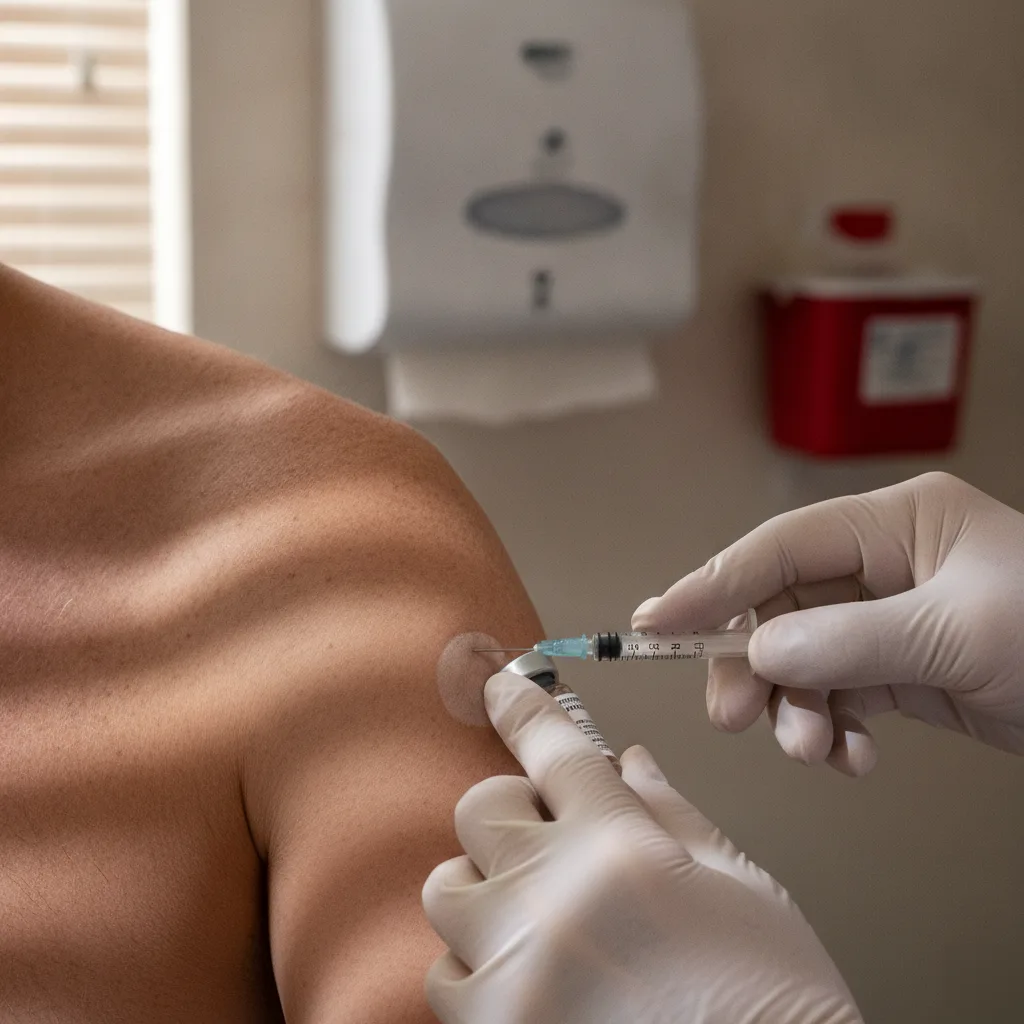
Why Testing Comes Before Any Treatment Plan
A lot of men show up here convinced that they already know the answer: “I just need my testosterone.” But low libido in men is rarely caused by just one thing. It is almost always the result of multiple root causes that need to be identified and measured accurately before a prescription or treatment can be made.
That is why we start with lab work, every single time.
A proper low libido workup involves looking at total testosterone and free testosterone, to be sure, but the testing goes far beyond this. We look at your thyroid panel, metabolic factors, estrogen, DHEA, cortisol, and often vitamin D and B12 levels. Florida is warm year-round, and a lifestyle where most men stay indoors all year can mask certain fatigue and deficiency markers that quietly lower libido and energy levels.
Take this example: if your body is converting too much testosterone into estrogen, a common occurrence in obese men, and you increase the amount of testosterone alone, it isn’t likely to solve the problem.
- Total testosterone, free testosterone, and sex hormone-binding globulin (SHBG)
- Estradiol and DHEA-S
- Thyroid panel (TSH, free T3, T4)
- Fasting glucose, insulin, and HbA1c
- Complete blood count, liver markers
Why are all of these tests important for libido? Because your hormones talk to one another. A sluggish thyroid is energy-sapping, high insulin levels can produce an inflammatory reaction that decreases testosterone production, and excessive cortisol resulting from chronic stress has a direct inhibitory effect on libido hormones. If you treat one without understanding the full picture, it becomes guesswork, and that wastes your time and money.
Our physician looks at your results. We don’t rely on software or an algorithm. A licensed men’s hormone and wellness physician looks at your lab work and your symptoms, and connects the dots. You have an actual diagnosis, not a series of educated guesses.
Sometimes, we find testosterone is fine and it’s poor sleep, unmanaged insulin resistance or side effects from drugs. Or it might be that it’s just not. Either way, it’s not really possible to know until we test. Once we have that information, we can create a plan that focuses on the cause of your low libido rather than its symptoms.

Situations When a Low Libido May Not Require Medical Intervention
And it’s important to keep in mind that sometimes the right answer is no medical treatment at all.
If your libido has dipped since starting a new job, moving, and/or sleeping two or three hours every night because of a newborn, that’s totally understandable. When you’re running on high alert, your body is going to put its energy into survival, not pleasure. The guy working a 60-hour week near the UCF campus and driving I-4 into work every morning isn’t necessarily unhealthy. He’s just dead tired. Exhaustion alone is enough to lower your sex drive faster than nearly any hormonal issue.
- You just started taking a medication, such as an SSRI or blood pressure medication, and low libido began around the same time
- You’re having a rough patch in your marriage and there’s an obvious tension or lack of connection between you and your spouse
- You’ve been drinking more and/or not sleeping much in the past few weeks
- You have a specific life stressor that you can link to the start of the decline
Often, dealing with the cause of low libido fixes it. If that means better sleep, better diet and less booze, or sitting down and talking to your spouse, you can just do it. Many times, men come in convinced that their issue is huge, but then talk with us and realize that their sexual desire took a dive the same month they started sleeping three hours less per night after starting to take on extra shifts, for example.
If, however, your symptoms continue over three months without any improvement, and you’ve made a reasonable effort to sleep better and reduce your stress but you’re still low drive, then your body may be telling you something you can’t fight with willpower.
It’s no surprise that the stress of daily life and the natural drop in testosterone you experience as you age are compounding the problem. And Orlando’s heat and humidity aren’t doing much to help your fatigue and bad sleep either. We’d love for you to try out these easy fixes in the interim to see if you can avoid an unnecessary trip to the doctor. If the symptoms get any better, that’s great! If they don’t, then a lab panel and face-to-face conversation with your doctor will definitely be the next move.
What Happens at Your First Hormone Consultation in Orlando
You will meet with a doctor. Not a chatbot, not a questionnaire that generates a prescription. A board-certified MD will meet with you to talk about your symptoms, history, and goals.
Your first visit begins with bloodwork. We’ll test total and free testosterone, thyroid markers, metabolic panel, and other hormones that influence your sex drive. It’s easy to chalk up Orlando’s hot and humid conditions to “just the weather,” so we dig a little deeper. That’s why your blood work is so vital because it will give us insight into your situation.
In addition to the blood panel, we’ll talk about your sleep, stress levels, body composition, and even what medications you may be on. There is rarely one cause behind a low sex drive. It’s not uncommon that you carry extra pounds around your midsection that causes your estrogen levels to go up as your testosterone is converted, something that we see often at our Lake Mary and Dr. Phillips offices. Some men on blood pressure medication and even some antidepressants didn’t know that their meds were also lowering their libido. We help our patients understand what their meds could be doing.
- You’ll have a private conversation about your symptoms, such as when you first began noticing them and how they may have progressed in the years since.
- You’ll have a blood panel run on your visit, so there are no delays on testing.
- Your body composition will be measured to find out if you have some metabolic factors that could be tied in with hormonal imbalance.
- Your doctor will sit down with you to review your results and make a clear treatment plan, usually within days of your first visit.
We don’t do pushy sales tactics. Our motto is straight forward honesty because men with low libido are already stressed enough. You deserve to hear straight forward answers, not to be sold something.
Since our clinic combines hormone optimization and weight management under one roof, we look at the complete picture in your treatment plan. If you’re carrying excess weight in the first place that is lowering your testosterone, we look at both issues as a unit so you don’t have to visit multiple offices. That is what sets a clinic that treats symptoms apart from a clinic that can treat the cause.
If you’d like to start from the comforts of your home, we offer telehealth visits for eligible Florida residents.

How Does Hormone Replacement Therapy and Monitoring Work?
If your tests do show that you do have low testosterone, what happens then? Many people feel nervous because of the conflicting information available online about hormone therapy. Let’s take a closer look.
The next step is to design a treatment plan based on your specific lab work. It’s certainly not one size fits all. Your free testosterone, total testosterone, SHBG, estradiol, thyroid markers, and metabolic panel are considered. A doctor will review everything to determine the best way forward for you. We offer bioidentical hormone replacement therapy and Biote pellet therapy to bring your hormones back into balance using the same natural hormones your body already makes.
Biote pellets are very small and look like a grain of rice. You’ll be getting these inserted under the skin during a quick appointment right in our clinic. The pellets provide an even amount of testosterone over several months, so you’ll be skipping the daily pills, the messy gels, the weekly injections, or worse. Most men notice that they’re feeling better by week three or four with mental clarity, then energy and libido coming back. Testosterone therapy can improve your mental acuity first and physical energy second.
It’s not enough to just treat men the first time; we recheck them on a regular schedule too. After all, hormones don’t work by themselves in the body; you have a relationship with weight, quality of sleep, stress hormones, red blood cell counts, and many other factors. We’ll want to check labs at set intervals to make sure your labs are still in a therapeutic range.
In Orlando, we’re also dealing with heat and humidity during most of the calendar year, and we know that heat and humidity impact the way men in Orlando can process hormones and exercise. This is especially common for our patients in East Orlando and areas like Waterford Lakes who have to work or exercise outside. This is normal, and we’ll sometimes need to tweak a treatment plan.
And all of this requires a medical doctor with experience. A board-certified medical doctor will go over your lab work, and tweak your plan. If you see an increase in estrogen levels or a hematocrit that’s too high, we want to know about it right away. That’s how we make a data-driven, medically sound decision.
We don’t just want to help your lab values look better. We want to help you feel like you again!
Book Your Consultation
Frequently Asked Questions
How do I know if my low libido is from low testosterone or just stress?
You can’t know for sure without a blood test, but there are clues. Hormone-related low libido usually comes with other signs, like tiredness that sleep doesn’t fix, weaker morning erections, or brain fog. If you can point to one clear stressor, like a new job or bad sleep, that’s often the cause. If symptoms stack up and last for weeks, your hormones are more likely involved. A simple lab panel gives you a real answer instead of a guess.
What tests do you run to check for low libido in men?
We check total and free testosterone, plus several other markers most places skip. This includes thyroid function, estradiol, DHEA-S, cortisol, and metabolic markers like fasting glucose and insulin. Your hormones don’t work alone, so a low thyroid or high insulin can lower your drive even if testosterone looks fine. A board-certified physician reviews every result together instead of chasing one number. This gives you a full picture, not a partial one.
Can Orlando’s heat and humidity affect my energy and libido?
Yes, Orlando’s heat and humidity can hide real fatigue for much of the year. Many men here stay active outdoors, so when energy or performance drops, they blame the Florida summer instead of looking deeper. If tiredness sticks around even after good sleep, the climate probably isn’t the real cause. That pattern is worth checking with a lab panel rather than waiting out another hot season.
Is it normal for libido to drop after a stressful stretch, like commuting the I-4 corridor?
Yes, this is common and often not a medical problem. Long hours near the UCF corridor, daily I-4 traffic, and short sleep can lower desire faster than most hormone issues. Your body prioritizes survival energy when it’s stressed, so a temporary dip is expected. If you can trace the drop to a specific change, like a new job or a rough patch at home, addressing that usually helps first.
How long should I wait before getting low libido checked out?
Give it about three months if you’ve already fixed sleep, stress, or alcohol habits. Many men see libido return once they get more rest or ease up on drinking. But if you’ve made those changes and still feel flat, something else is likely going on. At that point, a hormone evaluation gives you clear numbers instead of more guessing.