
Home » How Often Do I Need to Come In for Testosterone Injections? A Dr. Phillips Orlando Guide
How Often Do I Need to Come In for Testosterone Injections? A Dr. Phillips Orlando Guide
Testosterone Injection Frequency Depends on the Ester You Use
How often you come in for testosterone injections depends mostly on which ester your doctor prescribes. Testosterone cypionate and enanthate usually need dosing every 7 to 14 days. Shorter esters need more frequent shots. Your labs, and how you feel between doses, fine-tune the exact schedule.
Testosterone doesn’t come in one form. It’s attached to a compound called an ester, and that ester controls how fast your body absorbs and clears the hormone. Some esters release slowly over two weeks. Others clear out in a few days. This one detail answers most of the confusion around injection timing.
In our Orlando clinic, we most often prescribe testosterone cypionate or testosterone enanthate. Both are long-acting. Patients like them because you can space out injections without big swings in how you feel. But not every patient responds the same way, even on the same ester.
- Testosterone cypionate: typically dosed every 7 to 14 days, one of the most common esters used for testosterone replacement therapy
- Testosterone enanthate: similar half-life to cypionate, also dosed weekly to biweekly
- Testosterone propionate: a shorter ester that clears fast, often requiring injections every 2 to 3 days
- Compounded blends: some formulas combine esters, which can change the frequency needed to keep levels steady
Here’s what we see in practice. Patients on a 14-day schedule sometimes feel great the first week. Then fatigue or mood dips show up right before the next shot. That’s a sign testosterone is dropping too low between doses. It’s a common finding, and it’s exactly why blood work matters so much here.
Splitting a longer-acting ester into smaller, more frequent shots, weekly instead of biweekly, often smooths out these highs and lows. We adjust this constantly based on labs and symptoms lining up, or not.
So the ester sets the starting point. Not the final answer.
Body weight, metabolism, and injection site also affect how long an ester’s effect lasts. Older patients sometimes clear testosterone slower than younger ones (we see this a fair amount in our Dr. Phillips patients in their 50s and up). A standard schedule pulled off an online chart doesn’t always match what’s actually happening in your bloodstream.
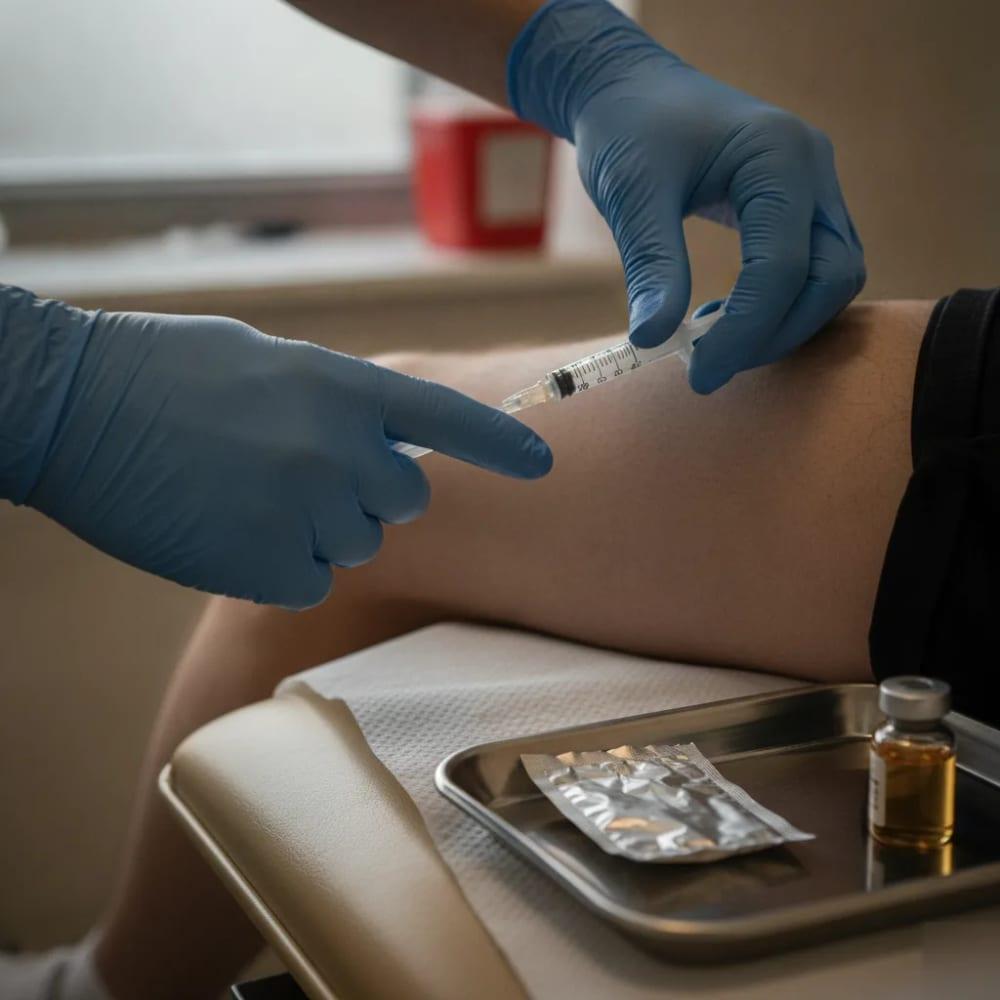
Why Your Clinic Visit Schedule Is Different From Your Injection Schedule
Here’s where a lot of new patients get confused. You might inject testosterone once a week at home. That doesn’t mean you’re driving to see us every week too. Your injection schedule and your clinic visit schedule run on different clocks. One keeps your hormone levels steady day to day. The other checks your labs and confirms your dose is still right for your body.
Most patients on a weekly self-injection protocol only need office visits every 6 to 12 weeks at first, then every 3 to 6 months once things stabilize. We use that time to draw labs, review testosterone levels, and check red blood cell count. We ask how you’re feeling too, because numbers on paper don’t always match how a patient feels day to day.
- Weekly or biweekly injections keep your testosterone level steady between visits
- Lab draws every 6 to 12 weeks during dose adjustments catch problems early
- Follow-up visits every 3 to 6 months once you’re stable on a maintenance dose
- Annual labs to track long-term markers like cholesterol and prostate health
- Sooner visits if you notice side effects or your symptoms change
A patient we worked with in Dr. Phillips came in expecting weekly office visits, just like his injection routine. He was relieved to learn he only needed to stop by every couple of months once his dose was dialed in. He kept doing his own injections at home. We handled monitoring on a longer cycle. That’s typical. Most guys settle into a rhythm where the shots are a weekly habit, but the doctor visits are a quarterly check-in.
So why not just skip the visits once you feel good? Because feeling good and having safe, stable labs aren’t always the same thing. Testosterone therapy can raise red blood cell counts over time, and that needs watching. Skipping labs is one of the more common mistakes we see, patients feel great and assume everything’s fine underneath the surface.
If you’re trying to figure out what a real visit schedule looks like for your situation, our testosterone injections page walks through what the first few months typically involve, from starting dose to your first follow-up lab draw.
The bottom line is simple. Injecting is a weekly task you manage yourself, most of the time. Coming in is a periodic checkup that keeps a physician’s eyes on your bloodwork and your progress.

What to Expect in Your First Few Months of Testosterone Therapy
Your first injection won’t flip a switch. Testosterone builds in your system over weeks, not days. Most men who start with us ask the same thing: when will I feel it, and what’s a realistic injection schedule to start with? We usually start patients weekly or biweekly, then adjust based on how the body responds and what labs show.
The first two to three weeks are about your body adjusting. Some men notice better sleep almost right away. Others feel nothing yet, and that’s normal. Low energy and low mood tend to lift before things like muscle gains show up.
By week four to six, most patients start reporting real change. Mood steadies, morning energy improves, and the mental fog that brought them into our Orlando office starts to clear.
- Weeks 1-3: Sleep and mood often shift first, sometimes subtly
- Weeks 4-6: Energy and focus usually improve, workouts feel less draining
- Weeks 6-8: Libido and stamina changes tend to show up here
- Months 2-3: First follow-up labs check testosterone levels and adjust dosing
- Months 3-6: Muscle tone and body composition changes become visible
We check labs again around the eight to twelve week mark. Not a formality. It’s how we decide if your dose or frequency needs to change. Too low a dose won’t move the needle. Too high a dose can cause its own problems. So we track your numbers, not just how you feel.
A patient of ours, a 44-year-old contractor working sites across Orlando, told us he didn’t believe the fatigue was hormone-related until week five, when he stopped needing an afternoon coffee just to get through the day. That’s a common story. And it’s exactly why we don’t ask patients to guess about progress on their own.
One thing we tell every new patient upfront: injection frequency isn’t fixed forever.
Your first few months are really a calibration period. We’re watching your labs, your symptoms, and your side effects together, then fine-tuning the schedule to fit your body specifically. Some men do weekly. Others move to every ten days once levels stabilize. Nobody gets a cookie-cutter schedule here
Book Your Consultation
Frequently Asked Questions
What happens at my first testosterone injection appointment in Orlando?
Your first visit focuses on lab work and a health review, not the injection itself. We check your baseline testosterone level, review symptoms, and talk about your goals. Many Dr. Phillips patients are surprised the first appointment is mostly talking and blood draws. We use this information to pick a starting ester and dose. You won’t leave with a random schedule pulled from a chart. Your plan is built around your labs and how you feel day to day.
Does injecting testosterone more often always speed up results?
No, more frequent shots don’t make testosterone work faster. Your body still needs weeks to respond, no matter how often you inject. What frequency does change is how stable your levels stay between doses. Splitting a longer-acting ester into smaller, weekly shots can smooth out highs and lows. But rushing the schedule won’t rush your results. Most men notice sleep and mood shift in the first few weeks, with bigger changes showing up by month two or three.
Does Orlando’s heat affect how I store my testosterone medication?
Yes, Orlando’s heat and humidity can affect how testosterone should be stored between injections. Vials need a cool, stable spot away from direct sun, especially if you’re driving around town on a hot afternoon. Leaving medication in a car, even for a short errand, can raise the temperature fast. We walk every patient through proper storage during their visit, since a hot Orlando summer day is different from a mild spring one.
How do I know if my injection schedule needs to change?
You’ll usually notice symptoms returning right before your next dose is due. Fatigue, mood dips, or low energy in the final days of a cycle often mean testosterone is dropping too low between shots. This is common with a 14-day schedule. Your labs and how you feel guide any changes. Our testosterone injections page breaks down what typical dose adjustments look like over the first few months, if you want a closer look before your next visit.
What’s the difference between my injection schedule and my clinic visit schedule?
Your injection schedule is a weekly or biweekly task you manage at home. Your clinic visit schedule is separate and usually happens every 6 to 12 weeks at first, then every 3 to 6 months once you’re stable. Visits are for lab draws and checking things like red blood cell count. Feeling good doesn’t always match what your bloodwork shows, so visits catch problems your body might not be telling you about yet.
Ready for a Svelte transformation?
Take the first step toward better health and metabolic stability today.
Our team is here to support you.