
Home » How Long Does a Blood Draw Really Take? What to Expect Before Weight Loss Labs in Orlando
How Long Does a Blood Draw Really Take? What to Expect Before Weight Loss Labs in Orlando
The Actual Draw Time vs. Your Total Appointment Time
The needle is usually in your arm for less than five minutes, even when several tubes are filled. Your full appointment, from check-in to walking out, often runs 15 to 30 minutes. Paperwork, wait times, and special tests make up most of that gap.
Most people mix up two very different numbers. One is the draw itself. The other is the whole visit. And they’re not close.
The actual blood draw is quick. A trained phlebotomist finds the vein, cleans the spot, and inserts the needle. Each tube fills in a few seconds. Even a full panel with four or five tubes rarely takes more than three to five minutes of needle time, the bandage goes on right after.
So where does the rest of the time go?
Mostly to everything around the draw. You check in. Staff confirm your ID and the doctor’s order. They may ask when you last ate. Then you wait your turn. After the draw, some people sit for a minute or two, especially if they get lightheaded. Here’s what usually adds time to your visit:
- Check-in and insurance or ID verification, often 5 to 10 minutes
- A busy waiting room, worst on early weekday mornings when fasting patients show up at once
- Hard-to-find veins, which can mean a second stick or a warm compress first
- A short rest after the draw if you feel faint or skipped breakfast
- Special tests like a glucose tolerance test, which can keep you there about two hours
That last one catches people off guard. A standard metabolic panel or A1C is a single quick draw. But a glucose tolerance test needs several draws spread over time. Your physician will tell you ahead of time if you need one.
We see this every week. A patient blocks off a full morning for baseline labs, then texts us from the parking lot 20 minutes later. One woman from Winter Park told us she spent more time on I-4 than in the chair. That’s pretty typical. The drive is often the longest part.
Fasting labs change the math a little. Those numbers matter. They show whether your body is stuck burning sugar or ready to burn fat. Because you can’t eat beforehand, most Orlando patients book the first slot of the day, get in, get out, and eat breakfast by 8:30. Smart move.
Our tip from years of doing this: bring water, wear short sleeves, and arrive a few minutes early. Hydrated veins are easier to find. Easier veins mean one stick instead of two –
Plan for about half an hour total, and you’ll almost always finish early.
Labs are required before any medication in our program. It’s how our board-certified physician makes safe, informed decisions about your care. The good news is it takes far less of your day than most people expect.
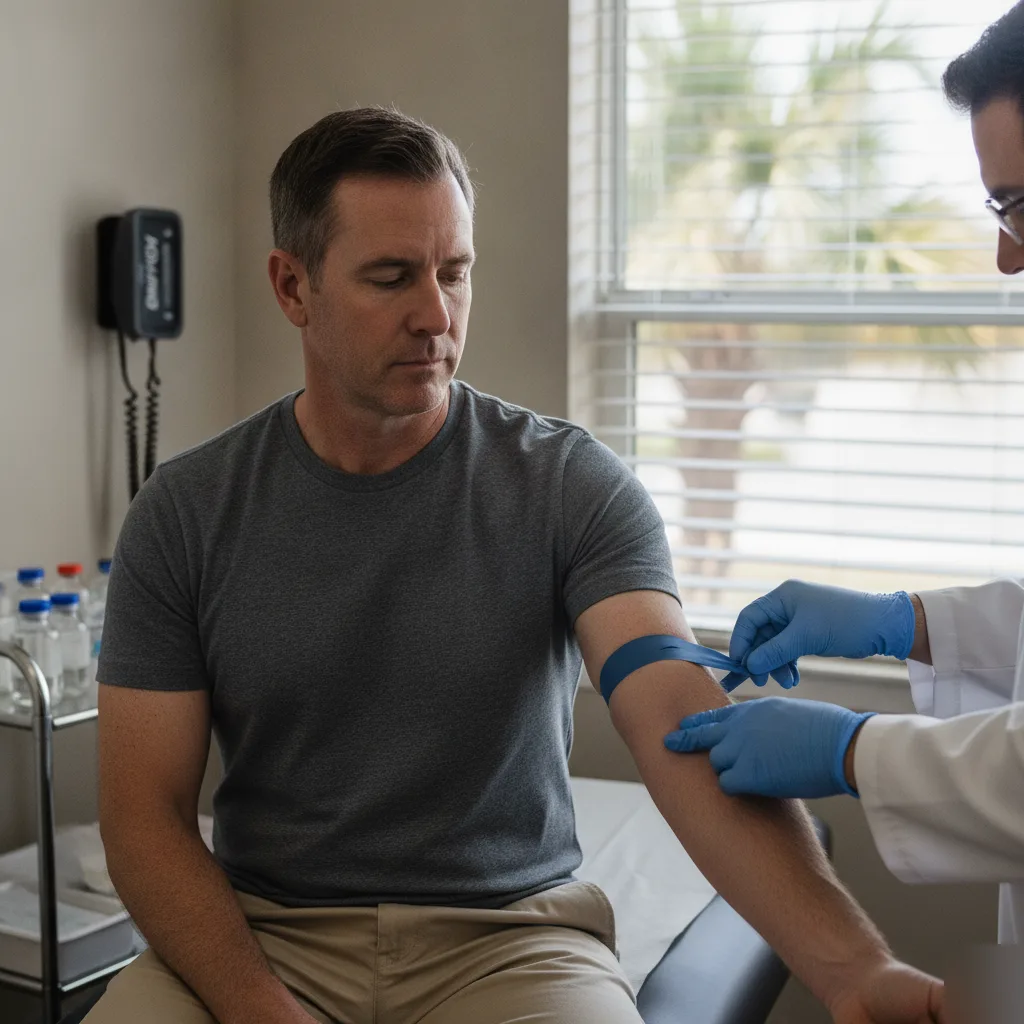
What Happens During a Blood Draw, Step by Step
Most people picture the blood draw as the long part. It isn’t. The needle is usually in your arm for less than a minute. Everything else is setup, safety checks, and a quick bandage.
Knowing the steps takes the mystery out of it. So here’s what a typical blood draw looks like from the moment you sit down.
- Check-in and ID. Staff confirm your name, date of birth, and the lab order from your physician. This simple step prevents tube mix-ups.
- A few health questions. Did you fast? Do you get lightheaded around needles? Are you on a blood thinner? Honest answers help us keep you safe.
- Finding the vein. A stretchy band goes around your upper arm. The band feels snug, it comes off once blood starts flowing. Most veins sit in the inner elbow.
- Cleaning the skin. An alcohol pad wipes the spot. We let it dry for a few seconds so it doesn’t sting.
- The blood draw itself. A small needle goes in and blood fills one or more tubes. For most patients, this part takes about 1 to 3 minutes.
- Pressure and a bandage. The needle comes out and you hold gauze on the spot for a minute or two. Then a bandage goes on.
- A short rest if you need it. Feeling woozy? Sit for a few minutes and sip some water before you stand.
From start to finish, the whole visit at the chair usually runs 5 to 10 minutes. The needle part is the shortest piece of it.
What changes the timing most? The number of tubes. Labs before a medical weight loss program often check blood sugar, A1c, cholesterol, kidney and liver function, and thyroid. That can mean several tubes. Each tube fills in seconds, the tube swaps are what add time. Our physician orders these labs because we don’t guess about your metabolism. We measure it first.
Fieldwork tip from our office: Orlando heat dries you out faster than you think. Dehydrated veins are flatter and harder to find. Drink a few glasses of water the day before and the morning of your blood draw, even if you’re fasting from food.
We see this one all the time. A patient walks in after a hot morning running errands around Orlando, skips water because they’re fasting, and their veins hide. Plain water is almost always fine during a fast. But check your lab instructions to be sure.
And if you’ve ever been told you have “hard veins” –
Tell your phlebotomist right away. They can warm your arm, use a smaller needle, or try a vein in your hand. A good one adjusts to you.
One patient from Winter Park came in sure she’d faint. She’d been dreading her labs for weeks. We had her lie back, chatted about her kids, and started the blood draw. She asked when we’d begin. We were already putting the bandage on.
That’s the experience we aim for. Calm, quick, judgment-free.
After 18-plus years caring for patients in Central Florida, we’ve learned the fear is almost always bigger than the poke. That picture guides every decision about your plan, including whether a GLP-1 medication makes sense for you.
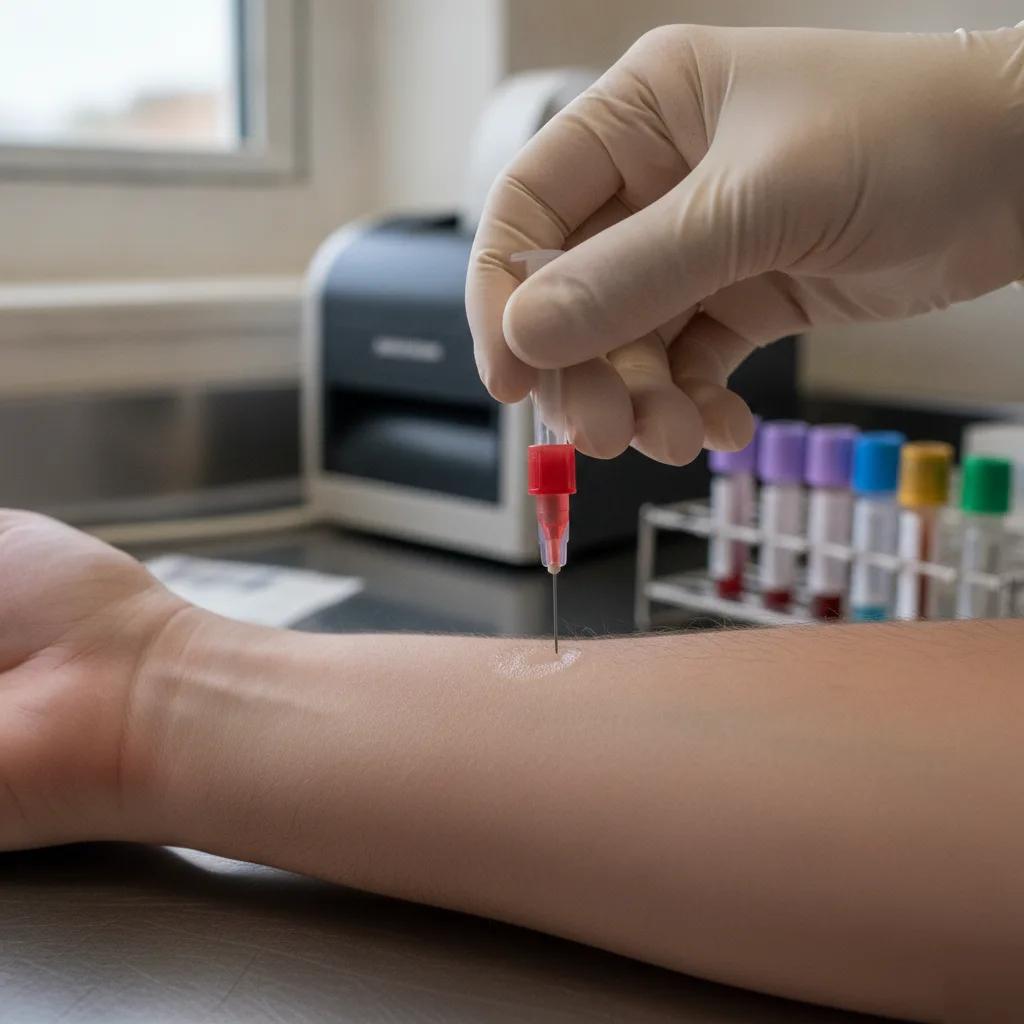
What Makes a Blood Draw Take Longer Than Usual
Most blood draws are quick. The needle part usually lasts under five minutes. But a few things can stretch that out, and most of them are within your control.
We draw labs for every patient before they start a weight loss plan. After 18+ years in Central Florida, we’ve seen just about every reason a draw runs long. These are the big ones.
- Dehydration. Low fluid levels make veins flat and harder to find.
- Cold hands or a chilly room, since cold narrows your veins and helps them hide.
- Veins that are small, deep, or scarred from past IVs.
- A larger lab panel. Checking several markers takes more tubes than a basic test.
- Nerves. Tension tightens muscles and can make you feel faint, so we slow down.
None of these are your fault. They’re just how bodies work.
Dehydration is the one we see most in Orlando.
Florida heat pulls water out of you fast. Even the walk from the parking lot counts. Add a fasting lab on top of that and your veins can shrink. Many patients skip water because they think fasting means nothing at all. It doesn’t. Plain water is fine before most fasting labs, and it helps a lot.
So what happens when a vein won’t cooperate? The tech may reposition your arm or use a warm compress. Sometimes they’ll switch to the other arm or a hand vein. A second stick isn’t a failure, it’s good technique. Each extra try adds a minute or two. Not much more.
Last summer a patient came in after a morning walk around Lake Eola. She’d had coffee and no water. Her veins were nearly flat. We gave her a cup of water, warmed her arm, and waited about ten minutes. Once we tried again, the draw itself took under three minutes.
The number of tubes matters too. More tubes means a bit more time in the chair. But the needle stays in once, and each tube swap takes only seconds.
And if you’re nervous, tell us. We’d rather go slow than rush you. Lying back, looking away, and breathing slowly can all help. Patients who get lightheaded usually feel it coming. Speak up early, we’ve got you.
Want your draw to go as fast as possible? A little prep goes a long way.
- Drink one or two glasses of water about an hour before your visit.
- Wear short sleeves or a top that rolls up easily.
- Keep your arms warm. Bring a light jacket if you run cold.
- Tell us about any past draws that were hard. It helps us pick the best spot first.
- Eat a small snack right after if your lab required fasting.
These small steps make a real difference. Most of our patients who follow them are in and out of the chair in minutes.
Book Your Consultation
Frequently Asked Questions
How long does it usually take to get results from a blood draw?
Most results come back within 24 to 48 hours, though some tests take longer. A basic metabolic panel or lipid check is often fast, while hormone or thyroid tests may take a few extra days. Point-of-care devices can return a complete blood count in under an hour. Your Orlando physician will let you know what to expect for your specific labs before you leave your appointment.
Is getting your blood drawn painful?
Most people feel only a quick pinch, not real pain. The needle is usually in your arm for less than a minute, and the discomfort fades fast once it’s out. Hydrated veins make the poke easier to find and smoother overall. If you’re nervous or have had trouble with draws before, tell your phlebotomist. They can warm your arm or try a different spot to make things easier.
What blood work takes the longest to complete at the appointment?
A glucose tolerance test takes the longest, often keeping you there about two hours because it needs several draws over time. A standard metabolic panel or A1C, by contrast, is one quick stick. If your weight loss labs include a glucose tolerance test, your Orlando physician will tell you ahead of time so you can plan your morning around it.
Why does my blood draw appointment take longer than the actual needle time in Orlando?
Check-in, ID verification, and wait times usually take longer than the draw itself. The needle part is often done in under five minutes, but paperwork and a busy waiting room can stretch your visit to 15 or 30 minutes. Orlando mornings get crowded with fasting patients trying to beat traffic on I-4, so arriving early for the first slot of the day helps you finish faster.
Does Orlando’s heat make it harder for a phlebotomist to find my vein?
Yes, Orlando heat and humidity can dry you out faster, which flattens veins and makes them harder to find. This is especially true if you’re fasting and skip water before your appointment. Drinking a few glasses of water the day before and morning of your draw, even while fasting from food, keeps your veins easier to locate and can mean one stick instead of two.
Why are fasting labs required before starting a weight loss program?
These results tell your physician whether your body is relying on sugar or ready to burn fat, which shapes safe, informed decisions about your care plan. If you want to know what your appointment will involve from start to finish, our guide on what happens during a blood draw walks through each step.
Ready for a Svelte transformation?
Take the first step toward better health and metabolic stability today.
Our team is here to support you.