
Home » How Long Does It Take To Get Hormone Test Results In Lake Mary?
How Long Does It Take To Get Hormone Test Results In Lake Mary?
Most standard hormone blood tests, such as total testosterone, estradiol, and TSH (thyroid-stimulating hormone), come back within 1 to 3 business days after your blood draw. The exact timeline depends on which tests are ordered and when your physician reviews them. Specialized tests take longer. Free testosterone by equilibrium dialysis, SHBG, and panels sent to an outside reference lab can take up to a week or more. Even then, a lab number alone isn't a treatment plan. Once your results arrive, the physician reads the numbers alongside your symptoms and health history before anything is prescribed.
Hormone tests are usually ordered because something feels off. Men often come in with fatigue, low drive, or body composition changes such as losing muscle or gaining weight around the middle. Women often come in with perimenopause symptoms, low libido, hot flashes, or night sweats. Lake Mary has a large population of busy professionals working along International Parkway and in Heathrow, and many of them travel often or keep irregular schedules. If you know the realistic timeline, you can plan a blood draw and a follow-up visit around work and travel instead of guessing.
What Is the Typical Timeline for Hormone Test Results in Lake Mary?
For most people, the full process from blood draw to a clear treatment discussion takes several days to about a week, with the lab results themselves often ready in 1 to 3 business days. Most of the waiting falls between “results posted” and “plan in place,” because the physician needs time to read every marker together and then go over them with you.
Here is how the process usually unfolds:
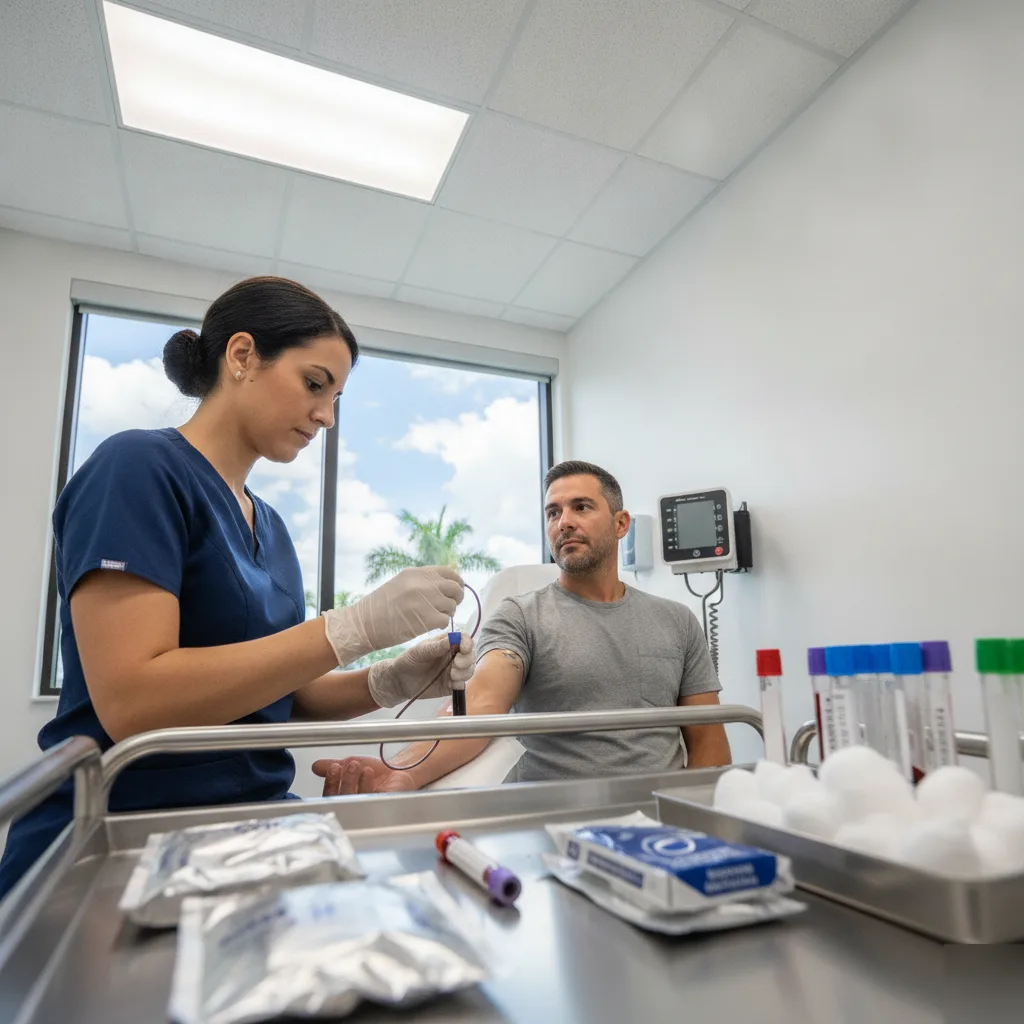
- The blood draw. The draw itself takes only a few minutes. Morning appointments are common for testosterone because levels tend to be highest early in the day.
- Lab processing. Standard hormone and metabolic markers run on automated analyzers (machines that test many samples at once). Automation is why routine results come back fast.
- Results posted. The lab sends results to the ordering physician.
- Physician review. The physician looks at all the markers together. A testosterone value means more when it's read next to thyroid, metabolic, and other hormone results.
- Review visit. You and the physician talk through what the results mean and what, if anything, should happen next.
Weekends and holidays can add a day or two. Many labs report results on business days, so a Friday afternoon draw may not post until the following week. If you want results before a trip or a busy work stretch, an early-week draw gives the lab more room.
Which Hormone Tests Take Longer to Come Back?
Basic tests like total testosterone, estradiol, and TSH usually return fastest, while free testosterone by equilibrium dialysis, reverse T3, and other specialty tests often take longer because they are sent to a reference lab. A reference lab is a larger, specialized laboratory that handles tests a regular lab doesn't run in-house.
The reasons are practical. Some tests need special methods. Equilibrium dialysis, for example, separates the small amount of testosterone that isn't bound to proteins in the blood, which takes more time and equipment than a standard total testosterone test. Other tests are only run on certain days of the week, so a sample may wait in line before it's processed.
One point is easy to miss: a panel is only as fast as its slowest test. If your order includes ten routine markers and one specialty marker, the full report may not be marked complete until that last test finishes, even though the routine results may have been ready days earlier.
The ranges below are general lab ranges, not promises from any single lab or clinic.
| Test | What it checks | Typical turnaround range |
|---|---|---|
| Total testosterone | All testosterone in the blood, bound and unbound | 1 to 3 business days |
| Free testosterone | Testosterone not bound to proteins, the portion available to tissues | 1 to 3 business days by calculation; up to 7+ business days by equilibrium dialysis |
| SHBG | Sex hormone-binding globulin, a protein that binds testosterone and estrogen | 1 to 3 business days; longer if sent out |
| Estradiol | The main form of estrogen | 1 to 3 business days; sensitive methods may take longer |
| Progesterone | A hormone tied to the menstrual cycle and hormone therapy | 1 to 3 business days |
| FSH / LH | Pituitary hormones that signal the ovaries or testes | 1 to 3 business days |
| TSH and free T4 | Thyroid function | 1 to 3 business days |
| A1c and lipids | Average blood sugar over about three months; cholesterol and triglycerides | 1 to 3 business days |
Men's Hormone Panel Timing
Our hormone level testing for men covers testosterone, thyroid, and metabolic markers. Total testosterone usually comes back quickly. Free testosterone and SHBG may add time, depending on the method the lab uses. Metabolic markers like A1c and lipids usually return with the routine results, which matters because blood sugar, cholesterol, and testosterone often affect each other.
Women's Hormone Panel Timing
A women's hormone panel may include estradiol, progesterone, FSH, testosterone, and thyroid markers. Most of these are routine tests with short turnaround times. For women who still have periods, the timing of the draw within the menstrual cycle often matters more than lab speed. Hormone levels shift across the cycle, so a fast result drawn on the wrong day can be less useful than a slightly later result drawn on the right day. Ask your provider whether a specific cycle day is needed.
How Should You Prepare for a Hormone Blood Test to Avoid Delays?
The best way to avoid delays is to follow prep instructions closely, because a test drawn at the wrong time or without fasting may need to be redone. A redraw resets the clock. A few minutes of planning can save you a week.
Use this short checklist before your appointment:
- Morning draw. Testosterone is usually checked in the morning because levels are highest early in the day and drop as the day goes on.
- Fasting, if asked. Fasting is often requested when the panel includes glucose, insulin, or lipids, since a recent meal can raise those values.
- Supplement list. Tell your provider about every supplement you take, especially biotin. Biotin is a B vitamin found in many hair, skin, and nail products, and it can interfere with some hormone and thyroid tests.
- Cycle day, if relevant. Women who still have cycles may be asked to test on a specific day of the cycle.
If you're unsure whether to stop a supplement or medication before testing, ask first. Don't stop a prescribed medication on your own.
For Lake Mary commuters, the early slot that gives the most accurate testosterone reading also fits neatly before work. You can be done before heading to an office on International Parkway or Rinehart Road.
Why Do Some Hormone Results Need a Repeat Test?
Some hormone results need a repeat test because hormone levels change from day to day, and a single low or borderline number is not always enough to confirm a diagnosis. One reading is a snapshot. Two consistent readings are a pattern.
Low testosterone is generally confirmed with a second morning test before treatment is started, in line with Endocrine Society guidance. At Svelte Medical Weight Loss Centers Lake Mary, testosterone replacement therapy starts with a lab-confirmed low testosterone diagnosis.
Several everyday factors can skew a result:
- A recent illness or infection
- Poor sleep the night before, or shift work
- A missed fast when fasting was requested
- Drawing blood later in the day than planned
Women in perimenopause face a different challenge. Estrogen and FSH can swing widely from week to week during this stage, so a single value may look normal one month and abnormal the next. For that reason, symptoms and repeat values are often read together rather than relying on one number.
The tradeoff is time. A repeat test can add a week or more to the overall timeline. But it helps you avoid starting treatment based on a misleading number, which could mean taking a medication you don't need or missing a different cause of your symptoms.
Who Reviews Your Hormone Test Results in Lake Mary?
At Svelte Medical Weight Loss Centers Lake Mary, hormone results are reviewed by Dr. Richard Bragg, a board-certified family physician, not just flagged by a lab. That difference shapes what happens after your numbers come back.
A lab report compares each result to a reference range and marks values “high” or “low.” That's useful, but a flag doesn't explain why you feel tired or why your weight changed. A physician connects the numbers to your symptoms, your history, and your goals. A testosterone level at the low end of normal, for example, means something different for a man with fatigue and rising A1c than for a man with no symptoms at all.
Each treatment plan is built from your own labs, symptoms, and goals rather than from a template. The first visit includes a comprehensive blood panel and a physician consultation.
Dr. Richard Bragg has been Board Certified by the American Board of Family Physicians since 1995, and he served as President of the Seminole County Medical Society in 2008. Svelte is a Certified Platinum Level Biote Provider for bioidentical hormone pellet therapy, and our practice has served Central Florida since 2008.
Many Seminole County patients arrive having already had labs flagged by a primary care doctor. The report may show pre-diabetes, high triglycerides, or a borderline hormone value, but no clear next step. Physician review is how those flags get connected to your symptoms and turned into a plan.

How Often Will You Need Hormone Labs After Starting Treatment?
After starting hormone treatment, you will need follow-up labs on a regular schedule so your physician can check levels and adjust your plan safely. Each round of labs shows how your body is responding to the current dose, and that result guides the next adjustment.
For men on testosterone replacement therapy, whether by injections or pellets, general clinical guidelines call for follow-up labs in the first few months, then periodic checks after that. Those labs track testosterone levels and other markers that can change with treatment.
BioTE bioidentical hormone optimization uses pellets placed under the skin to deliver steady hormone levels, and it's available for both men and women. Lab results guide the dosing, and repeat labs support ongoing monitoring and optimization as your body responds.
Women on estrogen, progesterone, or testosterone therapy may also have follow-up labs, depending on the treatment. These results are read alongside symptoms like hot flashes, sleep, mood, and libido, because how you feel is part of the picture. When follow-up labs recheck routine markers, results usually return as quickly as routine first-round results.
Your physician sets the follow-up schedule based on your specific treatment, your starting levels, and how you respond. The interval for one patient may be different from the interval for another.
What Should You Do If Your Hormone Results Seem Late?
If your hormone results have not come back within about a week, call the office to ask whether a specialty test is still pending or whether a sample needs to be redrawn. Most delays have simple explanations.
Common reasons for a delay include:
- A send-out test that went to a reference lab
- A holiday weekend that pushed reporting back
- A sample that couldn't be processed, for example because it was damaged or the tube wasn't filled enough
When you call, ask which specific tests are still pending rather than waiting on the full panel. Routine results may already be in, and the physician may be able to discuss those while the slower test finishes.
Many people relocate to Central Florida from the Northeast and Midwest. If you've moved to Lake Mary from out of state, bring recent lab reports from your past doctor. The physician can decide which results still apply and which need to be retested, which may save you a repeat draw.
Don't wait on lab results if your symptoms get worse. Call sooner for severe fatigue or major mood changes. For chest pain or any other emergency, call 911 or go to the nearest emergency room.
Getting Your Hormone Results and Next Steps in Lake Mary
Standard hormone tests usually come back in 1 to 3 business days, while specialty tests like free testosterone by equilibrium dialysis can take up to a week or more. Good preparation, including a morning draw, fasting when asked, and telling your provider about biotin, helps you avoid repeat tests and extra waiting.
If you live in Lake Mary, Heathrow, or nearby Longwood and want a physician to read your hormone levels alongside your symptoms, book a first visit with Svelte Medical Weight Loss Centers Lake Mary. Your visit includes a comprehensive blood panel reviewed by a board-certified physician, and any plan is built from your own results.
Book Your Consultation
Ready for a Svelte transformation?
Take the first step toward better health and metabolic stability today.
Our team is here to support you.