
Home » Hormone Level Testing for Men in Lake Mary | Svelte Medical Weight Loss – Lake Mary
Hormone Level Testing for Men in Lake Mary | Svelte Medical Weight Loss – Lake Mary
What a Complete Male Hormone Panel Actually Measures

A lot of guys walk in thinking we’ll check one number: testosterone. That’s it. A single testosterone reading doesn’t tell us much on its own. It’s like checking the oil in your car but ignoring the engine light.
A complete male hormone panel gives us a full picture. As a Lake Mary men’s health clinic, we run this panel for men across the area every week. The results often reveal things a basic test would miss.
Here’s what we measure:
- Total testosterone, your overall testosterone level in the bloodstream.
- Free testosterone, the portion your body can use right now.
- SHBG (sex hormone-binding globulin), a protein that binds to testosterone. This can make your total number look fine even if your usable amount is low.
- Estradiol, men produce estrogen too. When it’s out of range, you’ll feel it.
- DHEA-S, a precursor hormone made by your adrenal glands. It affects energy and mood.
- Thyroid markers (TSH, Free T3, Free T4), thyroid problems often mimic low testosterone symptoms.
We also look at metabolic markers. These include fasting insulin and a complete blood count. Hormone imbalances do not happen in isolation. Your blood sugar, red blood cell count, and liver function all play a role in how your body processes hormones.
Why does this matter to you? Maybe you are a 44-year-old near the Heathrow area. You are dragging through your afternoons. Your doctor ran a basic testosterone test last year and said you were “normal.” But you still feel off. This can happen if nobody checked your free testosterone or your estradiol. Those numbers can be the real problem.
We see this every week.
The Endocrine Society states that male hormone evaluation should include both total and free testosterone. We go further. Surface-level testing provides surface-level answers. You deserve better than that.
Signs That Make Hormone Testing Worth Scheduling Soon
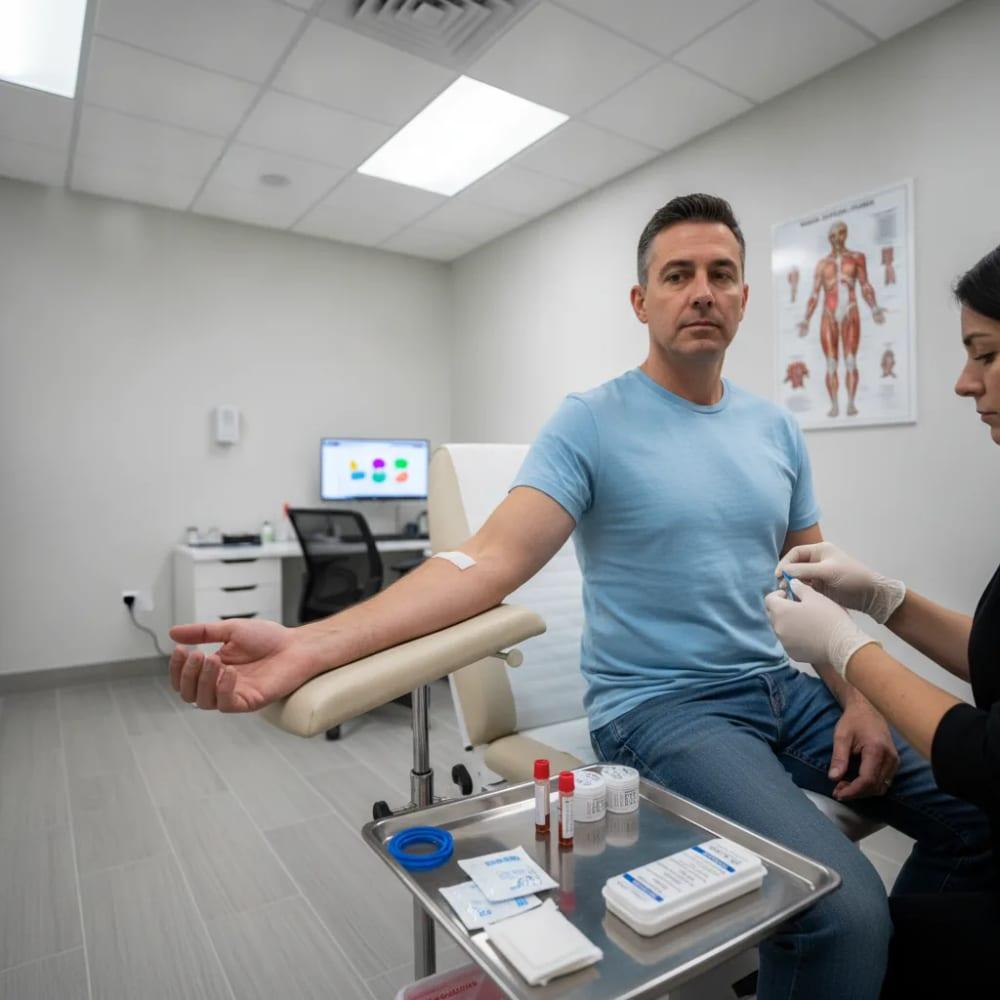
You used to sleep through the night. Now you are wide awake at 3 a.m. for no reason. Or perhaps you are tired in the afternoon even after a full eight hours. These are not just “getting older” problems. They are signals from your body. Getting your levels checked can help identify what is happening.
We hear a similar story from guys at our Lake Mary clinic almost every week. They are in their late 30s, 40s, or 50s. Something shifted. They cannot pinpoint when it started, but life feels harder than it should.
Here are common signs that suggest a hormone imbalance:
- Fatigue that does not improve with more sleep or coffee.
- Low motivation or a flat mood that does not lift.
- Trouble building muscle or losing belly fat despite consistent effort.
- Decreased sex drive or difficulty with performance.
- Brain fog, forgetfulness, or trouble concentrating at work.
Any one of these might not seem like a big deal on its own. But if you have two or three together, that is a pattern. This pattern often points to something specific.
What surprises many men is that these symptoms do not always mean low testosterone. Sometimes it is elevated estrogen. Sometimes it is thyroid function. Sometimes cortisol is too high from chronic stress. You will not know until you test. That is why bloodwork under medical supervision is important.
We tell every patient near the Heathrow area and across Lake Mary not to wait until they feel terrible. Men who come in early get better answers and more options. Those who push through for two more years often deal with the same problems plus new ones that developed while they waited.
If you are reading this list and nodding along, consider it a reason to find out more. It does not guarantee something is wrong. It suggests finding out if there is.
How to Prepare for Accurate Hormone Test Results
We get this question almost every day. “Do I need to do anything special before my blood draws?” Yes. A little preparation helps us get numbers we can trust.
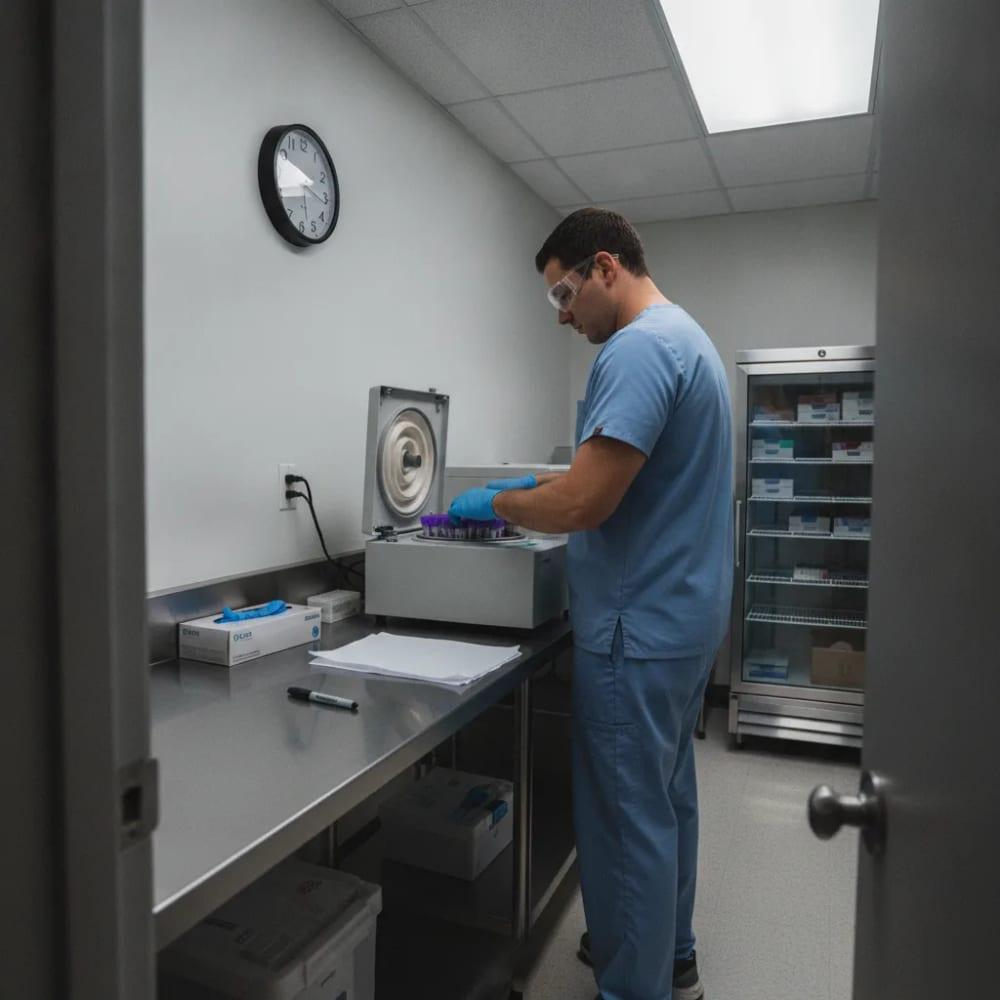
Testosterone levels peak in the early morning. We schedule most male hormone blood draws before 10 a.m. here in Lake Mary for this reason. A late afternoon draw can show levels 20 to 30 percent lower than your true baseline. This difference impacts how we interpret your results.
What to Do the Night Before
Most of this is simple, but it matters more than many realize.
- Fast for at least 8 hours before your appointment. The water is fine. Coffee is not.
- Skip your evening workout. Heavy exercise can temporarily spike or lower certain hormones.
- Get a normal night of sleep. Poor sleep the night before can lower testosterone readings noticeably.
- Avoid alcohol for at least 24 hours. Even a couple of drinks can affect your cortisol and testosterone levels.
- Write down every supplement and medication you are currently taking. Bring that list with you.
The last point sometimes causes issues. Biotin supplements, for example, can interfere with certain lab tests. We have seen it cause confusing results for men near the Timacuan area who did everything else correctly.
Morning of Your Appointment
Keep things calm. Do not rush to the clinic stressed. That alone can raise your cortisol and obscure the picture. If you take any prescription medications in the morning, tell us before the draw. We can note it on your panel.
Sometimes when a man’s results seem off, it is a preparation issue, not a real problem. We prefer to get it right the first time. This avoids a retest.
Not sure if you need to adjust anything specific? Call us before your visit. Our medical team in Lake Mary can explain what applies to your situation. This helps prevent surprises on lab day.
What Happens From Blood Draw to Results Review in Lake Mary
Guys often want to know what the process looks like. That is understandable. Here is how it works when you come in for male hormone testing at our Lake Mary clinic.
- Schedule a morning blood draw. We ask you to come in before 10 a.m. Testosterone levels peak early in the day. Morning draws give us the most accurate picture.
- Quick fasting check. You will want to fast for 8 to 12 hours before your appointment. The water is fine. This keeps your glucose and lipid markers clean. It prevents anything from skewing your hormone results.
- The draw takes about five minutes. Our phlebotomist performs a standard blood panel. Most men barely feel it. We check free testosterone, total testosterone, SHBG, estradiol, DHEA, thyroid markers, and other key levels depending on your symptoms.
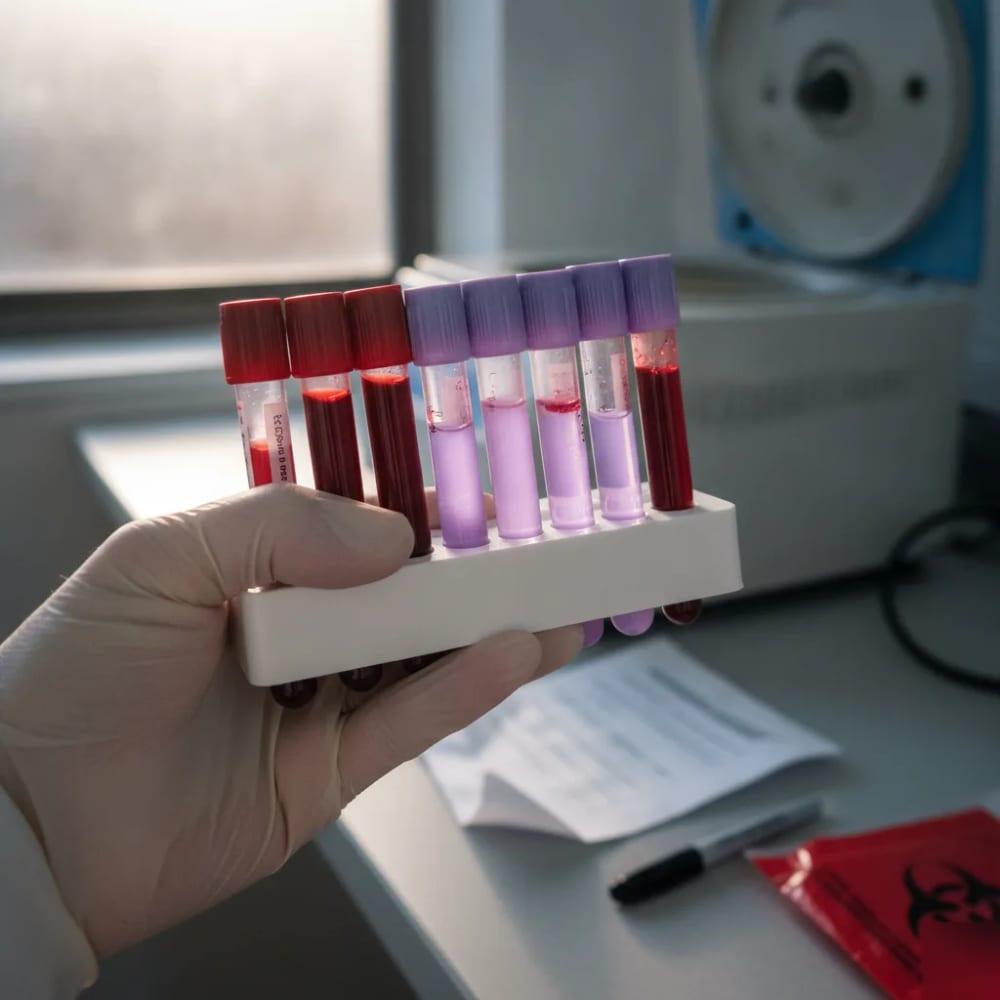
- Lab processing. Your samples go to a certified lab. Results typically return within 5 to 7 business days.
- Results review with your provider. This part is most important. We sit down with you and discuss every number. We look at whether you are “in range.” We also discuss where you fall and what that means for how you feel daily.
We see this every week. A man comes in expecting one simple number. He then realizes there are many markers that all connect. The review matters more than the draw itself.
Most clinics skip a key step. We compare your results against age-specific reference ranges. We do not just use the broad lab defaults. A 38-year-old near Heathrow and a 62-year-old retiree should not be measured by the same standard. Your provider considers your age, symptoms, and goals. They do this before making any recommendation.
The whole process from first visit to results review usually finishes within two weeks. No guessing. No vague answers. You will leave that review appointment knowing your levels and your options.
Understanding Your Results and the 'Normal Range' Problem
We explain this to men in Lake Mary almost every day. You get lab results back. Your testosterone reads 350 ng/dL. Your doctor says you are “normal.” But you feel terrible. You are exhausted by 2 p.m. You have no drive. Brain fog is so thick you cannot remember why you walked into a room.
That is the normal range problem.
Most standard labs list “normal” testosterone anywhere from about 264 to 916 ng/dL. That is a very wide window. A 35-year-old man at 280 gets the same “normal” label as a man at 850. The American Urological Association states that testosterone below 300 ng/dL generally means low testosterone. However, even men in the 300 to 450 range can have symptoms that affect their daily life.
We do not just glance at one number and stop there. When we review your results, we look at several markers together:
- Total testosterone and free testosterone. Total alone does not tell the full story.
- SHBG (sex hormone-binding globulin). This can bind up your available testosterone.
- Estradiol levels. Elevated estrogen in men causes its own set of problems.
- Thyroid panel and metabolic markers. These can mimic low testosterone symptoms.
Free testosterone matters more than most men realize. You could have a total level of 500. But if your SHBG is very high, little of that testosterone is actually available to your cells. We often see this in men over 40 near the Heathrow area. They exercise regularly and eat well but still feel off.
So what do your numbers mean? It depends on your age, symptoms, and health history. There is no single number. However, we can tell you this: a man who feels sharp, energetic, and strong is usually not at the bottom of that reference range.
That is why we sit down with you. We discuss every result line by line. This is not a five-minute phone call. It is a real conversation about what your numbers mean for you. Wondering if your levels are where they should be? Schedule a consultation and bring your most recent labs. We will show you exactly where you stand.

Book Your Consultation
Frequently Asked Questions
How long does it take to get hormone test results in Lake Mary?
Most men get their results back within 3 to 5 business days at our Lake Mary clinic. After your morning blood draw, your panel goes to the lab the same day. Once results are in, we schedule a review appointment to walk through every number with you. We do not just send a portal notification and leave you guessing. You will know what each marker means and what your next step looks like.
Why do I need to come in before 10 a.m. for my blood draw?
Testosterone levels are highest in the early morning and drop throughout the day. A late afternoon draw can read 20 to 30 percent lower than your actual baseline. That difference can make a real imbalance look normal on paper. We schedule all male hormone blood draws before 10 a.m. here in Lake Mary so your results reflect your true numbers, not a low point in your daily cycle.
My doctor already tested my testosterone and said it was normal. Why would I test again?
A standard testosterone test only checks your total level. That number can look fine even when your free testosterone is low or your estradiol is out of range. We see this regularly with men near the Heathrow area who were told they were normal but still felt off. A complete male hormone panel checks free testosterone, SHBG, estradiol, thyroid markers, and more. Those are often where the real answers are hiding.
Can supplements I take affect my hormone test results?
Yes, and this catches a lot of men off guard. Biotin supplements in particular can interfere with certain lab tests and cause confusing results. We have seen it happen with men near the Timacuan area who prepared perfectly in every other way. Bring a full list of every supplement and medication you take to your appointment. Our medical team in Lake Mary will note anything that could affect how we read your panel.
What symptoms should push me to schedule hormone testing sooner rather than later?
If you have two or more of these at the same time, do not wait: poor sleep, afternoon fatigue, low motivation, trouble losing belly fat, brain fog, or a drop in sex drive. Any one symptom alone might not mean much. A pattern of two or three together usually points to something specific. Men in Lake Mary who come in early get more options. Those who wait two more years often deal with the same problems plus new ones.
Does hormone testing in Lake Mary check anything beyond testosterone?
Yes, a complete male hormone panel goes well beyond testosterone. We measure free testosterone, SHBG, estradiol, DHEA-S, thyroid markers like TSH and Free T3, fasting insulin, and a complete blood count. Hormones do not work in isolation. Your thyroid, blood sugar, and adrenal function all affect how your body uses testosterone. Checking only one number gives you an incomplete picture of what is actually going on.