
Home » Does Hormone Testing in Lake Mary Check Anything Beyond Testosterone?
Does Hormone Testing in Lake Mary Check Anything Beyond Testosterone?
Does hormone testing in Lake Mary check anything beyond testosterone? Yes. A full men’s hormone panel also checks thyroid function and metabolic markers such as blood sugar and blood fats, not testosterone alone. Those extra markers matter because tiredness, weight gain, and low drive can come from a slow thyroid or a blood sugar problem, not only from low testosterone. At Svelte Medical Weight Loss Centers in Lake Mary, the first visit includes a comprehensive blood panel and a consultation with a board-certified physician. Dr. Richard Bragg reviews the results against your symptoms, so any treatment plan is lab-driven rather than built on one number a lab happened to flag. Depending on the whole picture, that review can point the same panel toward testosterone therapy, further thyroid evaluation, or a metabolic weight loss plan.
Many men book a test because they suspect low testosterone, and sometimes they’re right. When testosterone is the only number checked, though, a thyroid or blood sugar problem can stay hidden behind the same symptoms. Our hormone level testing for men in Lake Mary is built around that overlap: one blood panel, several marker groups, and a physician who reads them together.
What Does a Men's Hormone Panel Check Besides Testosterone?
A comprehensive men’s hormone panel checks testosterone plus thyroid and metabolic markers, which gives the doctor a fuller picture of your energy, weight, and drive. At Svelte Medical Weight Loss Centers, our Hormone Level Testing for Men covers all three groups, and the physician reviews the results personally.
Testosterone itself isn’t one simple number. Total testosterone measures all the testosterone in your blood. Much of that total is bound to SHBG (sex hormone-binding globulin, a protein that holds testosterone so your tissues can’t use it). Free testosterone is the smaller share your body can actually put to work. A man can have a total level that looks acceptable while his free level runs low, which is one reason doctors may check free testosterone when the total result is borderline or doesn’t match symptoms.
Beyond the core groups, many male hormone panels in general practice also look at estradiol (a form of estrogen that men make from testosterone), SHBG, and a complete blood count. Which extra markers a doctor orders depends on your symptoms and history.
Marker group — What it shows — Symptom it may explain
Testosterone (total and free) — How much testosterone you have and how much is usable — Low drive, fatigue, muscle loss
Thyroid — How fast your body burns energy — Tiredness, weight gain, feeling cold
Blood sugar — How well your body handles glucose — Belly weight, energy crashes
Blood fats — Cholesterol and triglyceride levels — Metabolic and heart risk
Thyroid markers on a men’s panel
The thyroid sets the speed at which your body uses energy. When it runs slow, the result can feel a lot like low testosterone. Both problems can bring tiredness, weight gain, and low mood, and a slow thyroid often adds feeling cold when others are comfortable. TSH (thyroid-stimulating hormone, the signal your brain sends to the thyroid) is the usual starting test. If TSH looks off, doctors may add more thyroid markers to see where the problem sits.
Metabolic markers like blood sugar and blood fats
Blood sugar markers, such as fasting glucose or A1c (a three-month average of blood sugar), can reveal pre-diabetes before it becomes diabetes. Blood fats, meaning cholesterol and triglycerides, show heart and metabolic risk. Low testosterone and insulin problems often show up in the same man, and each can make the other harder to fix. Checking both on one panel means neither problem gets treated while the other goes unnoticed.
Why Do Doctors Test Thyroid and Metabolic Markers With Testosterone?
Doctors test thyroid and metabolic markers with testosterone because the symptoms overlap, and treating the wrong cause can leave you feeling the same as before. Four complaints show up again and again across all three areas:
- Fatigue that sleep doesn’t fix
- Low drive or low libido
- Weight that settles around the belly
- Losing muscle even when you stay active
Each of those symptoms can come from low testosterone. Each can also come from a slow thyroid or from insulin resistance (when your body stops responding well to insulin, so blood sugar and fat storage both rise). The symptom list alone can’t tell the causes apart. The blood work can.
Testing testosterone alone has a real downside. A man may start testosterone replacement therapy (TRT) when a thyroid or blood sugar problem is the bigger driver. His testosterone number may improve while the fatigue and belly weight stay put, and months pass before anyone looks further.
That’s why, at Svelte Medical Weight Loss Centers, we build your protocol from your labs, symptoms, and goals before anything is prescribed.

What Happens at a First-Visit Hormone Lab Appointment in Lake Mary?
At Svelte Medical Weight Loss Centers in Lake Mary, the first visit includes a comprehensive blood panel and a consultation with the physician, not a sales pitch. The process generally moves through four steps:
- Symptom conversation. You describe what has changed, such as energy, sleep, drive, weight, or strength, and how long it has lasted.
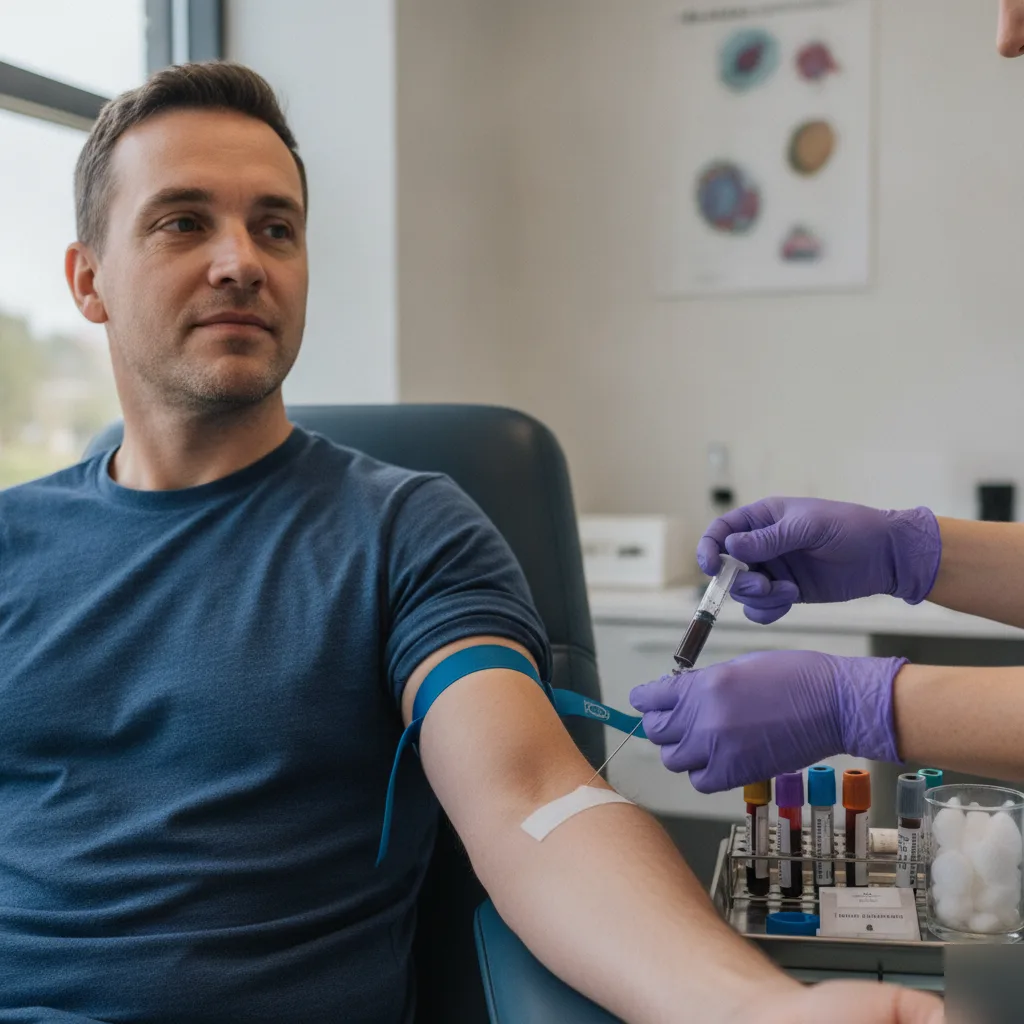
- Blood draw. Blood is collected for a panel that covers testosterone, thyroid, and metabolic markers.
- Physician review. The board-certified physician reads the results against the symptoms you described.
- Plan discussion. You and the physician talk through what the results show and which options fit your labs and goals.
Preparation varies by test. As general guidance, testosterone is often drawn in the morning because levels tend to run highest early in the day, and some blood sugar and blood fat tests may require fasting. Ask our office how to prepare before your appointment so the numbers reflect your normal baseline.
The format suits how many Lake Mary residents work. Professionals along International Parkway and in the Heathrow corridor often travel, attend client dinners, and keep irregular hours, and weekly group programs rarely fit that calendar. A focused, physician-led visit with labs doesn’t require a standing weekly class.
Physician-Reviewed Hormone Results vs a Simple Lab Flag
A lab flag only tells you a number fell outside a reference range, while a physician review connects that number to your symptoms, history, and other markers.
A “normal range” is the span of results seen in most of the people a lab tests. Being inside that range doesn’t always mean a result explains how you feel. A man can sit at the low edge of normal testosterone and still have real symptoms, especially if his free testosterone is low. The reverse also happens: a result can fall slightly outside the range and not need treatment once the rest of the panel is considered.
At Svelte Medical Weight Loss Centers, results are reviewed by the physician, not just flagged by a lab. Dr. Richard Bragg has been board certified by the American Board of Family Physicians since 1995. After earning his MD from Louisiana State University School of Medicine in 1992, he completed his Family Practice Residency at Florida Hospital in Orlando from 1992 to 1995. He served as President of the Seminole County Medical Society in 2008, and he has served as Adjunct Clinical Faculty at the Florida Hospital Family Practice Residency since 1997.
Family medicine training is useful here, because reading a hormone panel well means thinking about the whole patient, not one organ.
Can Hormone Testing Explain Weight Gain or a Weight Loss Plateau?
Hormone testing can help explain weight gain or a plateau when thyroid, insulin, or testosterone levels are part of the cause, though labs are only one piece of the picture. A clean panel doesn’t rule out other reasons for weight change, and an abnormal panel doesn’t explain everything on its own.
Testosterone directly affects body composition. Men with low testosterone often lose muscle and gain fat. Because muscle burns more energy at rest than fat does, losing muscle can slow metabolism and make further weight gain easier. That cycle is one reason a man can eat the same way he did five years ago and still watch his waistline grow.
Svelte Medical Weight Loss Centers pairs lab work with in-clinic body composition and metabolic rate testing. Body composition testing shows how much of your weight is fat versus lean tissue. Metabolic rate testing estimates how much energy your body burns. Together with the blood panel, those results form the basis for a personalized plan.
When labs confirm pre-diabetes, high triglycerides, or metabolic syndrome, a physician-supervised weight loss program may be the right next step. Our approach is grounded in insulin science, not generic calorie restriction. When appropriate, that plan can include GLP-1 therapy such as semaglutide, a weekly injection that helps regulate appetite and insulin response. For patients who have stalled, plateau treatment involves clinical evaluation and protocol adjustment.
In Central Florida, heat and humidity limit outdoor exercise from May to October, with the heat index regularly above 100°F. For half the year, “just exercise more” is hard advice to follow, which is one more reason to look at what your labs and metabolic testing show before blaming effort.
Is Hormone Testing in Lake Mary Only for Men?
No, women in Lake Mary can get hormone testing too, and a comprehensive women’s hormone panel also looks beyond a single hormone. Svelte Medical Weight Loss Centers offers a Comprehensive Women’s Hormone Panel. The Women’s Health Clinic provides physician-led evaluation for perimenopause, low libido, and symptoms tied to hormonal imbalance.
Our women’s weight loss evaluation accounts for perimenopause, thyroid function, and female hormonal factors, because those can all shape energy and weight at the same time. Women also make testosterone, and some have levels that run low. Svelte offers Low Testosterone Treatment for Women, along with menopause hormone therapy and perimenopause treatment.
When Should Lake Mary Men Get a Hormone Panel?
Lake Mary men should consider a full hormone panel when fatigue, low drive, erectile changes, or stubborn body changes last for weeks and do not improve with rest and routine changes. Signs worth testing include:
- Ongoing tiredness that doesn’t lift with better sleep
- Low libido
- Erectile dysfunction
- Losing muscle or gaining belly fat without a clear reason
- Primary care labs that were flagged with no clear next step
That last sign is common in Seminole County. Many patients arrive with pre-diabetes, elevated triglycerides, or high blood pressure already flagged by a primary care doctor, but no structured referral path to follow. A full panel with a physician review gives those flagged results a next step.
Men who have recently moved to Lake Mary have a good reason to start here too. Many relocators from the Northeast and Midwest arrive with established weight or metabolic concerns and are looking for a new physician-supervised program. A baseline panel gives your new physician a clear starting point instead of relying on old records alone.
What happens after results come back
Lab-confirmed low testosterone may lead to TRT options such as testosterone injections or testosterone pellet therapy. Svelte Medical Weight Loss Centers is a Certified Platinum Level Biote Provider. BioTE bioidentical hormone optimization uses pellets placed under the skin to deliver steady hormone levels. Hormone therapy calls for ongoing monitoring and optimization, and follow-up lab work is a normal part of adjusting a plan over time. If your results point to a metabolic issue instead, the next step may be physician-supervised weight loss rather than hormones.
The Bottom Line on Hormone Testing Beyond Testosterone
A good men’s hormone panel checks testosterone, thyroid, and metabolic markers, because the symptoms of all three overlap. How the physician reads those results together decides whether the plan is TRT, BioTE, or physician-supervised weight loss, with ongoing monitoring either way.
If you want lab work that goes past one number, book a first visit at Svelte Medical Weight Loss Centers in Lake Mary. Svelte has served Central Florida since 2008.
Book Your Consultation
Frequently Asked Questions
What are the signs that my hormones might be out of balance?
Common signs include low energy, poor sleep, hot flashes, weight changes, and mood swings. Some people also notice hair thinning, brain fog, or changes in their cycle. No single sign proves a hormone problem on its own. That’s why we ask you to write down what you’ve noticed and when it started. These notes help your doctor connect your symptoms to your lab numbers. If several signs sound familiar, it’s worth booking a hormone testing appointment in Orlando to get clear answers.
When is the best time to check hormone levels if I’m in perimenopause?
The best time depends on whether your cycle is still regular. If you still have periods, FSH and estradiol are often checked early in your cycle, while progesterone is usually tested about a week before your next period starts. If your cycles have become unpredictable, that’s normal during perimenopause. Just write down the date your last period began and bring it to your appointment. Your doctor will use that date to choose the right testing window for accurate results.
Does Orlando’s heat and humidity affect my hormone test results?
Heat itself doesn’t change your hormone levels, but dehydration can make your blood draw harder and leave you feeling lightheaded. Orlando mornings warm up fast, even outside summer. Drinking water before you leave home keeps your veins easier to find and helps you feel steady afterward. If you’re fasting, plain water is still fine. Pack a small snack for right after your draw, especially if you’re heading back out into midday heat.
Is it a mistake to skip listing my vitamins and supplements before testing?
Yes, this is one of the most common mistakes we see. Many hair, nail, and energy supplements contain biotin, which the FDA has warned can interfere with certain lab tests, including some thyroid tests. People often leave these off their list because they seem harmless. Write down every supplement, not just prescription medicine, or bring the bottles with you. This small step can prevent a confusing or inaccurate result on your first panel.
Do I need to fast before every hormone test?
No, fasting rules depend on which hormones are on your lab order. Hormones like testosterone and cortisol care more about the time of day than food, so an early morning draw matters more. Thyroid tests usually don’t require fasting at all. Always follow the specific instructions given for your panel, since mixing up the rules can lead to a confusing result and a repeat visit.
What should I do if my symptoms don’t match my test results?
This happens more than you’d think, since one blood draw only shows a single moment in time. Your symptom notes give your doctor the bigger picture that a lab report alone can’t show. Bring details on when symptoms started and how often they happen. If your results and symptoms still don’t line up, your doctor may suggest a retest at a different time or cycle day. Being prepared with notes helps sort out these mismatches faster.
Ready for a Svelte transformation?
Take the first step toward better health and metabolic stability today.
Our team is here to support you.