
Home » Do I Need to Fast Before Hormone Level Testing? An Orlando Guide
Do I Need to Fast Before Hormone Level Testing? An Orlando Guide
Why 'Do I Need to Fast?' Isn't a Simple Yes-or-No
Fasting before hormone level testing depends on which hormones your doctor is checking. Some tests, like fasting insulin or glucose paired with hormone panels, need 8 to 12 hours without food. Others, like testosterone or thyroid panels, usually don’t require fasting at all.
Here’s the honest answer: it depends. Frustrating, we know, when you just want a yes or no. But hormone testing isn’t one test. It’s a group of different tests, and each behaves differently once it hits your bloodstream.
Some hormones shift within hours based on what you ate. Insulin is a good example. Eat a big breakfast, and your numbers can look completely different than if you’d skipped the meal. Testosterone and thyroid hormones barely budge no matter what’s in your stomach.
So the real question isn’t do you need to fast. It’s which hormones are on your lab order. That’s a detail your doctor should walk you through before your appointment – not something you guess at the night before.
- Which specific hormones are being measured, since each has its own behavior in the body
- Whether glucose or insulin is part of the panel, since food directly affects both
- The time of day your blood is drawn, since some hormones follow a daily rhythm
- Any medications you’re taking, since some can affect how a test needs to be timed
- Whether your doctor also wants a lipid panel run at the same visit
We see this mix-up all the time. A patient shows up having fasted for 14 hours, lightheaded and irritable, for a test that never needed fasting. Or the opposite happens – someone eats a full lunch right before a test that absolutely needed an empty stomach. Neither situation gives us clean, useful numbers.
That’s exactly why physician-supervised testing matters.
When a board-certified medical doctor reviews your case, not just a generic lab slip, you get instructions matched to your actual panel. This has been part of how we’ve approached hormone testing since 2008, long before hormone optimization became a trend. If you’re weighing hormone testing and weight management together, it helps to have both handled under one plan instead of two separate providers guessing at your prep instructions.
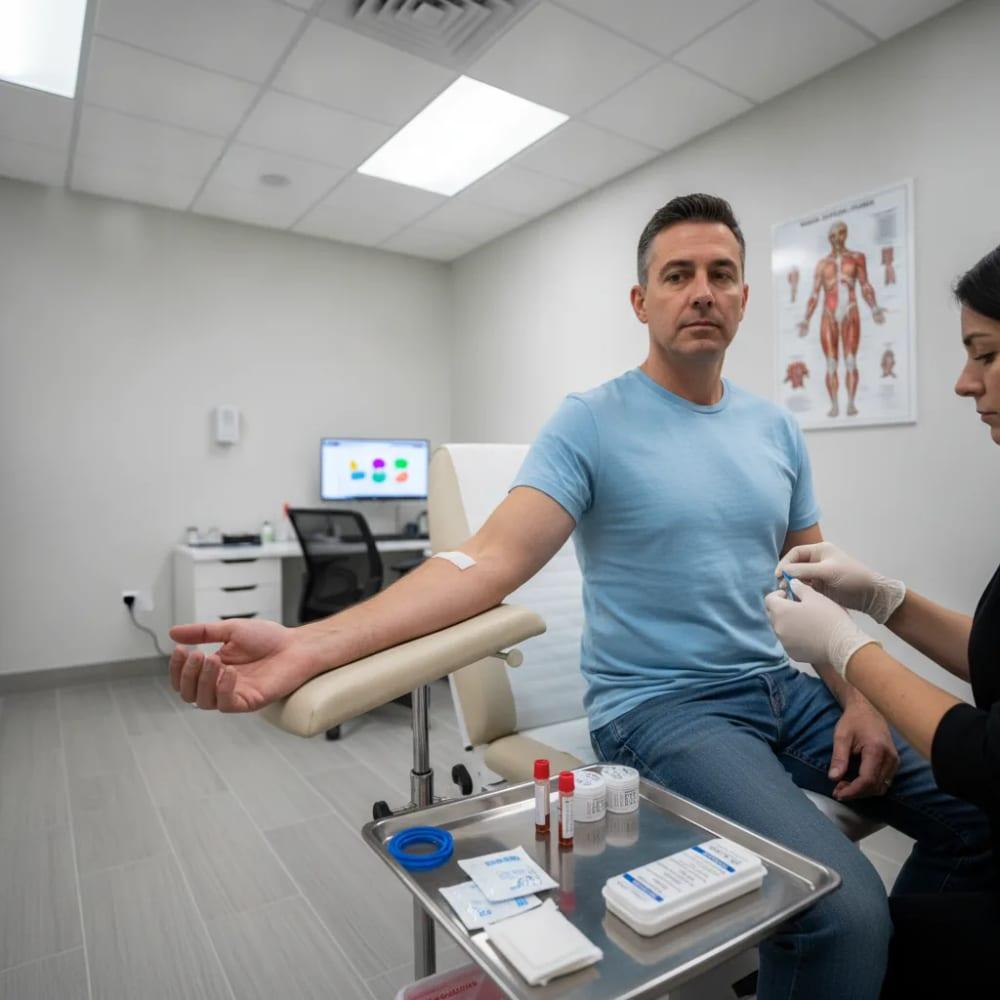
Which Hormone Tests Typically Don't Require Fasting
Good news first. Most hormone tests men ask about don’t need fasting at all. We hear this question almost daily at our Orlando office, and the relief on someone’s face when we say no fasting needed is real.
Testosterone is the big one. Total and free testosterone levels aren’t affected by food. What matters more is the time of day you draw blood – levels drop as the day goes on.
- Total and free testosterone – timing matters, food doesn’t
- LH and FSH (luteinizing and follicle-stimulating hormone) – no fasting required
- Estradiol – eat normally before your draw
- Prolactin – fasting isn’t needed, though stress and recent activity can slightly affect results
- TSH (thyroid-stimulating hormone) – safe to eat beforehand
Cortisol works a bit differently. You don’t fast for it, but timing is everything here too. Cortisol naturally peaks in the morning and dips by evening, so your doctor will likely want an early draw rather than an empty stomach.
So why the confusion? Probably because so many other blood tests, like glucose or cholesterol panels, do require fasting. People get these lumped-in tests confused with each other constantly.
We had a patient last spring, a construction supervisor working long days near Lake Nona, who skipped breakfast for three days straight before his testosterone draw. He didn’t need to. His results would’ve been the same either way, and he could’ve eaten a normal meal and felt a lot better that morning.
If you’re getting a broader men’s health panel – one that checks testosterone alongside blood sugar or lipids – fasting rules from those other tests still apply. That’s the exception worth remembering.
This is where a clear, physician-supervised process helps. Our team walks you through exactly what your specific panel requires, no guessing involved. If you want the full picture on prep, timing, and what your results mean, check out our main service page, hormone level testing for men in East Orlando, before your next visit.
One more thing worth knowing: some labs default to fasting instructions out of habit, even when your specific test doesn’t call for it. Double-check with the office ordering your draw. A quick phone call saves you an unnecessary morning without coffee.
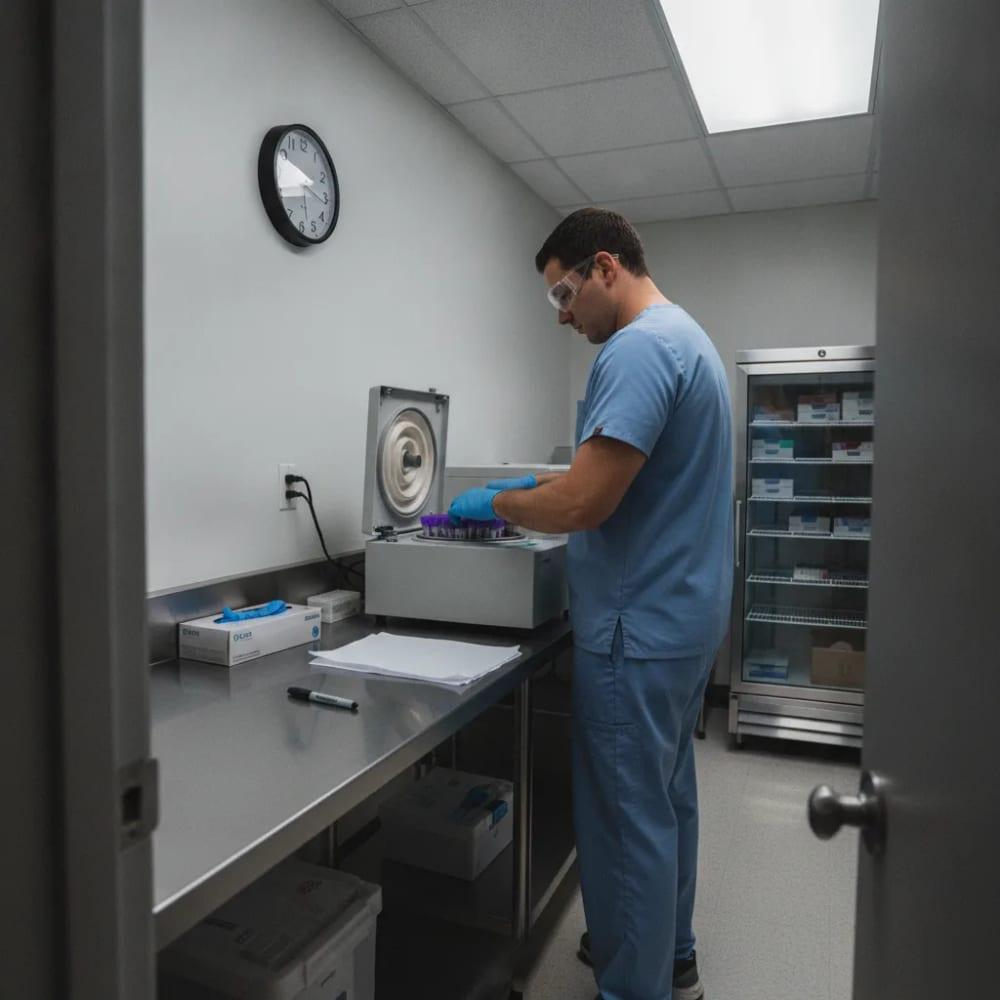
Do You Need to Fast? Three Common Scenarios
Not every hormone test works the same way. The fasting answer depends on what your doctor is checking, and sometimes what else gets drawn in the same visit. Let’s walk through three scenarios we see all the time in our Orlando office.
- Scenario one: a standalone hormone panel, like testosterone or estrogen, drawn in the morning
- Scenario two: hormone testing combined with a metabolic or lipid panel
- Scenario three: thyroid testing, which rarely requires fasting at all
In scenario one, fasting usually isn’t required. What matters more is the time of day. Testosterone peaks in the early morning and drops as the day goes on. So we schedule these draws before 10am whenever we can. A patient who eats breakfast first typically sees no meaningful change in their result – food just isn’t a big factor for most reproductive hormones.
Scenario two is different. If your doctor orders a hormone panel alongside glucose, insulin, or a lipid profile, fasting becomes necessary, usually 8 to 12 hours. This happens often in our weight loss and hormone optimization patients, since we’re looking at the full metabolic picture, not just one number. We had a patient last year who almost skipped this step before a visit. She’d eaten a granola bar an hour before her draw. Her glucose came back elevated and we had to redraw the following week. That delay is easy to avoid with one text to our team beforehand.
Thyroid testing, our third scenario, almost never requires fasting.
TSH and free T4 stay fairly stable whether or not you’ve eaten. Some research suggests TSH can shift slightly after a meal, but not enough to change a diagnosis in most cases, according to general endocrinology literature. We still recommend a consistent morning appointment time if you’re tracking thyroid levels over several months. Consistency matters more than fasting here, and it keeps your results easy to compare visit to visit.
Here’s the honest truth: guessing which scenario applies to you isn’t worth the risk of a redo. Our physician-supervised team will tell you exactly what to do before your specific panel, no guesswork required.
Book Your Consultation
Frequently Asked Questions
How should I prepare for hormone level testing?
Preparing for hormone testing starts with knowing exactly which hormones are on your lab order. Ask your doctor if fasting applies before your visit, not the night before. For most single-hormone panels, like testosterone or thyroid, you just need to know your draw time. If glucose or insulin is included, plan for 8 to 12 hours without food. A quick call to the office ordering your test clears up any confusion fast.
What’s the biggest misconception about fasting before a hormone test?
The biggest misconception is that all hormone tests require fasting. Many patients skip meals unnecessarily before testosterone or thyroid draws, only to feel lightheaded for no reason. Food rarely affects these hormones. Fasting only matters when glucose, insulin, or a lipid panel rides along with your hormone test. Knowing which category your test falls into saves you an uncomfortable, unnecessary morning.
Does the time of day matter more than fasting for testosterone testing in Orlando?
Yes, timing usually matters more than fasting for testosterone tests. Levels peak early in the morning and drop as the day goes on, so most Orlando offices schedule these draws before 10am. Eating breakfast beforehand typically won’t change your numbers much. We’ve seen this play out with patients working long shifts near Lake Nona who worried more about food than the actual draw time, which is the detail that really counts.
Can I drink water or coffee before hormone testing?
Water is fine before almost any hormone test, and staying hydrated makes the blood draw easier. Coffee is trickier since caffeine can slightly affect cortisol and blood sugar readings. If your panel includes glucose or insulin alongside hormones, skip coffee until after your draw. For standalone tests like testosterone or thyroid, a small cup usually won’t cause a problem, but it’s worth confirming with your doctor.
What happens if I fast when I didn’t need to?
Fasting when it’s not required usually won’t ruin your results, but it can leave you feeling weak, irritable, or dizzy for no reason. This happens often with patients who confuse hormone panels with metabolic bloodwork. The real risk goes the other way: eating before a test that needed fasting, which can force a redraw. That’s why physician-supervised testing matters so much, since your instructions get matched to your exact panel instead of a generic checklist.
Why do some hormone panels require fasting while others don’t?
Some hormone panels require fasting because they’re often combined with glucose, insulin, or lipid tests, which react quickly to food. Hormones like testosterone, thyroid, and estradiol stay steady no matter what you’ve eaten, so fasting adds nothing useful there. The difference comes down to what else is being measured in the same blood draw. If you’re planning a broader panel, our hormone program page walks through what a full workup typically includes.
Ready for a Svelte transformation?
Take the first step toward better health and metabolic stability today.
Our team is here to support you.